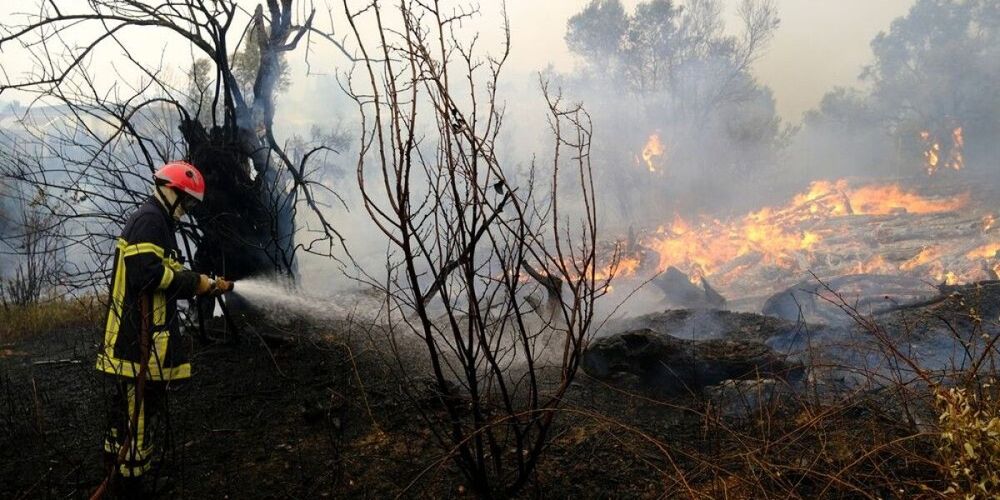
French farmers clash with prefecture over help for firefighters
Hundreds of farmers have mobilised to support firefighters battling catastrophic wildfires in Gironde and Landes, but tensions are rising as local authorities insist volunteers must register through official channels rather than arriving spontaneously at fire fronts.
The Gironde wildfire has burned approximately 42,000 hectares by July 27, making it the largest wildfire in France since 1949. By July 29, the blaze had injured 126 firefighters and forced the evacuation of 222,000 people, though 57,000 residents have since been allowed to return home.
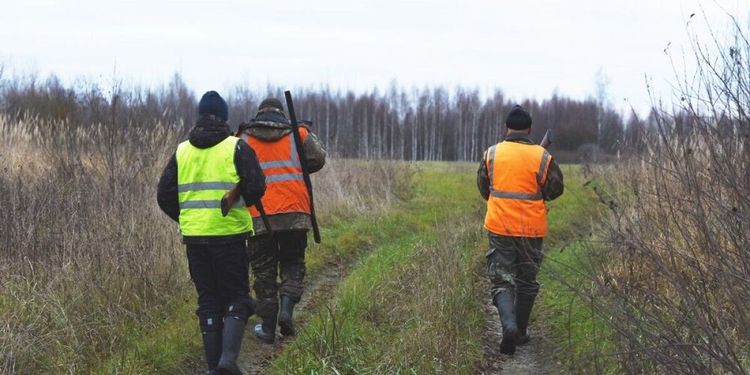
Farmers have emerged as crucial allies in the firefighting effort, using tractors and water cisterns to reach areas inaccessible to larger vehicles. Their smaller equipment can navigate narrow forest paths, clearing routes for firefighters and refilling water trucks on-site, saving precious time that would otherwise be spent driving several kilometres for supplies.
Around 100 farmers have aided firefighters on the front lines in Gironde since the blaze started last week, with some travelling dozens of kilometres from neighbouring departments. Among them is 25-year-old Christopher Bonnefond from Lot-et-Garonne, who set out at 4:30 in the morning with fellow farmers, transporting a slurry tanker filled with water.
Just one of these tanks holds three or four times the capacity of a fire truck. It saves them a huge amount of time.
Mr Bonnefond told AFP. A firefighter confirmed their support was truly essential.
Prefecture demands organised approach
Gironde prefect Sophie Brocas stressed on Sunday that while generosity is appreciated, it must be coordinated.
Farmers are highly mobilised, generosity is part of their culture, but we do not want them taking individual initiatives or intervening spontaneously. We need to get water to the firefighters, but in an orderly and safe manner. I do not want farmers getting caught in the flames, injured, or worse.
The prefecture's concerns have particular weight given the fire's unprecedented behaviour. The blaze has generated pyrocumulonimbus effects, fire thunderstorms that create lightning and start additional fires, an extremely rare phenomenon never before seen in France but observed in North America and Australia. Officials have also warned the blaze could continue to smoulder underground for months as a "zombie fire," which can burn underground for extended periods during drought conditions.
Head firefighter Marc Vermeulen echoed the safety concerns.
We cannot have farmers heading into the operation zone on their own. We need to know their location so we can warn them if the fire changes direction.
He added that structured assistance was needed to ensure volunteers are properly insured if their vehicles are damaged.
The Gironde Chamber of Agriculture has set up an online registration system where farmers can list available equipment and contact details. The system also ensures those whose equipment is officially requisitioned are covered by additional insurance.
No official requests despite 500 registrations
By Tuesday, however, not a single official requisition request had been made to the 500 volunteers who registered on the website, according to Jean-Samuel Eynard, president of the Gironde Chamber of Agriculture.
Farmers are helping at their own risk. If their tractors burn, or if problems arise, they really need to be properly insured and authorised to perform work outside their own farms.
Mr Eynard told FranceInfo, saying he had no idea what was causing the "bottleneck" preventing official requests.
It is a good thing that some farmers are stepping up anyway. It may not be appropriate for a Chamber of Agriculture president to say this, but the reality is that it is fortunate they dared to do so.
Théo Hernandez, president of the Gironde branch of the Jeunes Agriculteurs union, was more direct in his criticism.
The prefect needs to step out of the office a bit. It can't work that way. We see the smoke, we go. We have equipment capable of hauling 300 cubic metres, and we make round trips between the water source and the firefighters. We aren't here to generate buzz, but to help as quickly as possible.
National emergency stretches resources
The scale of the crisis extends far beyond Gironde. As of July 26, France was battling 30 to 40 wildfires daily, with over 115,000 hectares burned across the country. The neighbouring Landes wildfire near Biscarrosse burned approximately 3,500 hectares and was declared contained on July 27, though authorities warned hot spots could still flare up.
France activated the European Union Civil Protection Mechanism on July 24, deploying two Croatian Canadair water bombers, two Portuguese Air Tractor aircraft, and two heavy Black Hawk helicopters from the Czech Republic and Slovakia. French energy group Engie announced on July 28 that it would contribute 25 million euros to help with reconstruction and sustainable regeneration of forests destroyed by the fires.
The current situation evokes memories of July 2022, when Gironde experienced major wildfires that burned over 15,000 hectares of pine forest. More than 1,000 firefighters and water-dropping planes eventually brought that fire under control, though it reignited in August amid record temperatures.
France's firefighting capacity depends heavily on volunteers, who make up more than three-quarters of the country's nearly 252,000 firefighters. During the 2022 wildfires, the Interior Minister called on private companies to free up their volunteer firefighters to help tackle the blazes.