Staffing pledges and an October deadline
Education Minister Édouard Geffray said 3,000 substitute teachers would be sent in the coming hours and days to more than 500 high schools with conditions identified as "problematic." He also pledged to authorize a few hundred hires above the usual allowance wherever additional teachers were needed.
Lecornu has asked ministers to address students' central demands: coverage for absent teachers, a review of school days that run from 8 a.m. to 6 p.m., and an assessment of repairs needed in aging buildings. Initial proposals are due by the end of October.
In a televised address on October 7, 2026, Lecornu outlined five longer-term areas of work. These included teacher replacement, school conditions, school hours and greater transparency in Parcoursup, the higher-education admissions platform. He said lawmakers would debate a budget proposal on November 12 that provides 64 billion euros ($71.6 billion) for education, slightly more than the previous year.
Student representatives are seeking more. A union representing high school and university students issued 10 "emergency measures" on Monday, with staffing shortages and a large recruitment campaign among its priorities. It described the government's response so far as "repression." Union leaders representing some protesters have also sought 10 billion euros ($11.2 billion) in investment in high school and university-level education.
At a demonstration outside Helene Boucher School in Paris, mother Emilie Lhomme questioned whether the promises would produce tangible improvements. "All of that is well, but it's not going to change our children's daily lives," she told reporters.
How the school grievances spread
The demonstrations began in late September, with the first protest traced to Saint-Exupéry high school in Créteil, a suburb south of Paris. France 24 described a strike by a handful of teachers over unfilled posts; students joined them that evening to organize a demonstration for the following morning.
Math teacher Laurent Bessiere described the gaps at the school to France Inter: "We were short a maths teacher, a French teacher, a literature professor, a history teacher and an assistant professor. The school nurse was on sick leave." As students at other high schools joined the movement, one told the broadcaster: "We're asking for the bare minimum."
The complaints followed Geffray's assurances on France Inter at the end of August that teacher shortages would be "minimal." He said "all indicators" pointed to a school year that would be "much better" than previous ones.
Findings from a major union representing public school staff describe wider shortages. More than half of middle and high schools are missing at least one teacher, while 69 percent lack at least one member of their teaching and support staff. France 24 reported that understaffing regularly leaves classrooms with 35 students.
The buildings themselves are another concern. France 24 reported that two-thirds of elementary, middle and high schools date from before 1970 and cannot withstand the rising temperatures associated with climate change. Some classrooms reached 38 degrees Celsius during successive heat waves in summer 2026.
Injuries and investigations into police conduct
Lecornu told lawmakers that clashes had injured at least 215 teenagers and 85 school staff members, describing the toll as "the highest number of victims in decades for the education system." His office separately reported injuries to more than 700 police officers. The Interior Ministry's figures for Tuesday were 488 arrests and 48 injured security personnel.
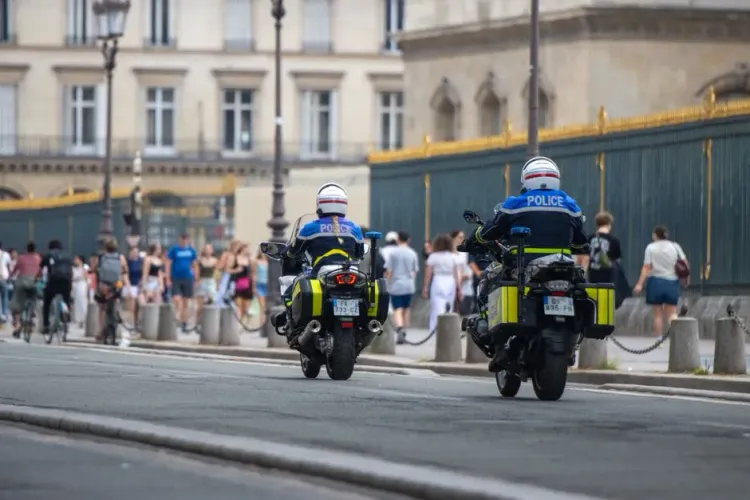
Officers used tear gas and water cannons against violent groups around marches in several cities, including Paris, Strasbourg, Rennes and Toulouse.
After a 15-year-old in northern France lost a hand when police fired a stun grenade during an October 5 demonstration, the government suspended use of the devices at high school protests. Interior Minister Laurent Nuñez said the restriction covered only demonstrations involving high school students and would last "just long enough to understand what happened" as investigators examined the circumstances.
Nuñez also reported 18 investigations by the IGPN police watchdog into alleged officer misconduct since the movement began. The inquiries would assess whether police actions were proportionate.
Omar Slaouti, a secondary school teacher in Argenteuil, northwest of Paris, criticized efforts to distinguish between protesters. "They want to divide young people into good and bad protesters," he said. "If there had not been burning trash containers, the government would not have backed down or noticed the stakes involved."
U.S. President Donald Trump offered a different characterization, claiming the demonstrations showed migration was "out of control" in France. On Truth Social, he wrote: "This has nothing to do with schools, but with Islam trying to take over a country that was once great."
Budget pressure and the political backdrop
The education demands come as the government seeks to curb public debt during a period of weak economic growth. Since Emmanuel Macron's allies lost their parliamentary majority in 2024, the government has struggled with basic business, including passing a budget.
In his Wednesday evening address, Lecornu reiterated a target of bringing the budget deficit down to 5 percent of GDP next year. He also announced plans to release diesel stocks in an effort to lower fuel prices. The unrest is taking place less than a year before France is due to elect Macron's successor.