One killed, seven wounded
The shooting killed Pengo Bossio Wangi, a 26-year-old French citizen originally from the Democratic Republic of the Congo. Seven other people were injured, four severely; one remained in critical condition as of October 29.
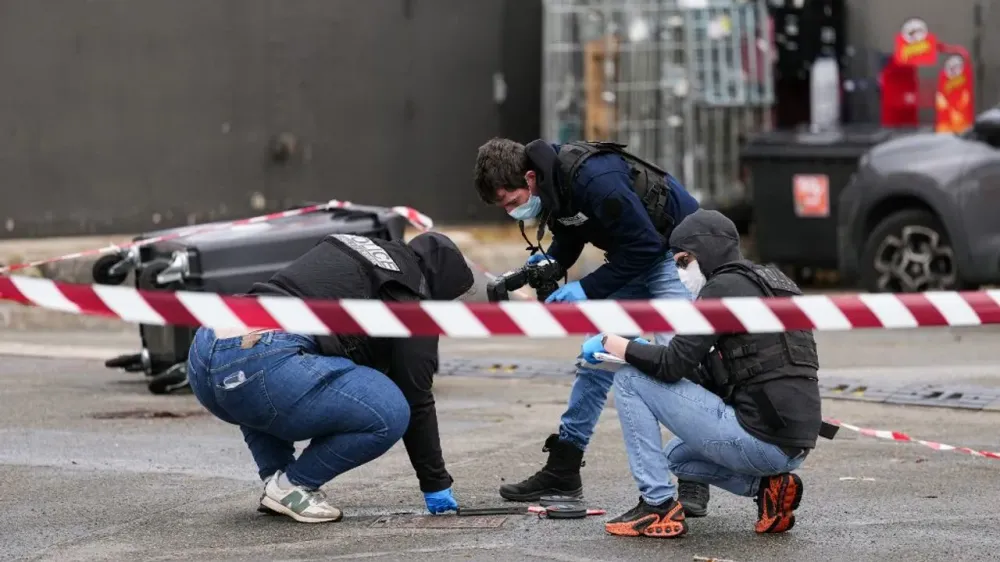
National antiterrorism prosecutor Olivier Christen said the assailant fired 128 rounds at eight crime scenes over a route of about 12 kilometers, according to Brussels Signal. Police arrested Tessier in Coignières shortly afterward.
Prosecutors said Tessier's account showed that he selected people "of Muslim, African, or North African appearance." He described the attack as "legitimate" and expressed no remorse. Regarding an 11-year-old victim, he said he might have misjudged the child's age.
The charges identify racial or ethnic bias as the motive. Tessier also faces charges of illegal weapon possession and association with terrorist groups.
Purchases before the attack and weapons recovered
Investigators described extensive preparation. According to RTL, Tessier began acquiring equipment in September 2026 to improve his submachine gun's tactical effectiveness, along with a police armband and handcuffs. Before the attack, he also repaid debts to family members, deleted his social media accounts, sold his computer and hid his phone.
Police found a Sten-type submachine gun in his car, along with weapon parts, ammunition, a knife, tear gas, handcuffs and a police armband, Brussels Signal reported. A search of his residence turned up a charger, two brass knuckles, a bayonet and a silencer, as well as Mein Kampf and religious texts.
Authorities also said Tessier had rigged three gas cylinders to a timer in his apartment. Although crudely constructed, the device worked and could have destroyed both the apartment and neighboring units if RAID tactical officers had not intervened, according to Brussels Signal.
Investigators found 227 self-made nationalist stickers at the home, though they questioned their authenticity. Christen said about 30 included references to France, RN and pride in being French; 99 proclaimed being 100% French and support for France; and 98 expressed support for law enforcement. Tessier said he had designed the stickers and ordered them online, while denying membership in or sympathy for any political party.
Earlier allegations and psychiatric findings
Tessier, a Yvelines resident with a prior criminal record, had been arrested just three days before the shooting over a separate alleged assault. According to Mediapart reporting cited by La Dépêche on October 29, he allegedly sprayed a Black man with tear gas and beat him in a gas station parking lot on October 20. His employer subsequently began dismissal proceedings.
The same reporting described alleged death threats against former acquaintances in his Guyancourt neighborhood in 2025 and 2026. La Dépêche also reported testimony that Tessier had said he would avoid prison by pretending to be mentally ill.
During a 48-hour psychiatric hold, prosecutors noted psychological issues and drug use dating to age 13. Toxicology testing detected cannabis, cocaine and antipsychotic medication in his system.
Christen said the psychiatric examination after Tessier's arrest found no clinical signs of a condition capable of eliminating his capacity for discernment. The prosecutor also said Tessier's claimed schizophrenia diagnosis reflected his own interpretation rather than a medical conclusion.
Tessier's defense attorneys acknowledged the "gravity of the facts" and called for a "serene" legal process that would proceed as smoothly as possible.
Public response and continuing investigation
President Emmanuel Macron called the shooting a "racist terrorist attack" and a "turning point." He described it as the first planned terrorist act to target French citizens and children because of their skin color or perceived religion.
Rallies took place across France, including in the Paris region, to support the victims and condemn the normalization of racist hatred. A national tribute led by Prime Minister Sébastien Lecornu was planned. The Paris police prefecture also said the interior minister had ordered a far-right event in the capital banned because of public order risks following the attack.
By the October 29 press conference, investigators had interviewed 111 victims or witnesses, and at least 200 people had been mobilized for the investigation. The case will proceed under three antiterrorism investigating judges at the Paris judicial court.