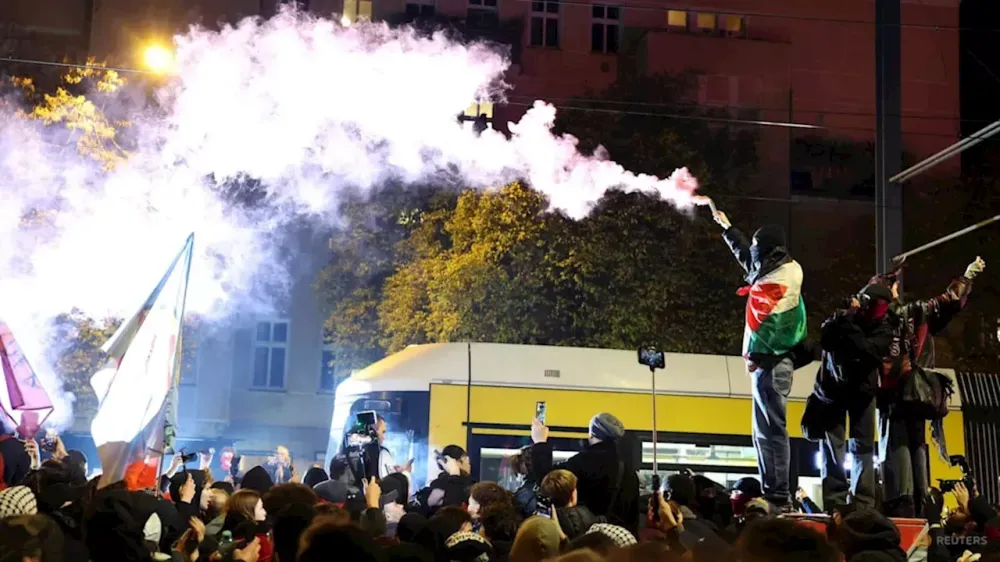
German organizers call another nationwide protest
Germany's GenZ regelt youth movement wants greater spending on education, social security, health and climate protection, along with a more affordable cost of living. It also opposes the return of compulsory military service. Its name translates as "Gen Z has got this."
Deutsche Welle reported that the group demonstrated in 34 cities on October 31, 2026, including Berlin, Frankfurt, Cologne and Munich. Organizers said "100,000 people showed why they're taking to the streets" and called for another nationwide round on November 14.
For Berlin high school student Janelle Schulz, the demands start with the condition of her school. She told AP that water damage had left the ceiling collapsing, toilets were broken and there were too few teachers.
Violence disrupted some of the German marches. Frankfurt businesses were looted, windows were smashed and rioters hurled Molotov cocktails at police. A gun shop was among the targets; police reported arresting a suspect and seizing two weapons. In Cologne, officers stopped a march after participants threw stones, used pyrotechnics and concealed their faces despite a ban. Police also used water cannons.
Hesse Interior Minister Roman Poseck said about 100 identified left-wing extremists had infiltrated the Frankfurt protest. In a further account reported by Deutsche Welle, he said authorities estimated that 1,000 to 1,500 of the more than 8,000 participants were violent troublemakers, "predominantly from a migrant background." He reported that 54 people between ages 13 and 29 had been taken into custody and more than 100 officers injured, while emphasizing that the vast majority of those detained were German citizens.
German Interior Minister Alexander Dobrindt said "violent left-wing groups and troublemakers from migrant communities" had hijacked otherwise peaceful demonstrations that evening. GenZ regelt's organizers rejected violence and said extremist groups, racism and hate speech had no place in their protests.
France's school protests widen into a national confrontation
France's movement started with a teachers' strike at a high school in Creteil, near Paris, according to the Council on Foreign Relations. It reached more than 1,000 high schools and drew hundreds of thousands of people before broadening into a challenge over living costs, public services and President Emmanuel Macron's leadership. Trade unions and the Yellow Vests movement joined in support.
Housing conditions are also among students' complaints. Corentin Cabreux, 21, told AP that his state-run student residence had damp and peeling walls, cockroaches and rats.
AP estimated that 550,000 people participated in the October 17 demonstrations, which descended into some of the country's worst rioting in years. Rioters entered Marseille's city hall, set fire to the town hall in Limoges and looted roughly 3,000 shops nationwide, according to the Council on Foreign Relations.
The Interior Ministry said about 2,400 people were arrested, nearly 1,000 officers were injured and one protester died from cardiac arrest. Authorities had deployed 60,000 police and other security personnel that day. Fondation IFRAP, a French think tank, estimated that damage and economic losses from the October 17 and 18 violence could total as much as 1.1 billion euros, according to an earlier CNA report.
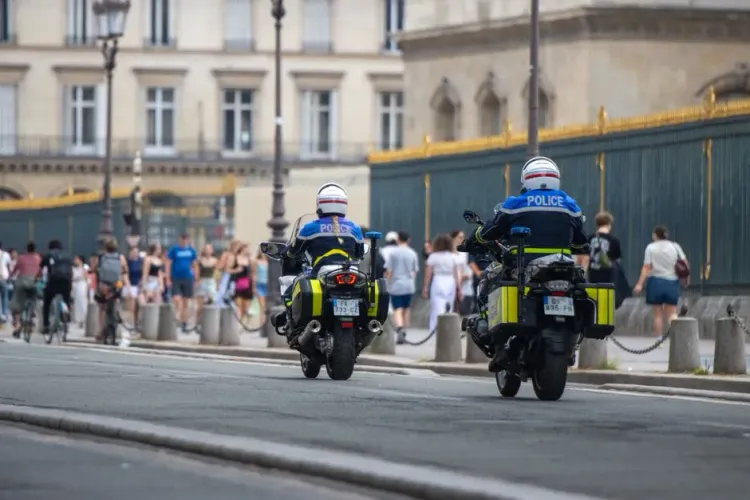
Authorities subsequently imposed curfews in parts of Paris, Lille, Nice and other cities, while Marseille prohibited gatherings and demonstrations, Reuters reported. On October 19, Macron rejected Interior Minister Laurent Nunez's offer to resign. Macron's office said the president instead directed him to stop the barricades and looting and explain what Macron called "intelligence and foresight failings".
By October 31, another round of demonstrations drew around 320,000 people across France, with more than 560 arrests reported by night. Near Porte de Charenton in Paris, protesters threw bottles and fireworks at officers, who used tear gas and stun grenades.
Macron has distinguished people seeking improvements in education and living standards from "those who destroyed, smashed and looted". Authorities have promised 3,000 additional substitute teachers and abandoned planned increases in certain university registration fees. Unions have called for further strikes and rallies on November 5.
Italian strikes and Spain's housing demands
Italian protesters have raised concerns about education, living costs and their future. Demonstrations in Milan, Turin and Bologna turned violent in mid-October, but a later nationwide strike was largely peaceful.
On October 30, the grassroots USB trade union's general strike brought tens of thousands of students and workers into dozens of cities, Deutsche Welle reported. Marches took place in Rome, Milan, Turin, Bologna, Genoa and Naples. Truck drivers, taxi drivers and farmers joined demands over low wages, higher fuel prices and military spending. Only minor scuffles were reported in Turin.
In Spain, the September eviction of an 87-year-old Madrid resident after a sharp rent increase sparked nationwide outrage. The German Marshall Fund identified her as Maricarmen Abascal, who had lived in the apartment since 1956 and was later allowed to return.
The housing pressures extend beyond her case. According to the German Marshall Fund, average house prices increased 37% in the Madrid region and 36% nationally from 2021 to 2025. Nationwide rents rose an average of 28.5% between 2015 and 2022, with larger increases in major cities.
Protesters are seeking rent freezes, protections against evicting vulnerable people and stricter rules for short-term and room rentals, The Guardian reported. Prime Minister Pedro Sanchez proposed emergency housing legislation that would regulate temporary rentals and extend an eviction ban through 2030. Parliament rejected it, prompting him to call a snap election for November 29.
Shared grievances, separate movements
The demonstrations share concerns, but they are not a single coordinated campaign, according to Sascha Riaz, a Presidential Assistant Professor at Singapore Management University. He described their spread as "diffusion rather than coordination": each country has its own demands and organizing structures.
AFP reported that protests in France and Italy inspired Germany's youth-led demonstrations. The BBC said organizers frequently use TikTok and Instagram, while students in Barcelona rallied around #InstitutsIndignats, echoing France's Lycees Indignés slogan.
Riaz linked the recurring grievances to sluggish economic growth and aging populations that put pressure on public finances. Young people's prominence, he said, reflects "a widespread sense of generational unfairness" as they form an electoral minority and see a growing share of public money going toward older generations, particularly through pensions. Genevieve Pons, president and director general of Europe Jacques Delors, also identified weak growth as a source of frustration.
Riaz stressed that the vast majority of demonstrators have been peaceful. Loosely organized movements, he said, struggle to exclude extremists and people intent on fighting or looting, while a violent minority can cause extensive damage and attract disproportionate attention. He also said police responses, especially in France, had aggravated tensions.
Governments face budget and election pressures
Meeting the demands will be harder than during earlier protest waves, Riaz said. Macron could offer concessions worth billions of euros during the Yellow Vest protests when borrowing was relatively cheap. Governments now have less financial room, and concessions could require cuts elsewhere.
"So it is hard to see how this ends soon, because what most governments can afford falls far short of what protesters are demanding," Riaz said.
France's unrest also comes ahead of its April 2027 presidential election. National Rally presidential candidate Marine Le Pen has supported the police, criticized the government's response and blamed the far left for the violence. Council on Foreign Relations senior fellow Matthias Matthijs said the unrest could give National Rally an opening to present itself as the party of law and order.