Authorization follows months of opposition
The prefect of Maine-et-Loire published the order authorizing the farm on October 8, 2026, after months of citizen opposition, according to Ouest-France / Le Courrier de l'Ouest.
Verrie Bad Trip has gathered more than 9,000 signatures opposing the project and says it will contest whether the approval complies with the rules. The Nantes administrative court reviews the legality of public decisions.
Opposition also came from the municipal councils of Verrie and Saumur, both of which voted against the project, according to PETA France's written submission to the prefect. In that submission, the animal advocacy organization formally objected to the proposed intensive 560-calf operation on animal-welfare and environmental grounds.
The future operator, Samuel Hermenier, spoke publicly on October 24, 2026, after remaining silent for months, Ouest-France / Le Courrier de l'Ouest reported. His comments followed the prefect's authorization earlier that month.
Indoor housing and calf welfare
The authorized site covers 19,030 square meters and includes buildings and a storage pit, according to Ouest-France / Le Courrier de l'Ouest. Its indoor rearing system would accommodate 560 calves simultaneously. With successive groups arriving and leaving, about 1,000 calves would pass through the farm annually.
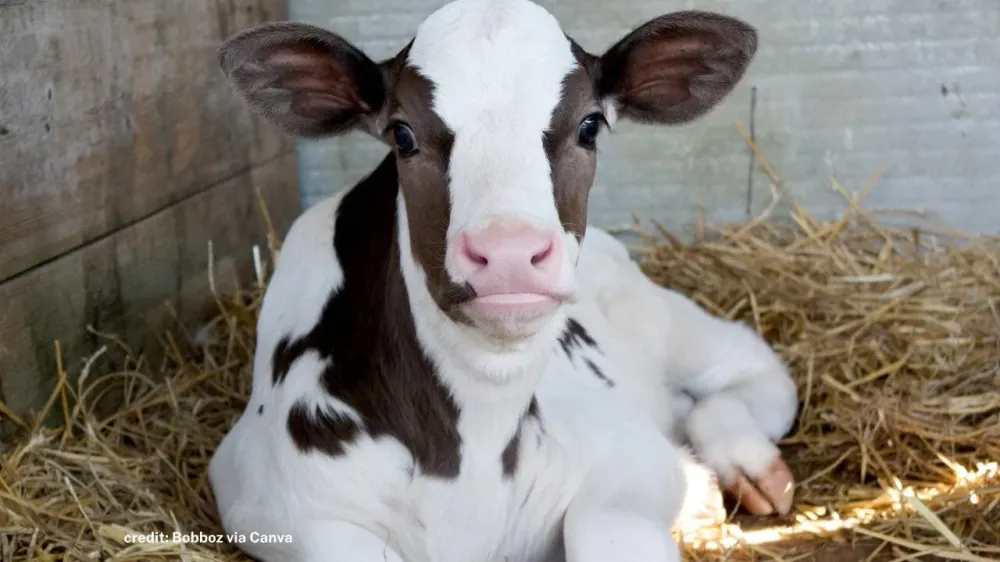
PETA France's submission describes four rearing buildings where the young calves would remain throughout their time at the farm. They would stand on slatted floors, made with gaps between the slats, and would have no access to pasture or other outdoor space.
Housing conditions matter for calves' ability to rest, move and engage in normal behavior. In 2023, European food scientists recommended keeping calves in small groups, providing comfortable bedding and allowing sufficient room for resting and play.
Concerns over manure storage and spreading
PETA France also warned of nitrate and ammonia pollution associated with the operation. According to its submission, the farm would generate large volumes of slurry, which would be held in an outdoor pit before being spread on agricultural land.
The farmland identified for spreading lies in several communes, including Verrie, Saumur, Gennes-Val-de-Loire and Doué-en-Anjou.