Women's rights and diplomatic recognition
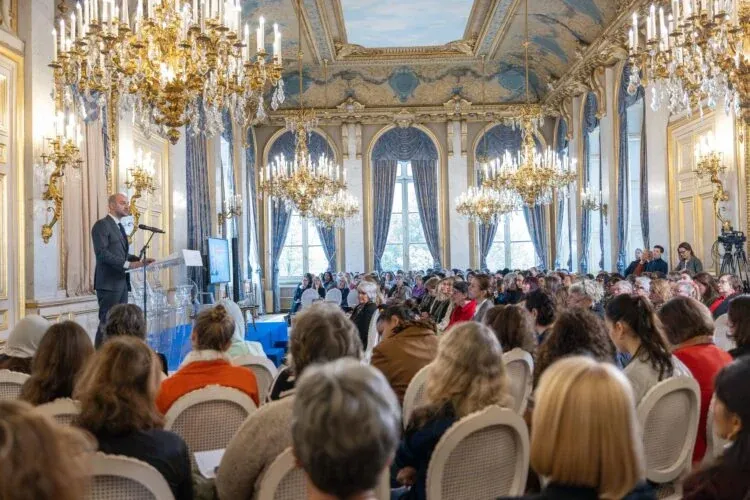
Barrot met with Afghan women at the Quai d'Orsay during the Marie Claire think tank's "Action for Equality" event. Pascal Confavreux, spokesperson for the French Ministry for Europe and Foreign Affairs, reported the meeting on X late Monday, November 2.
The event's Afghan speakers included former Afghan parliament head Fawzia Koofi, former minister Nargis Nehan, Hamida Aman of Radio Begum and Roya Sadat, according to the speech transcript published by France Diplomatie. The event's French title was "Agir pour l'Egalité".
The ministry spokesperson's statement warned that excluding women jeopardizes both the futures of millions of women and girls and the prospects for lasting peace and stability in Afghanistan. Under the Taliban, women have faced limits on schooling, work and participation in public life.
In his speech, Barrot said the French president had made an improvement in the situation of women and girls an indispensable condition for any eventual recognition of the Taliban regime.
Humanitarian aid, resettlement and education
Barrot outlined France's assistance to Afghans since the fall of Kabul. According to the spokesperson's statement, visas issued in neighboring countries have allowed 17,000 Afghan men and women to enter France.
His speech also detailed programs specifically supporting women. In 2025, France resettled 450 Afghan women through the "Avec elles, pour les femmes et les filles réfugiées" initiative, in cooperation with the UN High Commissioner for Refugees. Since 2021, it has awarded 60 scholarships for Afghan women to study in France.
France has allocated more than 187 million euros in humanitarian aid to Afghanistan since August 2021, Barrot said, following a principle that assistance should be provided by women and for women.
Among the assistance figures he cited were 100,000 health consultations, treatment support for 3,000 children younger than five with severe acute malnutrition, and access to quality education services for 35,000 girls. He also reported that six humanitarian aid operations had delivered nearly 100,000 metric tons of essential supplies to Afghans after the republic's collapse.
Investigations and ICC warrants
Barrot also described France's efforts with European partners to secure recognition and documentation of crimes against humanity in Afghanistan. He said those efforts led the UN Human Rights Council in Geneva to establish an independent international mechanism in October 2025.
The mechanism is intended to document and investigate the most serious crimes in Afghanistan, particularly violations of women's and girls' rights. France is working to make it operational as soon as possible, he said.
On the International Criminal Court, Barrot pointed to a November 2024 démarche filed jointly by France, Germany, Chile, Costa Rica, Spain, Luxembourg and Mexico. He described that action as a major step leading to arrest warrants for Taliban officials.
According to the ICC, its Pre-Trial Chamber II unsealed four warrants on October 5, 2026. Issued on July 8 and September 9, 2025, the warrants concern the crime against humanity of persecution on gender and political grounds.
Those named are Taliban Supreme Leader Haibatullah Akhundzada, Chief Justice Abdul Hakim Haqqani, Education Minister Habibullah Agha and Higher Education Minister Neda Mohammad Nadim.
Taliban rejection and UN demands
The Taliban rejected the warrants. The Independent reported that chief spokesman Zabihullah Mujahid said in an October 5, 2026, statement that Afghanistan recognized no court bearing the title "International Court" and attached no significance to its positions.
That same day, the UN Human Rights Council adopted a resolution calling on the Taliban to repeal its policies against women. According to The Independent, the resolution expressed concern about the "grave, worsening, widespread and systematic oppression" of women and girls in Afghanistan and said the discrimination should "shock the conscience of humanity".