Music and demands for change on the streets
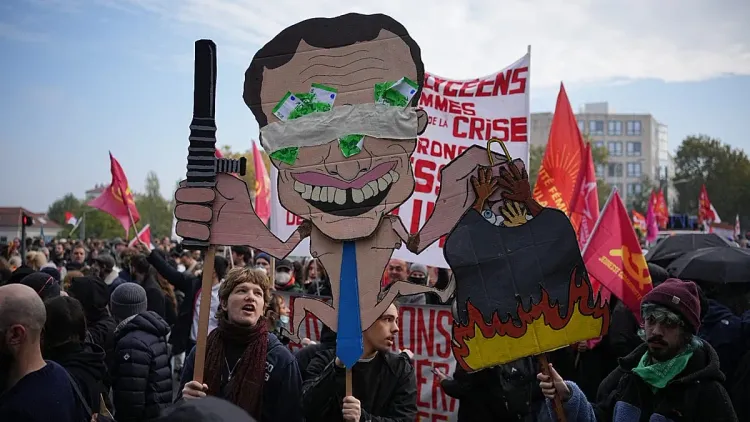
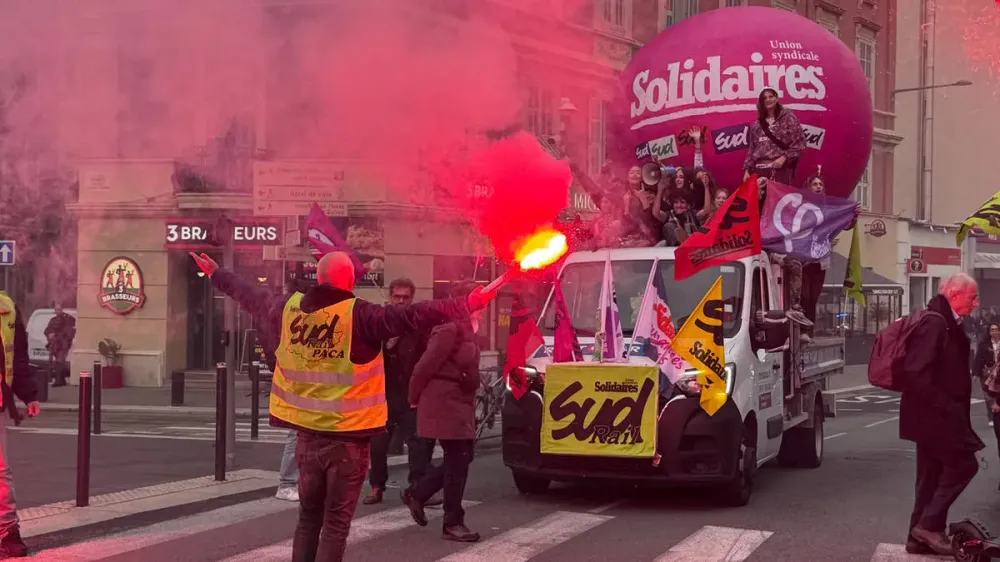
Bands, handmade signs and anti-racist chants accompanied the procession from Nice-Ville station to Place Masséna. Marchers took Avenue Thiers, Avenue Gambetta, the Promenade des Anglais and Avenue Max-Gallo, with a heavy police presence along the route.
The CGT, CFDT, FO, UNSA and FSU organized the march as part of nationwide action on wages, public services, jobs and industry. Participants called for higher pensions and better conditions in education, while chants opposing the far right and the National Rally reflected concerns about equality as well as living standards.
The gathering closed with songs, chants and dancing in Place Masséna. Riviera Radio reported that the march had remained peaceful, with no incidents reported at the time of publication.
Students describe the conditions behind their protest
For students interviewed before the procession, shortages of teachers and basic classroom resources were immediate concerns. A pupil from a town near Nice, who asked not to be named, also described mold and a feeling that students' concerns were not always heard.
"I want more teachers, more chairs, and I want the school to be less cold in winter," the pupil said.
A second anonymous secondary school student reported mold on ceilings, deteriorating classrooms and too few teachers. Long breaks between classes, the student said, kept pupils at school into the early evening without adding teaching time.
"Instead of finishing at 14:15, we finish at 18:00 because we have three hours of break in between," the student said.
Household budgets and workplace safety
An organizer's speech connected rising rents and energy bills with concerns about wages and pensions. The speaker warned of job losses and criticized the government's proposed budget, arguing that it would add to the pressure on vulnerable people and those affected by illness.
The minimum wage was also among unions' concerns ahead of the national strike. According to AFP reporting carried by Dawn, France's minimum wage has received no discretionary increase since 2012.
An archaeology student studying in Nice attended to draw attention to deaths at work. The student said further protests were needed because the concerns that had brought people into the streets remained unresolved.
"We have to show up," the student said. "We have to say that we are still not satisfied with our lives."
Protest rights and policing
Guillaume, who is originally from Alsace and now works in Nice, said reports of violence against protesting secondary school pupils were part of his reason for joining. He also objected to restrictions on demonstrations and attempts to keep marches away from city centers.
A final-year pupil at the lycée in Valdeblore said he had returned to protest after being detained before an earlier banned demonstration in Nice. He said police arrested him while he was talking with friends and held him in custody for 24 hours. Asked why he had come back, he replied: "I have to fight for my rights."
Route restrictions were also disputed in Paris. The prefecture prohibited a planned November 5 march between Place de la Bastille and Place de la Concorde, authorizing an eastward route away from the city center instead. AFP reported that several unions condemned the bans as repression of the freedom to demonstrate, and some lodged last-minute appeals.
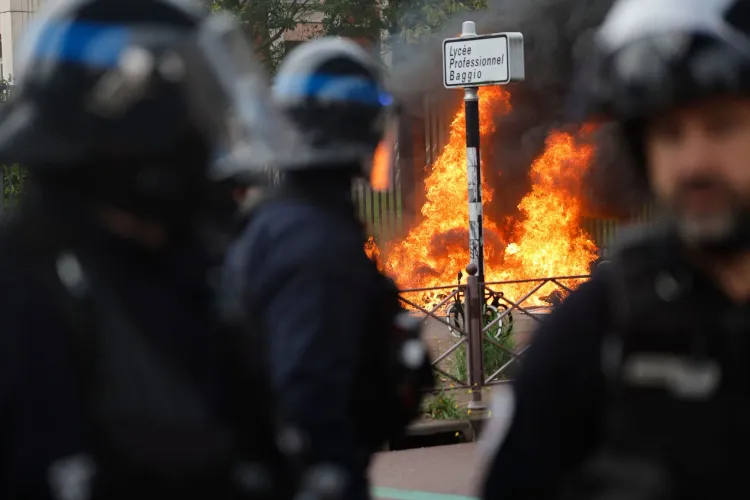
Ahead of the nationwide action, Interior Minister Laurent Nunez announced on November 4 that 70,000 police officers and security forces would be deployed across France. He promised an "extremely firm response" to violence or disorder, according to AFP.
A nationwide mobilization
Before the November 5 protests, French authorities projected attendance of 500,000 to 700,000 across the country, including up to 80,000 in Paris, AFP reported through Dawn. Those figures were forecasts, not final turnout counts.
CFDT leader Marylise Léon anticipated participation comparable to the 2023 pension-reform demonstrations, which drew more than one million people. AFP also reported similar youth-led protests in Denmark, Germany and Italy in the weeks leading up to November 5.
From school blockades to wider protests
The school movement that contributed to the November mobilization began in Créteil, a Paris suburb, on September 17, 2026. Teachers at Lycée Antoine-de-Saint-Exupéry struck over staffing shortages, and pupils started blockading the school the next day. Within two weeks, the protests had reached hundreds of secondary schools and dozens of universities, according to TheJournal.ie.
BBC News reported that French officials put the toll from the school protests at 440 arrests, mostly of minors, and 76 injuries on September 30. The secondary school students' union USL said up to 400 of France's 3,700 lycées had been blockaded.
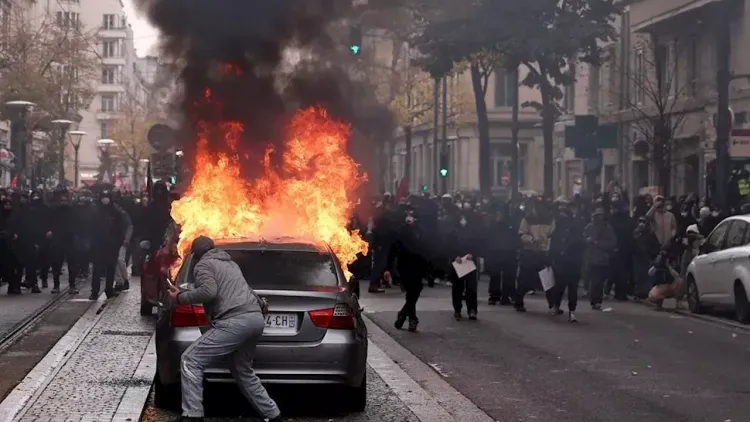
The nationwide demonstrations on October 17 brought much larger crowds and serious disorder. The interior ministry estimated attendance at 550,000, including 110,000 in Paris, while the CGT put the national figure at 800,000. AFP described the rioting as the worst France had seen in years.
Authorities reported about 2,400 arrests by the following Sunday, and the interior ministry said roughly 1,000 officers had been injured. The Retail and Trade Federation estimated damage to about 1,500 businesses. In Limoges, fire devastated the 19th-century town hall, according to TheJournal.ie.
As the school protests grew into broader action over living costs and public services, the government announced measures covering teacher replacements, school buildings, class sizes and university admissions. Student organizations have welcomed some initial steps but say their demands remain only partly met. They have called for the protests to continue.