Police deployment and expected disruptions
Reports put the planned nationwide police deployment at about 70,000 officers. France's domestic intelligence service estimates that demonstrations outside Paris alone will draw between 500,000 and 700,000 people.
At a news conference following Wednesday's cabinet meeting, government spokeswoman Maud Bregeon said: "We are extremely vigilant because it is out of the question to relive October 17."
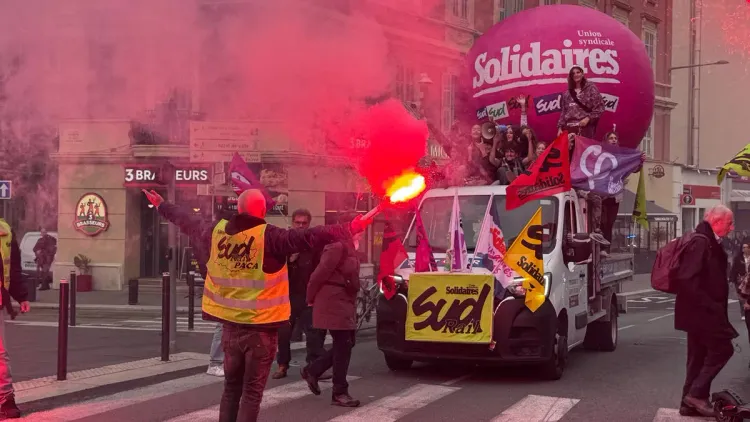
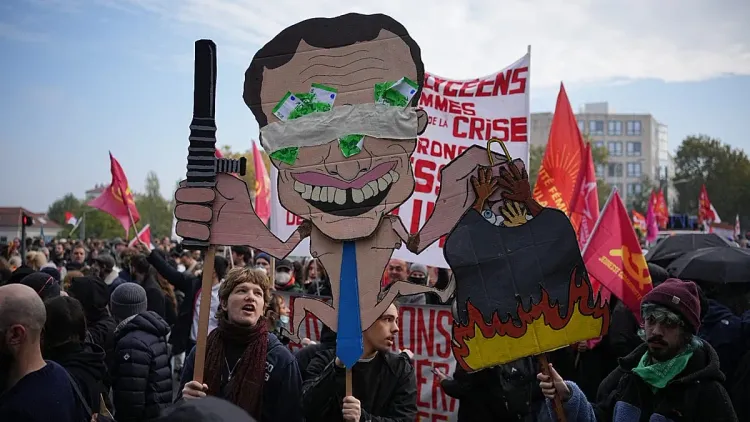
The mobilization was called by trade unions, including the left-wing CGT, with support from student groups. The Education Ministry expects 17.5% of public primary school teachers to strike, and unions have warned that rail services and public transportation will likely be disrupted. Students planning to march point to poor school conditions and uncertainty about their futures.
The strikes follow earlier industrial action in the energy sector. In mid-September, a power sector strike lowered electricity supply and reduced delivery capacity at Dunkirk LNG, the country's largest liquefied natural gas terminal.
School protests and the budget dispute
The movement started with classroom boycotts on September 21, 2026, in deprived areas of Paris, according to Al Jazeera's October 6 report. Students initially protested teacher shortages and poor school conditions; the campaign then spread across France and developed into a broader challenge to Macron's government.
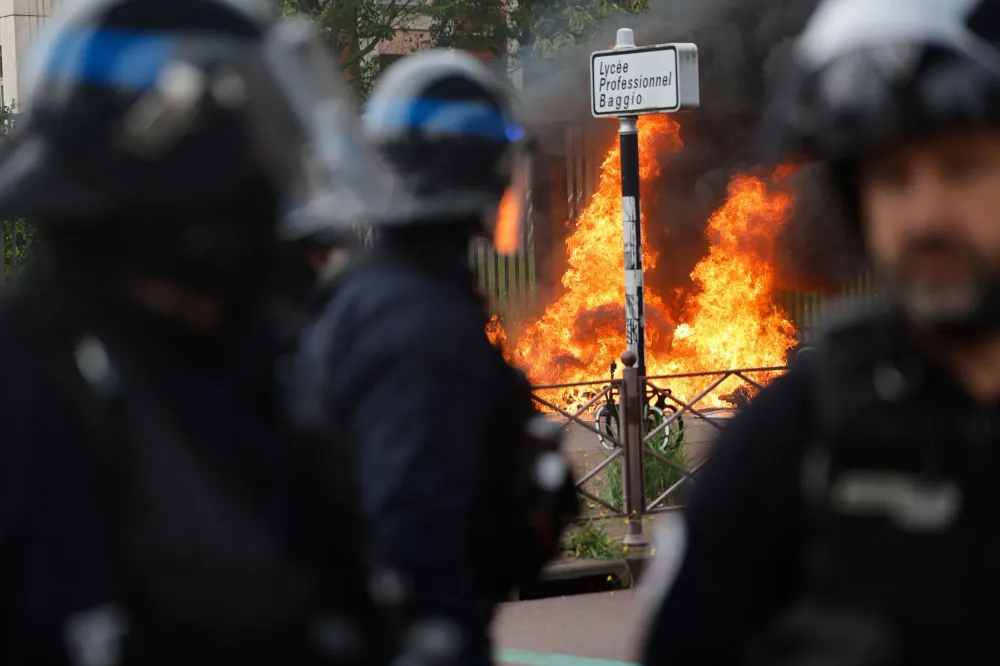
Figures cited by Al Jazeera showed at least 6,100 arrests by early October. At least 190 high school students and 78 teaching staff had been injured, while 24 schools had been burned or ransacked.
Public sector workers are also challenging the proposed 2027 budget. Al Jazeera reported that the cost-cutting plan seeks 54 billion euros, or about $61.3 billion, in savings. Unions particularly oppose a proposed salary freeze intended to save about 2 billion euros, or $2.27 billion.
The toll of the October 17 violence
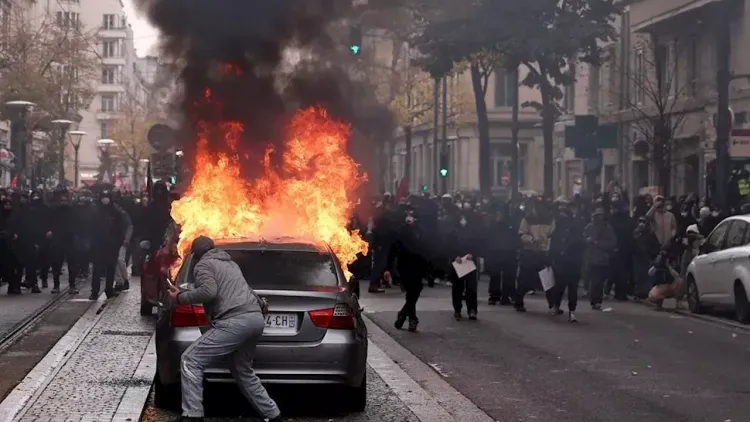
Earlier demonstrations over these issues led to France's worst civil unrest in years. On October 17, rioting and looting overwhelmed unprepared security forces, leaving shops and public buildings damaged nationwide and drawing criticism of Macron's response.
In an October 18 report, Reuters cited Interior Minister Laurent Nunez as saying that police had arrested 2,400 people across France and that nearly 1,000 officers had been injured. A protester died after suffering a cardiac arrest during the October 17 demonstrations in Paris.
The town hall in Limoges was set on fire, and its clock tower collapsed. Reuters described the destruction as recalling the 2019 fire that devastated Notre-Dame Cathedral in Paris.
Retailer Carrefour reported damage at 50 stores, 20 of which were looted. Chief Executive Alexandre Bompard told BFMTV that the damage amounted to tens of millions of euros, according to Reuters.
The government has stood by police tactics but said any abuses would be investigated.
Unrest ahead of the presidential election
The weeks of unrest have shaken the government and dominated the political agenda about five months before the presidential election. Candidates are positioning themselves for the race, while opposition parties seek to draw support from dissatisfaction with living standards and government policy.
An official close to Macron pointed to a decline in high school blockades this week compared with earlier in the crisis. "The goal in the coming weeks is to get the river that overflowed back into its bed and to launch the presidential election in the calmest possible conditions," the official said.
According to Wikipedia's article on the 2027 French presidential election, the first round is scheduled for April 18, 2027. A runoff will follow on May 2 if no candidate secures a majority. Macron cannot run because the constitution bars presidents from serving more than two consecutive terms.
The same article says a July 7, 2026, ruling by the Paris Court of Appeal cleared the way for Marine Le Pen to stand. The court upheld her embezzlement conviction but reduced her ineligibility sentence to 45 months, with 30 months suspended, and ordered one year of electronic monitoring.
On October 11, voters from the Socialist Party, Place Publique and the Republican and Socialist Left chose Raphaël Glucksmann as their joint presidential candidate, according to the article. He won 66.13% of the primary vote, defeating Olivier Faure, Ségolène Royal, Emmanuel Maurel and Jérôme Guedj.