A coalition defending a fictional ally
Orion 26 centered on a French-led coalition defending the fictional country Arnland. Its expansionist neighbor, Mercure, had used hybrid operations to try to block Arnland from joining the European Union. Within the exercise scenario, France assumed leadership of the coalition on January 6, 2026, at Arnland's request and in coordination with other allies, according to the ministry.
Mercure also held an enclave named "Kalindax" in southwestern Arnland. Le Parisien compared that setup with NATO concerns about possible Russian destabilization of Baltic states with large Russian-speaking minorities.
The exercise took place during the fourth year of Russia's invasion of Ukraine, amid increasing hybrid warfare operations across Europe. NATO Secretary General Mark Rutte had warned that Russia could target the alliance within five years.
The ministry described the training as preparation "for the most complex situations in hybrid and contested environments," saying it was particularly important "in a context where engagement in a high-intensity conflict could become a reality."
From air operations to NATO command
The French Air and Space Force opened the dynamic phase on February 10. Operations used seven air bases: Mont-de-Marsan, Cazaux, Orléans, Cognac, Avord, Istres and Tours. The Atlantic coast air maneuvers were scheduled to continue through March 1, testing whether forces could establish air superiority and defend French territory against external threats.
The naval schedule called for amphibious operations around Saint-Nazaire and Brittany on February 20 and 21, with roughly 700 troops and 100 vehicles deploying near Quiberon in Morbihan.
NATO took command in April to test cooperation among European forces. The ministry said the final stage, Phase 4, used an Article 5 collective-defense scenario and demonstrated France's capacity to lead and command an allied operation in high-intensity combat. The Army's planned tasks following the command transition included large-scale airborne operations and deployments deep into contested areas.
Forces, equipment and medical training
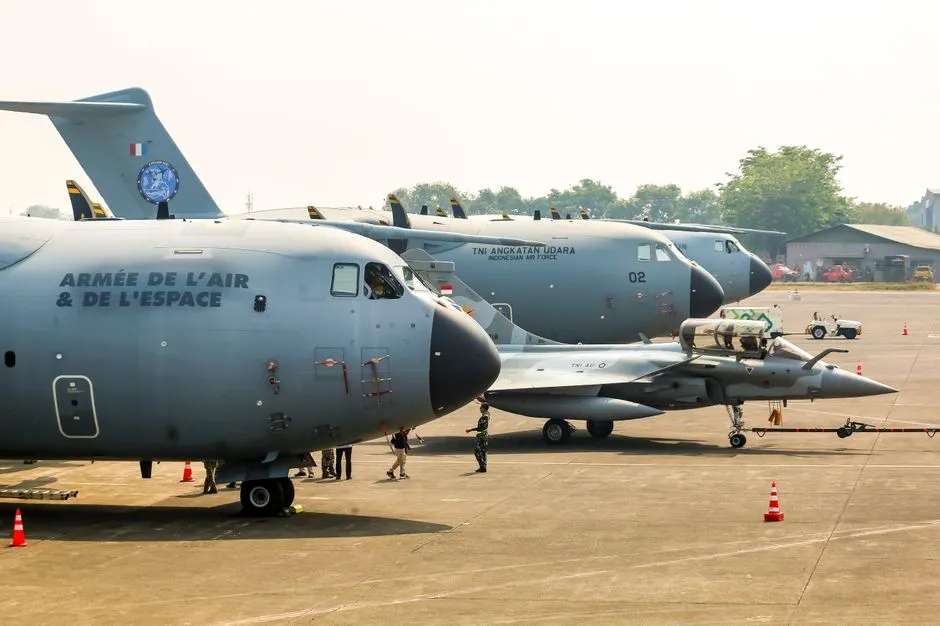
The exercise brought together participants from 24 allied nations, among them the United States, Japan, Switzerland and Morocco. Its equipment included 1,800 tactical vehicles, 30 helicopters and about 800 drones, reflecting the role of unmanned systems in modern warfare. The U.S. Army's account also listed 25 ships, including the aircraft carrier Charles de Gaulle, and 140 aircraft.
French reservists from every military branch took part in the training. Virtual network and space-based exercises tested cybersecurity capabilities alongside the field operations.
Battlefield medicine formed a substantial part of Orion 26, covering casualty care, treatment and evacuation, according to the U.S. Army. A team from Medical Readiness Command, Europe, observed this work. Rather than relying on separate role players or manikins, the French approach used front-line personnel, including infantry troops, to portray casualties.
France's broader readiness goals
The Orion series dates to 2021, according to RFI. Its previous edition, Orion 23, involved 12,000 troops, including NATO allies, and was described in 2023 as France's largest military exercise to that point.
The ministry said Orion 26 addressed the need to intensify French military preparation and put contemporary skills, tactics and technological innovations to the test under high-intensity combat conditions.
Defense News reported in April 2026 that France aimed to have a division ready for war in 2027 and a combat-ready corps by 2030. The report also noted that Rapid Reaction Corps-France had been renamed the 1st Army Corps in January 2026, restoring a Cold War-era designation.