Violence follows largely orderly marches
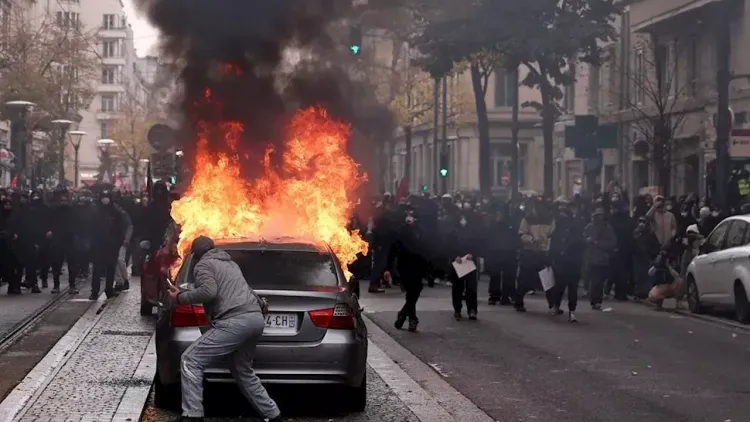
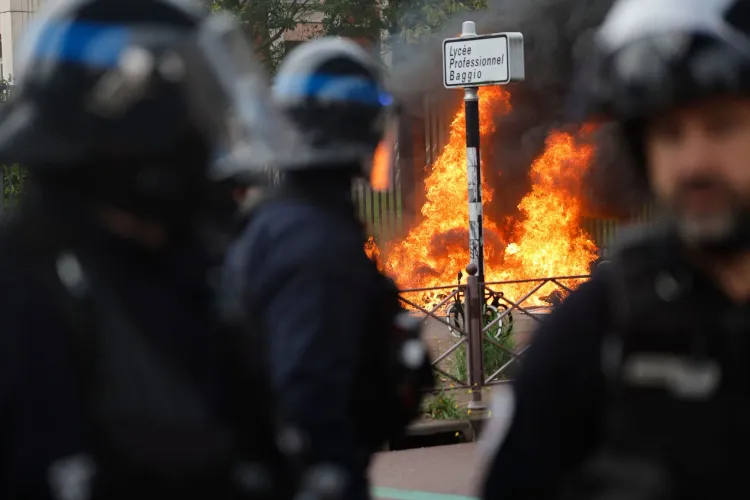
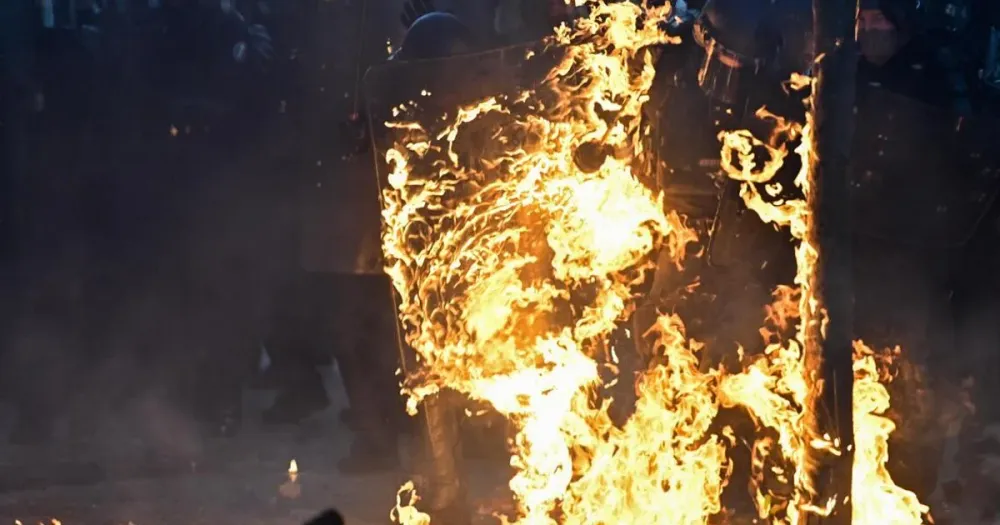
The Interior Ministry's late nationwide arrest count reached 565, up from the 520 Nunez reported at 7 p.m. GMT. In Paris, four police officers and one gendarme were injured; three of the five suffered burns from Molotov cocktails.
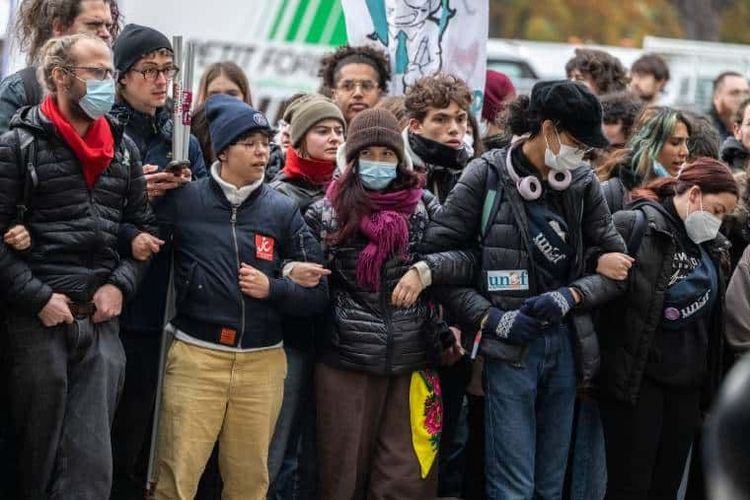
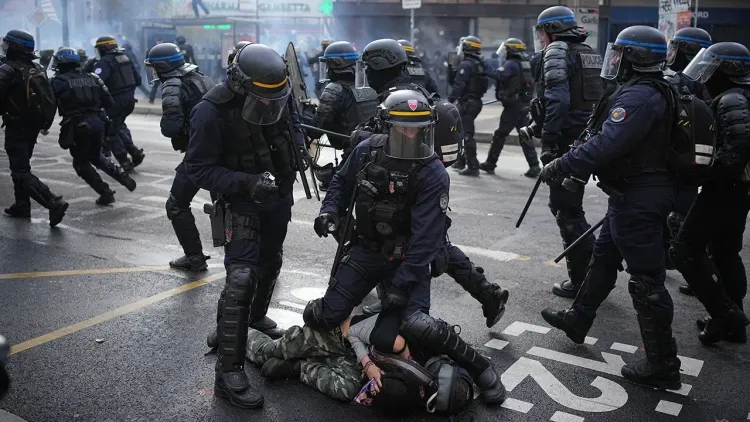
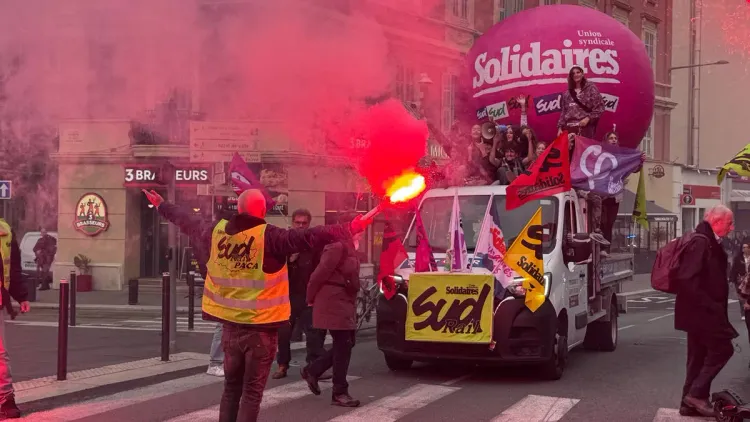
Nunez distinguished the largely orderly marches from the violence around them. He blamed far-left extremist groups for attacks on security forces, described some protesters' violence as "extraordinary" and called the firebomb attack on the Paris officer an "attempted murder".
The Paris confrontation began when a procession along the city's outskirts reached its endpoint. AFP reporters witnessed dozens of black-clad, masked people hammering paving stones loose and throwing them toward police. Officers used tear gas and made repeated baton charges. According to the Paris police prefecture, several hundred rioters attacked security forces with projectiles.
Officers in Lyon also fired tear gas after coming under a barrage of projectiles. In Toulouse, several thousand people joined an unauthorized protest that police confronted with water cannon. The Interior Ministry said "radical elements" had tried to reach central areas of Bordeaux, Toulouse and Marseille "with the aim of carrying out vandalism and looting".
Marine Le Pen, the far-right leader, demanded on X that those responsible for the firebomb attack be "punished with the utmost severity". She described the images of the burning officer as "unbearable". Authorities planned an 11 p.m.-to-6 a.m. curfew for Oct. 31 and Nov. 1 in the central Paris neighborhoods of Republique and Chatelet-Les Halles.
Turnout falls as protesters challenge restrictions
France deployed 70,000 police officers and gendarmes for the day's demonstrations. In Paris, a Council of State decision overturning a lower court ruling kept the march off central routes. The country's highest administrative court required participants to use the outer boulevards between Porte de Bagnolet and Porte de Charenton.
Earlier, the march through eastern Paris had featured Halloween costumes, including Spider-Man and Frankenstein, while a helicopter flew overhead. A placard declared: "Dressed up as an angry citizen for Halloween."
Officials counted about 320,000 demonstrators nationwide and 70,000 in Paris. Youth organizations put participation much higher, at nearly half a million across France and 200,000 in the capital. Jean-Luc Melenchon, who leads the far-left France Unbowed party, attended the Paris march and welcomed its turnout.
The official national figures show attendance declining over three Saturdays: the Interior Ministry counted 550,000 people on Oct. 17, 410,000 on Oct. 24 and 320,000 on Oct. 31.
Restrictions on where people could march were themselves a grievance. Video game developer Alice Hien said moving demonstrations away from city centers and banning many protests amounted to an attack on freedom.
In Lille, 47-year-old Aurelie Herrmann danced to emphasize a different side of the demonstrations. "I dance because on television they only show damage and destruction, whereas you can perfectly well demonstrate in good spirits," she said.
From school blockades to a broader movement
The mobilization began in late September 2026 with high-school students blocking their lycées, or upper secondary schools. They objected to overloaded schedules, teacher shortages and deteriorating buildings. Fishermen, in a separate action over diesel prices, blocked ports and a fuel depot. The student protests subsequently joined a Yellow Vest cost-of-living day on Oct. 17.
The resulting movement includes Yellow Vest activists, unions, high-school students and university students. Its original concerns were living costs, inequality and worsening learning conditions. A security crackdown and serious injuries among protesters widened its demands to encompass civil liberties and the right to demonstrate.
Oct. 17 remains the wave's most violent protest day. The Interior Ministry eventually recorded 2,628 arrests nationwide. An earlier tally put injuries among police officers and gendarmes at 997, including seven serious cases. About 3,000 businesses were damaged or looted. Looting hit Paris, Lyon, Bordeaux and Lille, while a fire gutted Limoges city hall.
The price pressures behind the cost-of-living protests include a 21.3% annual increase in energy costs. Final figures released by the statistics agency INSEE on Oct. 15 showed overall consumer prices rising 3.1% in the year to September, the highest inflation rate since January 2024. On Oct. 21, diesel averaged €2.37 per liter.
France's unrest is part of a wider European protest wave this fall over fuel prices, education, public services and housing. Italy and Albania have also experienced unrest, housing protesters have established tent camps in Spain and Portugal, and protests have flared in Serbia.
Education concessions and a proposed financial penalty
The government announced an education package on Oct. 26 that would cap high-school classes at 28 students and replace Parcoursup, the university admissions platform, by 2028. The plans also provide for 500 additional teaching positions, another 500 posts for psychologists, nurses and social workers, and 15,000 more higher-education places. High-school renovations would receive €4 billion in loans.
The finance minister estimated the package's cost at about €5 billion, with spending cuts intended to offset it. The government is seeking to reduce its deficit from 5.4% of gross domestic product in 2026 to 5% in 2027.
A separate response to the violence advanced in the Senate on Oct. 28. Senators voted 229-105 for the "rioters pay" bill, known in French as casseurs-payeurs. It would allow the state to seize welfare payments, including housing aid and the RSA basic income, from people participating in violent gatherings. Damages would be capped at €10,000 per person. The National Assembly had not yet considered the measure.
The government's room for further spending concessions is limited: France, the eurozone's second-largest economy, is near recession and faces pressure to curb its debt. The unrest also comes ahead of a presidential election, with Le Pen leading opinion polls. The government set the two voting rounds for April 18 and May 2, 2027, in a decision announced July 1, 2026.
Students and unions prepare November action
Students who objected to the refusal to authorize a march through central Paris pledged more high-school and university blockades the following week. Their plans include Nov. 5, when unions have called a demonstration.
Five union confederations—CFDT, CGT, FO, Unsa and FSU—have also called a nationwide strike for Thursday, Nov. 5. Their demands concern wages, pensions, public services and budget cuts totaling about €54 billion, or about $60 billion.