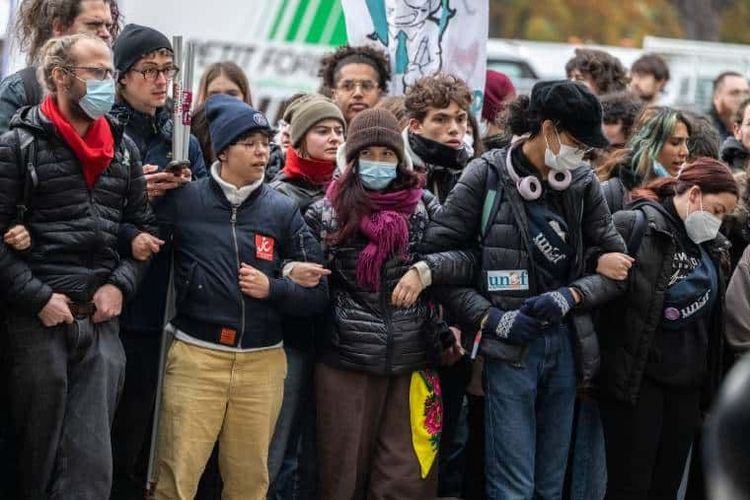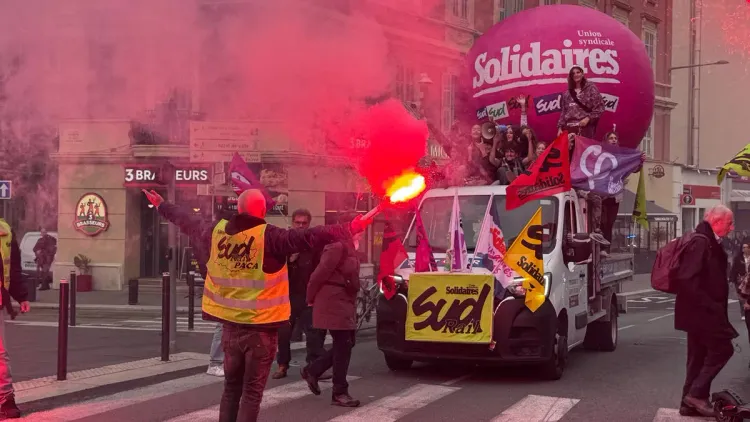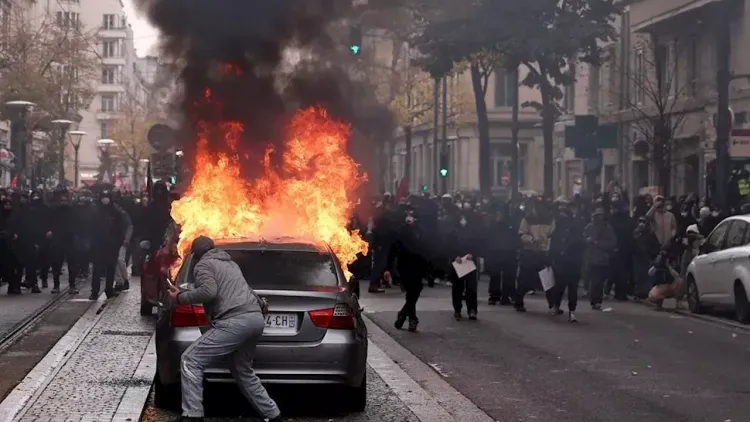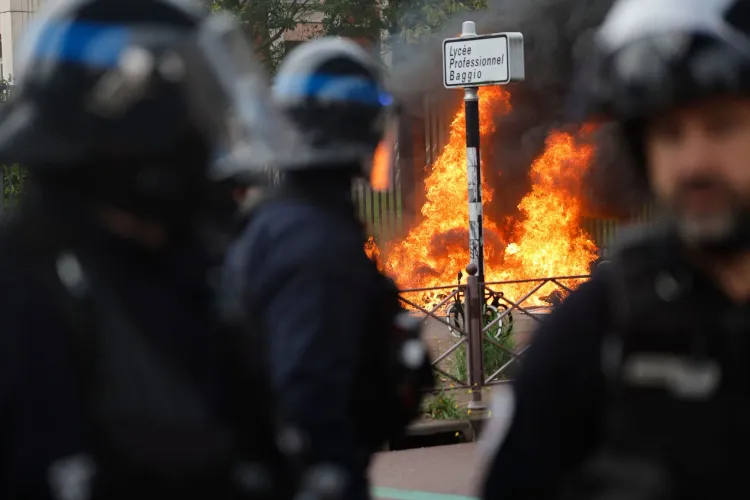
Closures, clashes and arrests
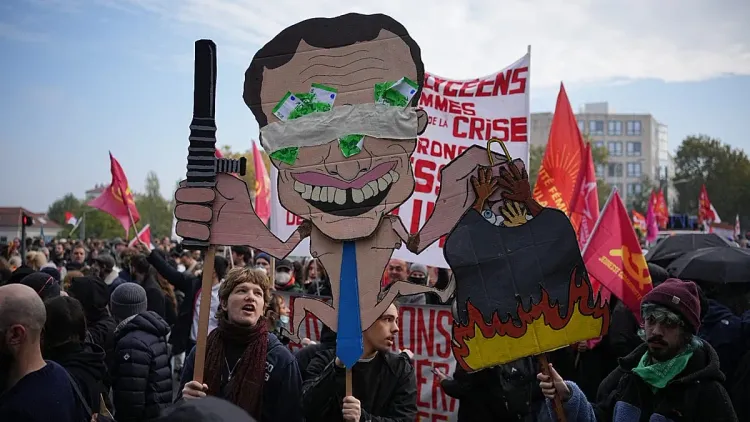
The demonstrations followed calls for mass action by left-wing groups and marked the largest protest day since the current wave of unrest began in September. An early count from an official close to Interior Minister Laurent Nuñez recorded about 270,000 participants at 180 union-organized rallies outside Paris; the later national estimates included the capital.
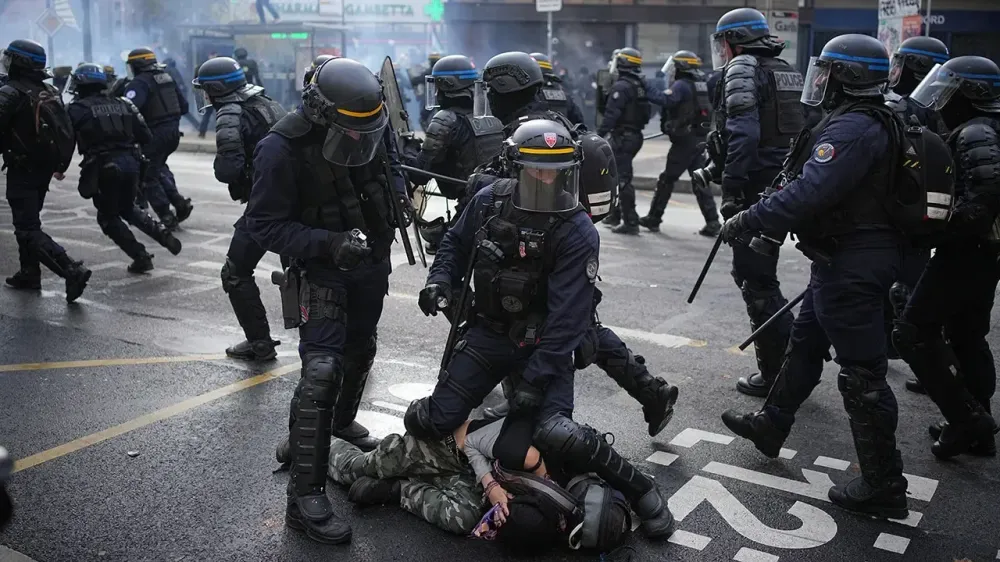
Authorities deployed 70,000 police officers, with Nuñez saying armored vehicles, drones and helicopters would support them. In Lyon, officers fired tear gas and charged demonstrators, Reuters reported. Brittany authorities accused some protesters in Rennes of throwing steel balls at police and said masked people had tried to obstruct roads.
At Lycée Françoise in Tournefeuille, near Toulouse, a fire broke out after fireworks were aimed at an office housing student services, according to the Interior Ministry. Education Minister Édouard Geffray called it a "deliberate act of arson." The Interior Ministry reported at least 448 detentions nationwide.
School disruption extended well beyond the fire. The Associated Press reported that about a third of French high schools had closed or could not operate, with student blockades affecting some and teacher strikes affecting others.
Paris visitors found the Eiffel Tower closed. Ashley Bradshaw, a tourist from Utah, also said a strike had prevented her from visiting the opera. "It was a bummer, but we're happy that we get to just be here in Paris," she said outside the tower.
The U.S. Embassy had issued a security alert before the demonstrations, advising Americans in France of potentially severe disruptions, curfews imposed at short notice and the possibility of violence.
From a school strike to a national movement
Students and teachers at a high school southeast of Paris began the movement in late September 2026 by striking over staff shortages. Protests subsequently spread across the country.
CGT leader Sophie Binet urged a large turnout for Thursday's action. "We need to turn up in big numbers on the streets today," she said, according to Reuters.
The mobilization followed violent demonstrations in October. Outgoing President Emmanuel Macron blamed "ultra-left groups whose aim is to bring down the Republic" for fueling that unrest.
The Interior Ministry said roughly 2,400 people were arrested during the October 17 unrest and about 500 police officers, firefighters and paramedics were injured. Damage affected around 1,500 businesses, with estimated losses running into hundreds of millions of euros.
Unions press for minimum-wage increases
Major French unions warned that the country was approaching recession while employers planned more layoffs. They argued that pay and pensions were failing to keep pace with household expenses.
"Fuel, food products, rent, gas, electricity… everything's going up except wages and pensions," the unions said in a joint statement quoted by the AP.
The CGT called for an immediate 10% rise in the minimum wage. The CFDT sought an additional €100 a month, or about 7%. A CGT official said the government's increase, which took effect November 1, amounted to only about €15 for someone earning the minimum wage.
Those demands come as lawmakers in the National Assembly debate a 2027 budget with roughly €45 billion ($50.5 billion) in projected cuts. France's high debt and deficit constrain the government's ability to meet protesters' demands.
Election campaigns and planned talks
Political parties are intensifying their campaigns for next May's presidential election, and contenders are seeking support from the expanding movement. Far-left politician Jean-Luc Mélenchon, Green leader Marine Tondelier and moderate-left representative Raphaël Glucksmann were among the presidential candidates who joined Thursday's Paris march.
The Constitution prevents Macron from running for a third consecutive term. The AP described far-right politician Marine Le Pen as the leading candidate.
Prime Minister Sébastien Lecornu was scheduled to meet employers and unions on Monday, November 9, for a "social conference" focused on purchasing power and wages, his office said.