France's protests and budget pressures
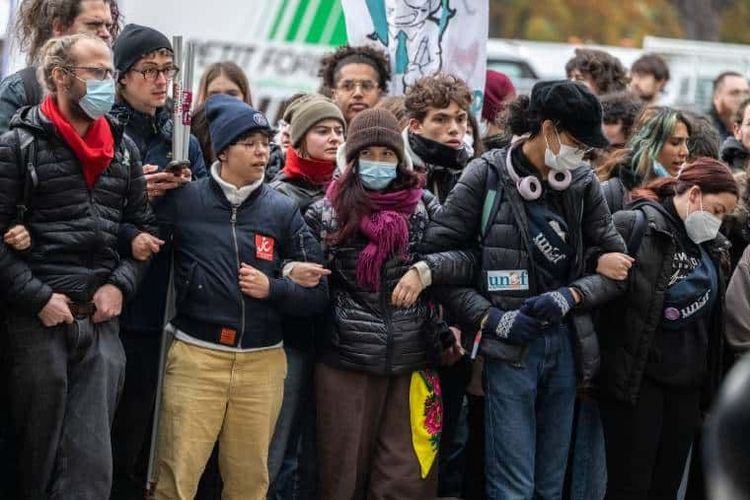
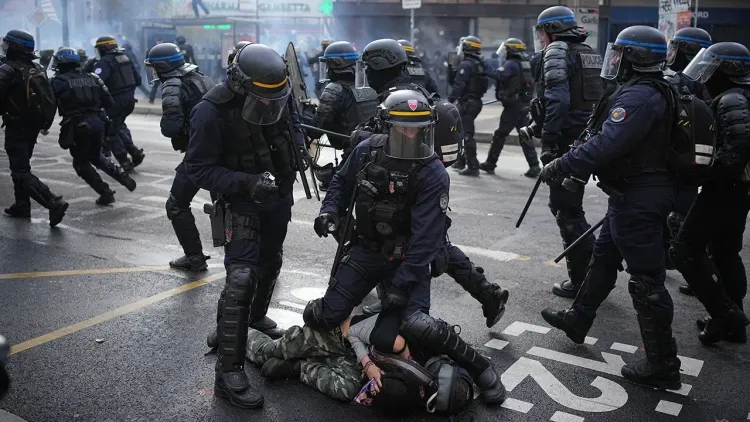
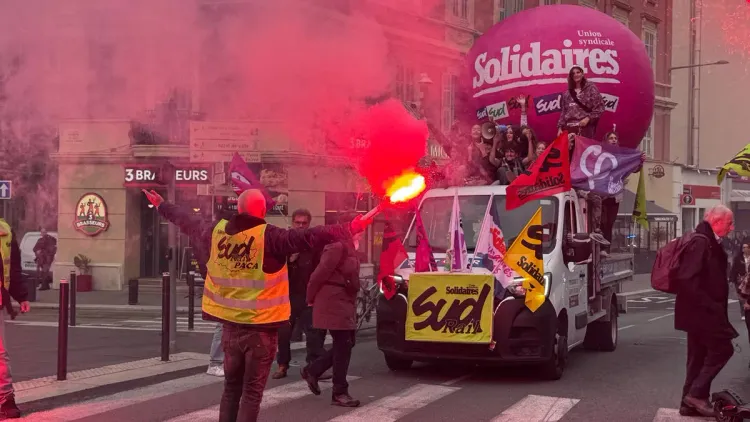
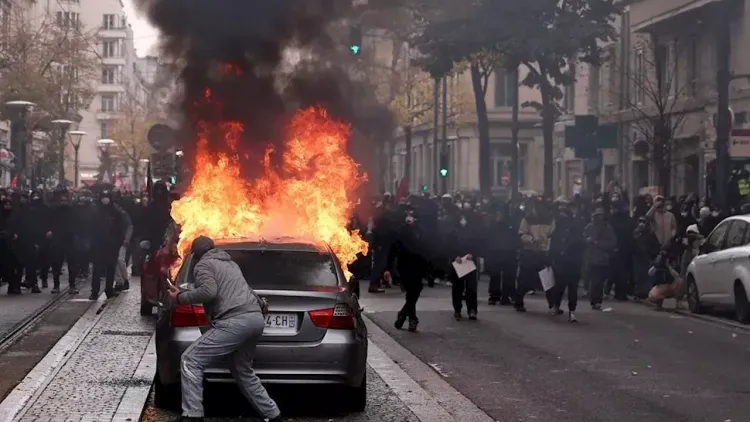
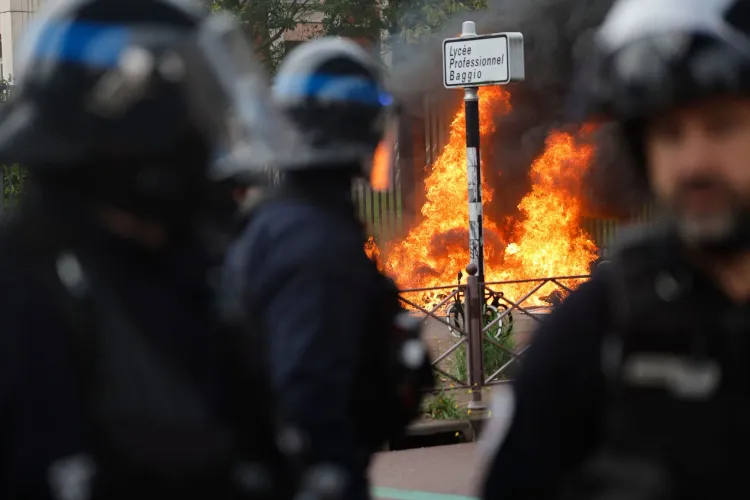
France's unrest has brought together grievances over pensions, immigration, policing and living costs. More than 550,000 people participated in nationwide demonstrations on October 17, 2026, according to Interior Ministry figures reported by Al Jazeera. Prime Minister Sébastien Lecornu said authorities arrested 1,200 people and 150 police officers were injured. In Limoges, masked protesters set a fire that largely destroyed the town hall, a building more than 140 years old.
The protests coincided with pressure on French financial markets. Reuters reported a 4.9% yield on the country's 10-year government bond on October 19 and a 1.5% decline in the CAC 40 index. Two days later, the benchmark 10-year bond, known as the OAT, briefly yielded more than 5% for the first time since 2002, CNBC reported, as France faced violent protests and a budget deadlock.
France is subject to the EU's excessive deficit procedure. CNBC reported that its deficit ended 2025 at 5.1% of GDP, compared with the EU's recommended 3% target. Lecornu sought €54 billion in spending cuts for the 2027 budget, while Finance Minister Roland Lescure said the government was prepared to use Article 49.3 to bypass parliament and force the budget through.
Subramanyachary identifies higher government borrowing costs as one potential constraint on spending for infrastructure and essential public services.
Grievances extend across Europe
Economic pressures, disputes over migration, political extremism and weakening institutional trust also underlie tensions in Germany, the United Kingdom, Italy and Belgium. Demonstrations in Spain, Portugal and Belgium have focused on fuel costs, housing and public services. Most protests remain peaceful, although arson, looting and confrontations with police pose risks to public safety and businesses.
In Milan on October 17, at least two police officers were injured and about 50 demonstrators were detained, many of them minors, according to LaPresse, the Italian news agency cited by Al Jazeera. The same Al Jazeera report described Portugal's housing pressures: home prices have more than doubled since 2017, and rents on new leases have risen by nearly as much.
Alberto Alemanno, a professor of EU law and policy at HEC Paris, told Al Jazeera that the "early stages" of protest movements were emerging in Greece, Germany and Austria in October. He described the next 12 months as an "unprecedented super-cycle of national elections," with votes scheduled in Spain, France, Italy and Poland.
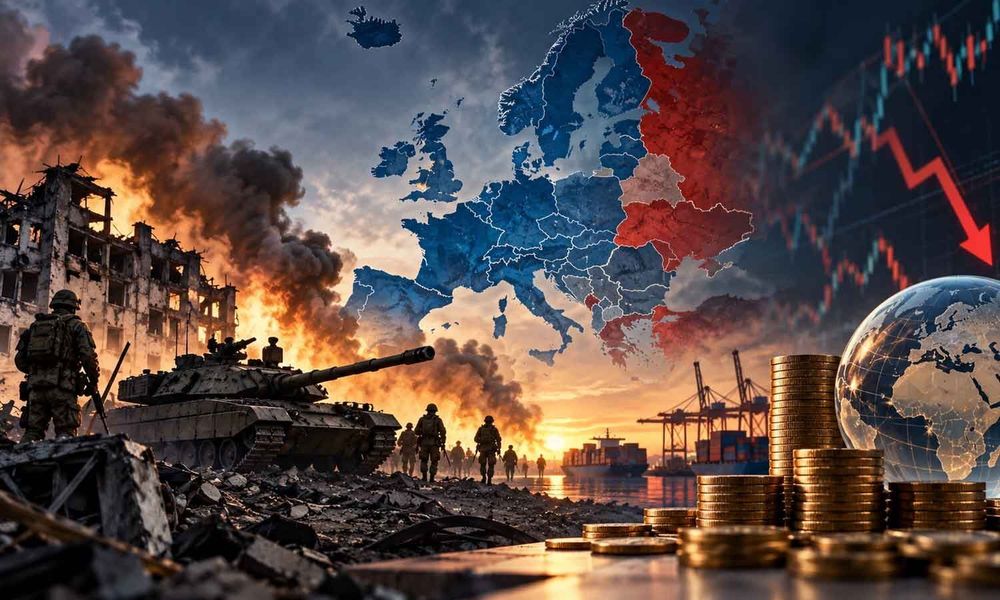
How instability could reach the global economy
Europe's exposure matters beyond its borders because of its manufacturing, trade and financial networks. Its industries include automobiles, aerospace, pharmaceuticals, machinery, luxury goods and renewable energy. Germany is a manufacturing leader, France has a diversified economy, and the Netherlands is a major logistics and trading hub. The 27-member EU operates one of the world's largest single markets, while the euro ranks behind only the US dollar as an international currency.
EU GDP totaled €18.8 trillion in 2025, but the region faces weak productivity growth, aging populations, substantial public debt and competition from the United States and China. The International Monetary Fund projects growth in 2026 of 1.1% for the euro area and 1.4% for the EU, compared with 3.1% worldwide. The Russia-Ukraine war has also pushed up defense spending and complicated energy and trade relationships.
Subramanyachary's warning is conditional: the economic damage would depend on how long the unrest lasts and how severe it becomes. Peaceful demonstrations would have much smaller effects. Persistent strikes, protests and political instability, however, could erode consumer confidence, prompt companies to postpone investment and weaken employment and productivity.
Disruption at ports, on transport routes or in factories could increase insurance and logistics expenses. Manufacturers of vehicles, aircraft, chemicals and industrial equipment could face supply-chain interruptions. Weaker European demand could also reduce purchases from exporters in Asia and elsewhere, including suppliers of machinery, automobiles, pharmaceuticals and IT services.
A depreciating euro and volatile financial markets could affect Europe's exports, energy imports and global commodity prices. Additional security and defense spending could benefit some industries while putting more pressure on public finances. If unrest overlaps with geopolitical conflict or interruptions to energy supplies, rising oil and gas prices could make transportation, electricity and manufacturing more expensive globally.
India's trade and investment exposure
India has extensive commercial ties with the EU. According to the European Commission's trade directorate, the bloc was India's third-largest trading partner in 2025, with €118 billion in goods trade representing 11.1% of India's total trade. India ranked ninth among the EU's trading partners, accounting for 2.3% of the bloc's goods trade. Bilateral services trade exceeded €67 billion that year.
The investment relationship is substantial as well. The EU's foreign direct investment stock in India increased from €105.1 billion in 2021 to €132.8 billion in 2024, and about 6,000 European companies operate in India, according to the Commission. The two sides concluded negotiations for a Free Trade Agreement on January 27, 2026.
In Subramanyachary's assessment, prolonged unrest could weaken European orders for Indian textiles, pharmaceuticals, engineering goods, chemicals and IT services. Payments, investment, technology partnerships and job creation could also face delays. A weaker euro and financial volatility could affect Indian exports, equity markets and capital flows.
He also sees possible openings for Indian manufacturing, digital services and renewable energy as companies diversify supply chains. His recommendations for India include broadening export markets, supporting domestic demand, making supply chains more resilient and expanding international trade cooperation.
Economic relief and dialogue
Subramanyachary argues that policing alone cannot address the sources of unrest. He calls for help for low-income households, more affordable housing and measures to regulate speculation. Across the EU, house prices rose approximately 60% from 2013 to 2024, while rents climbed about 20%.
His proposed employment measures include better-quality jobs, vocational education, apprenticeships and retraining. He advocates negotiations involving workers, employers, unions and policymakers over wages, pensions and public services, alongside protection for peaceful protest, proportionate policing and independent investigations of misconduct.
The analysis also recommends transparent fiscal policies, action against corruption, improvements in healthcare and education, migrant integration and renewable energy development to reduce inequality and restore trust. At the EU level, it calls for coordinated social assistance, employment programs and infrastructure investment, with priority given to vulnerable regions.
International cooperation with the World Trade Organization, India and other partners, he argues, should focus on predictable, rules-based trade, peaceful dispute resolution and avoiding protectionism to limit supply-chain disruption and investment uncertainty.