Police disperse groups after largely peaceful marches
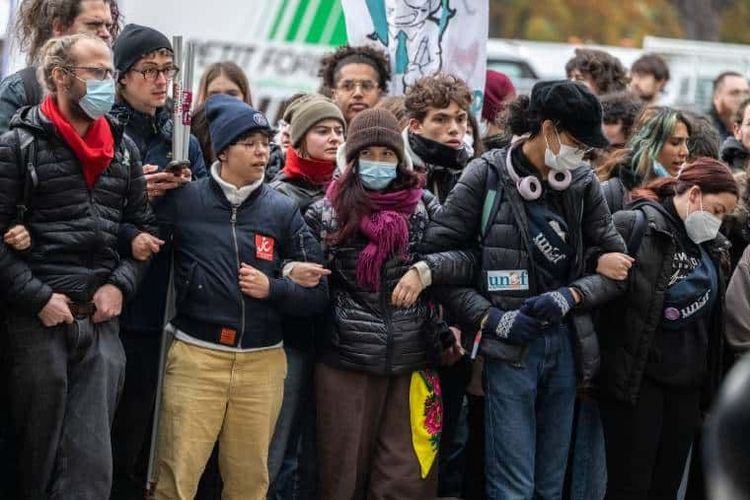
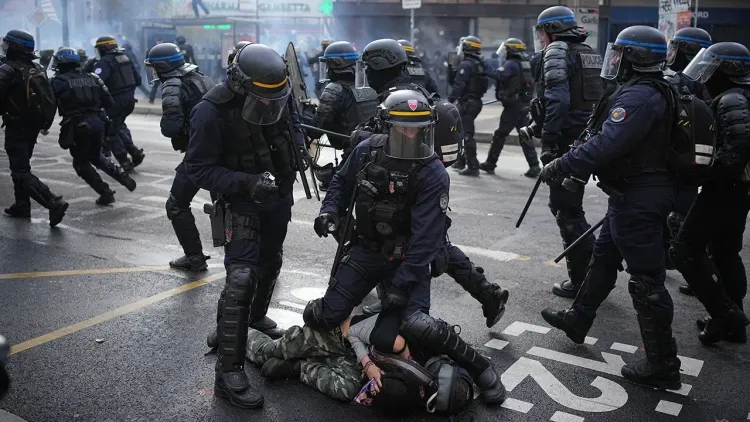
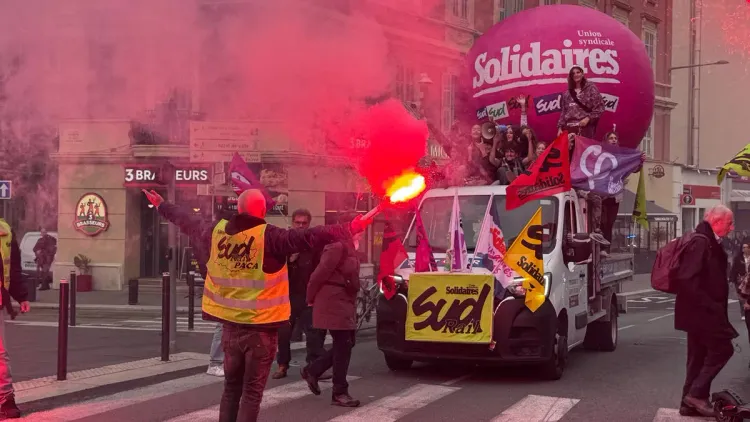
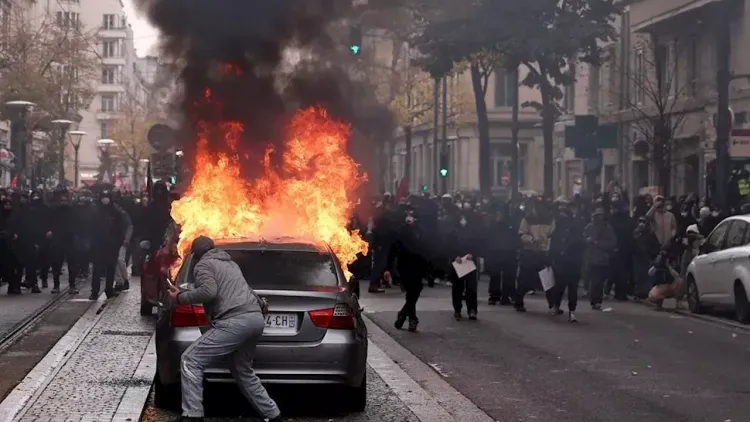
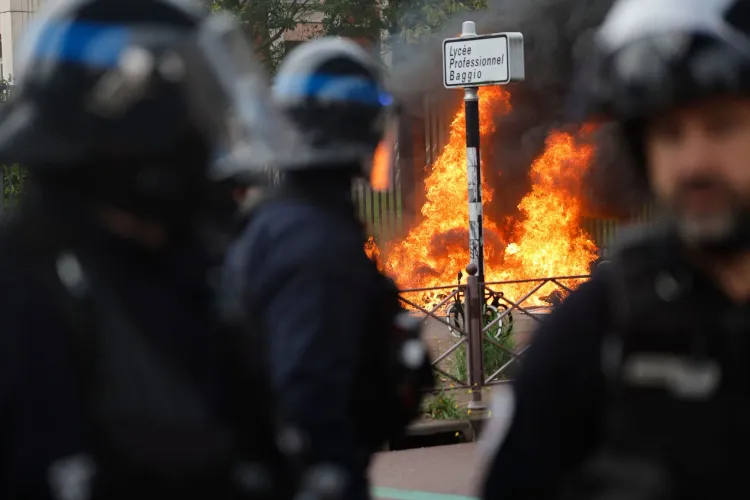
Demonstrations were largely peaceful during the afternoon before confrontations broke out. In Paris, riot police dispersed groups remaining after a march, while officers used tear gas in Lyon and Toulouse. Unauthorized protests also brought tensions in Marseille, where the situation was calm again by nightfall.
The Interior Ministry reported the nationwide arrest total late Saturday. In Paris, four police officers and one gendarme were injured; three suffered burns from Molotov cocktails. Interior Minister Laurent Nunez called the throwing of a Molotov cocktail at a Paris riot officer an "attempted murder," saying the officer sustained minor injuries.
Nunez said security forces had kept control of city centers despite the violence. According to his ministry, officers stopped radical groups from leaving marches to vandalize and loot in Bordeaux, Toulouse, Lyon and Marseille. Checks on roads and at railway stations also found people carrying objects that could serve as weapons.
Halloween precautions in Paris and beyond
Authorities imposed an 11 p.m.-to-6 a.m. curfew on Saturday and Sunday in the central Paris neighborhoods of Republique and Chatelet-Les Halles. They also warned that people taking part in violence might use Halloween masks to hide their identities.
Citing calls for Halloween unrest, Nunez said police were preparing for more disturbances. "The day is not over. We are ready for those looking for a fight tonight, and we will respond firmly," he said.
Nunez said the law already permitted police to ban face coverings when public order was at risk. The government, he added, intended to prevent a recurrence of the riots and looting on October 17. The U.S. Embassy in France advised travelers to stay away from locations scheduled to host demonstrations or large gatherings.
Turnout falls as students, unions and Yellow Vests march
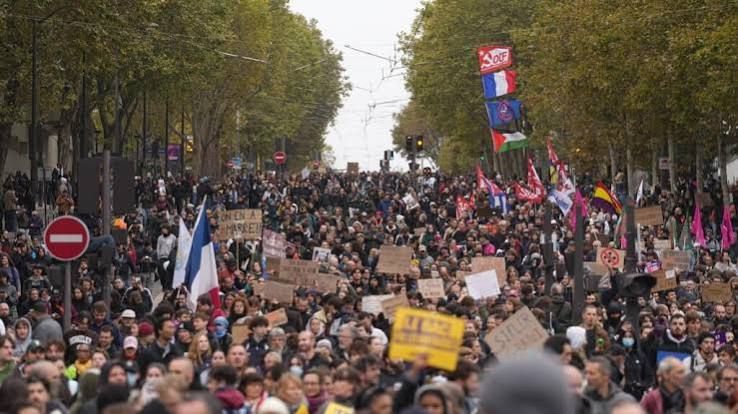
The Interior Ministry counted 320,000 demonstrators across France, including 70,000 in Paris, down from 410,000 nationwide the previous weekend and 550,000 on October 17. Youth organizations disputed Saturday's estimate, putting participation at nearly half a million nationally and 200,000 in the capital.
Students marched alongside trade unions and members of the Yellow Vest movement. Far-left leader Jean-Luc Melenchon led the Paris demonstration; his popularity has risen ahead of the presidential election next April.
The movement began with student protests in September and gathered strength late that month as President Emmanuel Macron's minority government opened discussions on the 2027 budget. Students objected to deteriorating school buildings, crowded classrooms and a university admissions system they considered unfair. Unions and Yellow Vest protesters subsequently joined with demands addressing inflation, fuel prices, living costs and declining public services.
Protester Jerome Rodriguez criticized the government's economic management, saying families were struggling while authorities controlled substantial financial resources. He said protesters would keep pressing their demands, even though he saw little prospect of a government response.
The French movement also inspired youth-led rallies in Germany and Italy over the October 31 weekend. RFI reported that Germany's "Gen Z regelt" initiative had received more than 180,000 online sign-ups, according to organizers, but only several thousand people had marched by Saturday afternoon. Protest appeals also spread on TikTok in Belgium, the Netherlands, Austria, Switzerland and Portugal.
Budget dispute adds to economic and political pressure
Part of the anger centers on a proposed 54-billion-euro ($60 billion) package of spending cuts and tax measures for the 2027 budget, including freezes on civil servants' salaries, according to Al Jazeera.
The government faces pressure to curb spending as borrowing costs rise and public debt approaches 120 percent of gross domestic product. Al Jazeera put national debt at about 3.6 trillion euros, or 119 percent of GDP, and reported a projected 2026 budget deficit of 5.4 percent of GDP, above the European Union's 3 percent ceiling.
On Friday, Fitch changed the outlook on France's debt to negative, citing the country's financial position. Economic data released the same day showed an unexpected contraction in the third quarter.
The French Chamber of Commerce estimated that retailers had lost more than one billion euros ($1.1 billion) over three weeks of unrest. The protests have also boosted far-right leader Marine Le Pen, who leads opinion polls for the April presidential election.
Education concessions and plans for more protests
Government pledges on education and fuel costs have not ended the discontent. An education package announced in late October calls for replacing Parcoursup, the university admissions platform, by 2028 and limiting high school classes to 28 students, according to Deseret News.
The package also provides for 500 new teaching positions, 15,000 additional places in higher education and 4 billion euros in loans to renovate high schools.
Student protesters have vowed to resume blockades of high schools and universities in the week after October 31, including on November 5, when unions have called another demonstration.