The protests and the security response
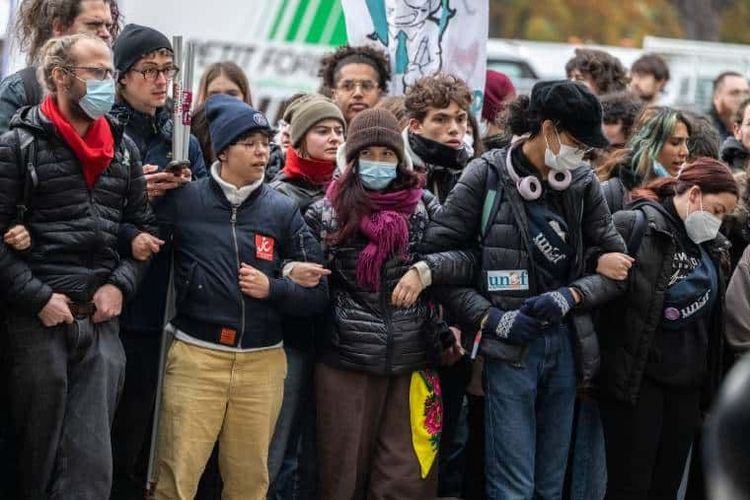
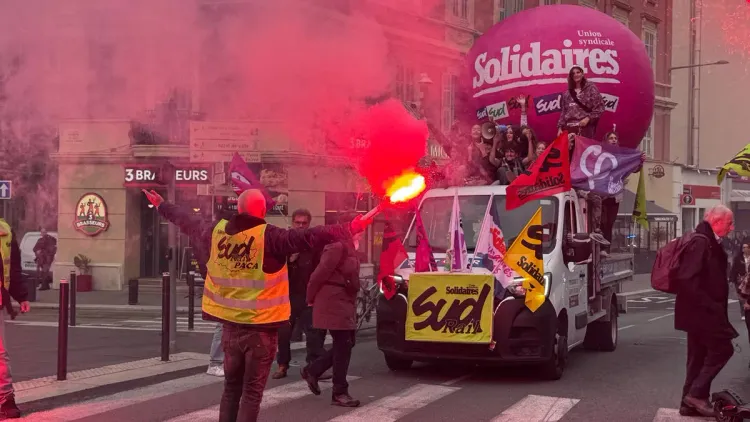
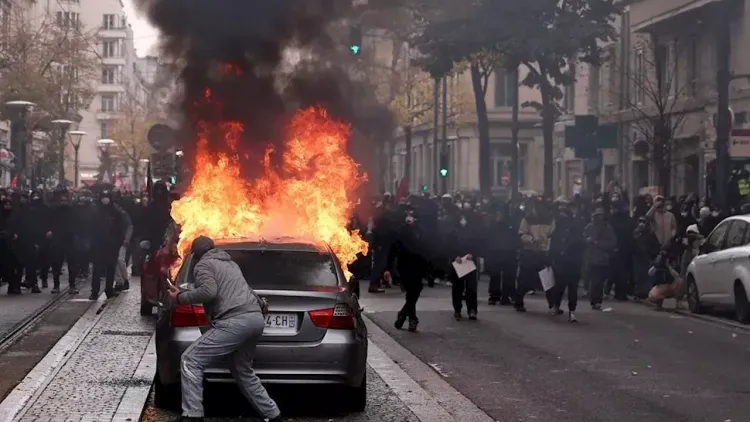
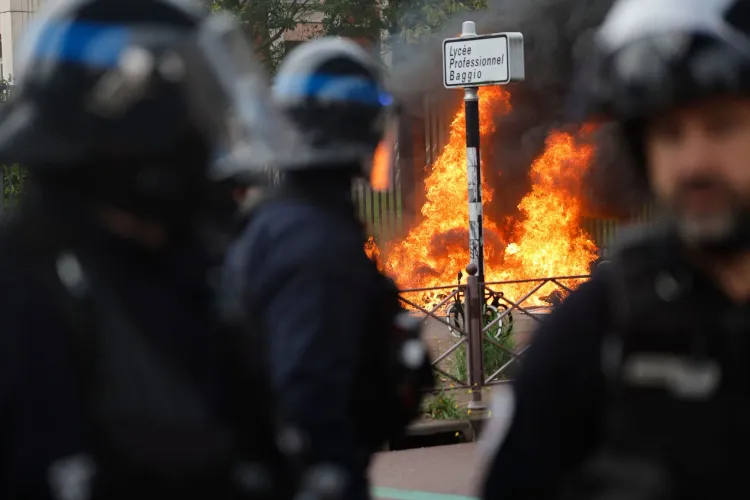
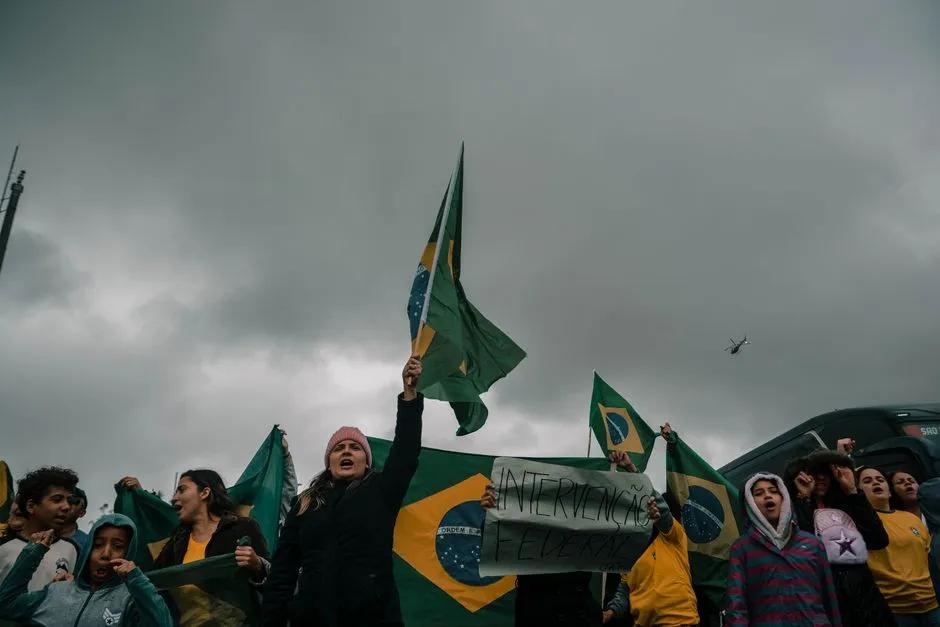
More than half a million people reportedly joined the French demonstrations, with students, teachers and unions among those protesting education conditions and the difficulty of affording necessities. Looting, fires and attacks on businesses and public buildings overshadowed the peaceful protests.
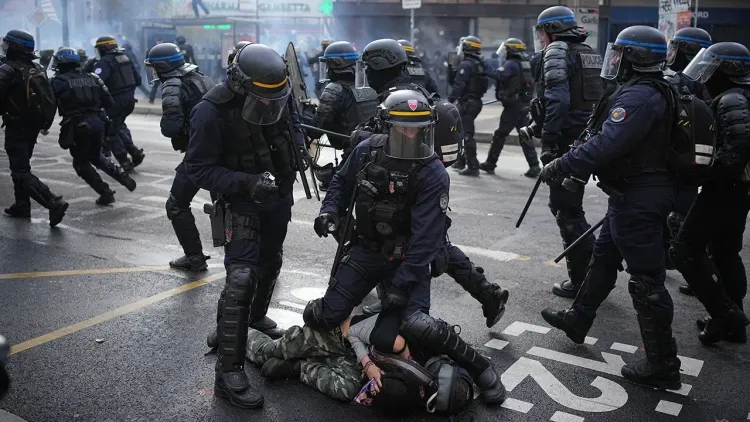
CNBC reported on October 19 that the Interior Ministry had recorded almost 2,400 arrests and injuries to nearly 1,000 police officers and gendarmes during the weekend unrest. Police also said a protester died of cardiac arrest during the October 17 demonstrations in Paris; their statement supplied no further details.
Among the buildings attacked was Limoges' 143-year-old town hall, which was largely destroyed by arson. Protesters also entered Marseille's city hall by force, while a tourist office in Lyon was set on fire, according to CNBC.
President Emmanuel Macron denounced the destruction and pledged a firm response. Interior Minister Laurent Nuñez was asked to review possible failures in planning and intelligence. On October 19, after the arrest count had passed 2,400, Macron rejected Nuñez's resignation, citing the need to maintain continuity in police command.
Retail losses and an insurance scheme still pending
Initial estimates put the toll at roughly 1,500 affected shops and businesses and hundreds of millions of euros in damage. Carrefour CEO Alexandre Bompard, who also heads the FCD retail federation, estimated on Sunday that about 1,500 shops had been affected, with industry losses of several hundred million euros. Carrefour reported damage to 50 stores, including 20 that had been looted.
The count subsequently rose. By Monday, October 19, the government listed at least 3,000 damaged shops, double the figure reported a day earlier, according to Euronews reporting carried by Yahoo Finance.
Earlier unrest offers a benchmark, though not a final estimate for the October damage. France Assureurs said the June-July 2023 riots generated €793 million in insured losses from about 17,000 claims, averaging approximately €46,600 apiece. A later Senate inquiry estimated total property damage at closer to €1 billion.
France adopted a riot-insurance scheme in its 2026 budget law, but it was not yet in effect as of October. The legislation requires riot coverage in certain property policies and establishes a national fund supported by insurer contributions of up to 1.5% of relevant premiums. It also provides for state guarantees of up to €4 billion annually. European Commission approval and a government implementing decree were still required.
In an analysis for The Statesman, Anand Kumar warned that small retailers could have particular difficulty recovering from the destruction, potentially adding to the economic hardship behind the demonstrations.
Fiscal constraints and political divisions
The government faces demands for stronger public services while trying to contain its finances. Figures reported on October 19 put public debt at a record €3.6 trillion in the second quarter of 2026, or 119% of GDP. The government expected the year's budget deficit to reach 5.4% of GDP.
The proposed 2027 budget reportedly contains about €43 billion in deficit-reduction measures. Kumar's analysis describes the competing risks: reductions in education, welfare and essential services could intensify public anger, while spending without credible funding could damage fiscal stability and investor confidence.
French bonds have faced selling pressure, the euro has weakened, and French stocks have lagged the broader European market. Prolonged instability could also deter investment, reduce consumer confidence and raise costs for businesses.
Kumar argues for protecting vulnerable households and essential services while improving spending efficiency and setting a credible course for sustainable debt. His analysis cautions that austerity concentrated on people already struggling with everyday expenses could carry both economic and political costs.
The approaching presidential election, as Macron nears the end of his presidency, has sharpened political divisions. Marine Le Pen and the nationalist right have focused on security failures; Jean-Luc Mélenchon and parts of the left have challenged the government's management of the demonstrations and police conduct. Kumar warns that a debate dominated by accusations rather than remedies could further weaken public trust.
Shared pressures across Europe
France's unrest comes alongside protests and clashes reported in Italy, Belgium and Portugal. Spain has demonstrations planned over housing and wages, while Albania has seen both anti-government and student-led protests.
The circumstances differ by country, but Kumar identifies recurring grievances over living conditions, inequality and the perceived inadequacy of public policy. High household expenses, weak growth, scarce housing and wage pressures have constrained people's prospects. Reports also associate higher energy prices with the conflict between the United States and Iran.
The analysis links France's discontent to the gap between what people expect from education and employment and what they can afford. When studying or working brings little improvement, Kumar argues, resentment can increase support for anti-establishment parties on either side of the political spectrum, including those offering simplistic answers.
He contends that restoring order requires more than policing: enforcement against criminal violence must remain distinct from the response to peaceful protest. Affordable housing, access to education, decent jobs and dependable public services are also central to rebuilding confidence in democratic institutions.
Unions call for November 5 action
Five union confederations—CFDT, CGT, FO, UNSA and FSU—have called a nationwide strike for November 5, 2026. Their demands include higher wages and pensions, more public-service funding, increases in the civil service index point, the minimum wage and social benefits, and higher taxes on wealth, inheritances and dividends.
According to The Local France, this is the first cross-sector strike call since the September 2026 school year began to cover workers in both the public and private sectors.
Ahead of the action, Kumar's analysis calls for protecting public and private property without restricting peaceful assembly. It also proposes transparent investigations into security failures, appropriate assistance for damaged businesses and structured talks with students, teachers and unions as ways to help restore confidence.