Investigators review images of the attack
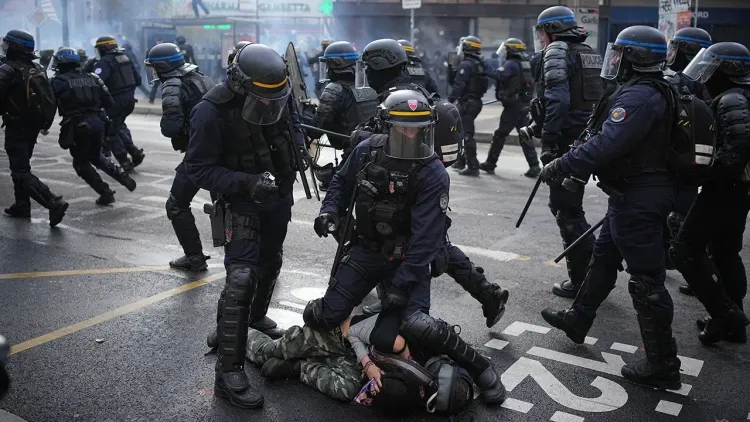
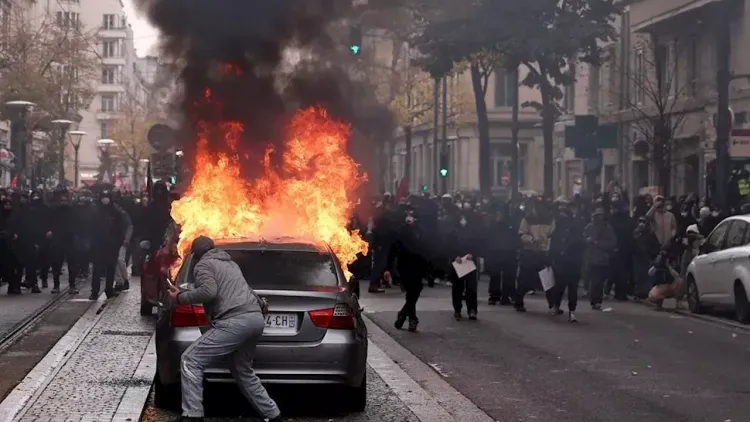
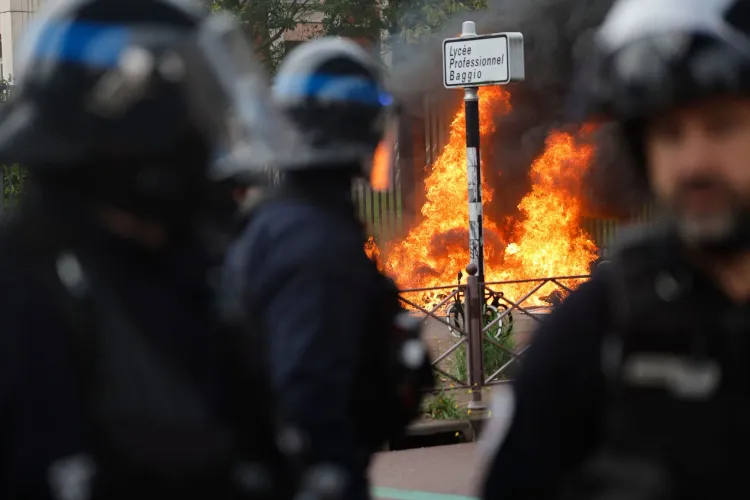
The Paris prosecutors' office told AFP it was examining photographs and videos shared on social media. Investigators identified three suspects wearing black clothing associated with Black Block protesters. The police prefecture said several hundred rioters had hurled projectiles at security forces.
Prosecutors opened the case for "attempted murder of persons vested with public authority". They said explosive devices targeted about 15 gendarmes, along with police officers, and that reported injuries included second-degree burns. Gendarmes belong to France's armed forces and perform military policing duties.
VOZ reported that the firebomb incident took place near Porte de Charenton in eastern Paris as the "Act III" march against rising living costs ended. AFP footage and photographs captured a homemade incendiary device detonating near an officer's feet, with flames surrounding the lower half of his body.
Injured gendarme thanks man who tried to help
One widely circulated video showed an officer's leg catching fire during crowd-control duties. As two colleagues tried to extinguish it, a man wearing a white T-shirt and straw hat approached and used his bare hands to fight the flames. Another officer pushed the man away and then against a wall.
The injured gendarme, identified under French regulations only as Captain Alexandre, told AFP that his colleagues had mistaken the man's approach for an attack. "This protester, or street medic, had actually come to help," he said. Alexandre said he had been concentrating on a difficult operation while his trousers burned and had not immediately understood why the man was there. He expressed gratitude and said he wanted to thank him.
In a separate interview with RTL, Alexandre described his unit as "under assault" from glass bottles, paving stones and firebombs. He said the greasy flammable material spread across his skin and melted the leg and shin protection on his riot uniform. His own injuries were minor; RTL reported that the gendarmerie counted 13 injured members of his unit.
Smaller crowds, extensive security measures
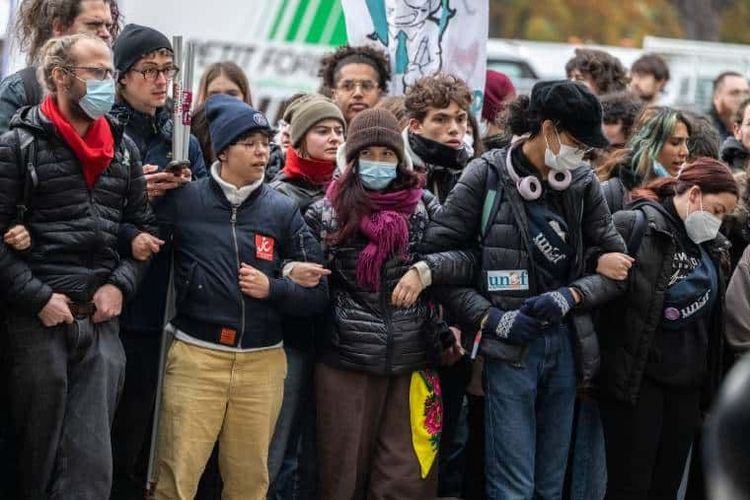
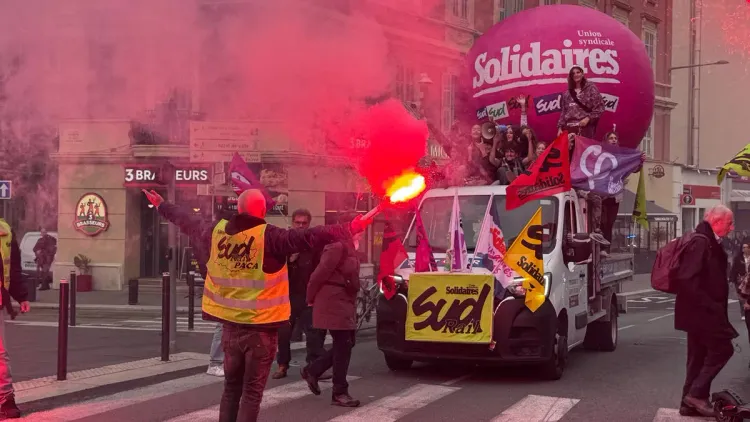
The October 31 demonstrations marked a third consecutive weekend of protests over soaring living costs. Authorities estimated attendance at about 320,000 nationwide, with 70,000 in Paris. Youth organizations gave higher figures: nearly half a million across France and 200,000 in the capital. The government's national estimates for the previous weekends were 550,000 on October 17 and 410,000 on October 24.
Interior Minister Laurent Nunez had warned of a "very high risk" of disorder, particularly after nightfall on Halloween. About 70,000 police and gendarmes were deployed nationwide. In Paris, marches were diverted toward the city's edge to keep them away from downtown stores, government buildings and tourist areas.
Police also restricted access to Place de la Republique and Les Halles between 11 p.m. and 6 a.m. on Saturday and Sunday. A separate curfew around the Champs-Elysees applied to unaccompanied minors from 9 p.m. Days earlier, a Paris court had suspended a previous curfew for minors, ruling that it seriously and illegally infringed on freedom of movement.
Although the unrest was less widespread than two weeks earlier, when France experienced some of its worst rioting in years, Nunez called the violence committed by some participants "extraordinary". The Interior Ministry recorded 779 arrests nationwide over the weekend and reported "no serious incidents" late Saturday. Paris prosecutors counted 105 arrests in the capital, including 88 related to demonstrations and 17 to Halloween night. Across the protests and Halloween celebrations, 159 law enforcement personnel were injured.
Political response and protests elsewhere in Europe
With the presidential election six months away, front-runner Marine Le Pen has pledged to restore law and order if elected next year. The far-right National Rally leader wrote on X that the firebomb attackers must be "punished with the utmost severity". Le Pen and Bruno Retailleau, who leads the right-wing Republicans, both called the images of the burning officer "unbearable".
The French demonstrations formed part of a wider wave of youth-led protests that also reached Germany and Portugal. In Germany, the initiative "Gen Z regelt" organized rallies in more than 30 cities. Frankfurt experienced smashed storefronts and thefts of goods. Berlin police reported 27 injured officers and up to 56 temporary detentions, while Hamburg recorded 120 arrests.
How the movement grew
France's protest movement started in October 2026 with high school students demanding action on deteriorating school buildings, insufficient teachers and a university admissions system they viewed as disadvantaging poorer students. Unions and other opponents of President Emmanuel Macron's leadership subsequently joined, bringing a broader range of demands.
Following a security crackdown and serious injuries to some demonstrators, protesters also sought stronger safeguards for civil liberties and the right to demonstrate. AFP reported that the government had limited scope to respond with additional spending: France, the eurozone's second-largest economy, was described as being on the brink of recession while facing pressure to reduce its debt.
Student organizations have announced more high school and university blockades ahead of a nationwide union demonstration scheduled for November 5, 2026.