Officer describes burns as prosecutors assess injuries
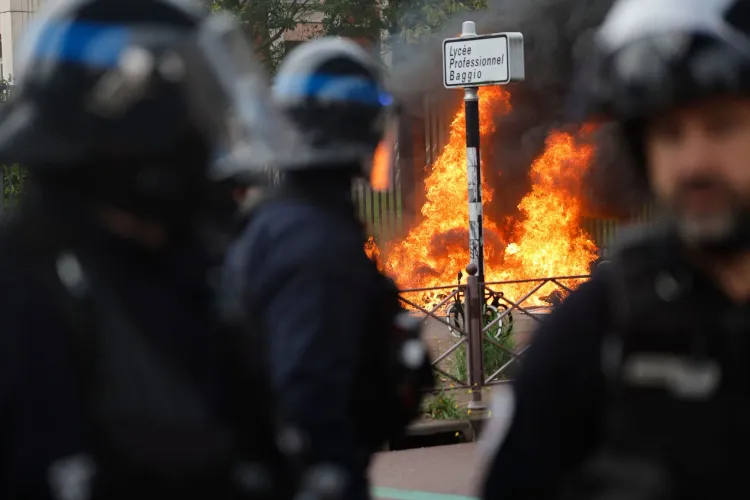
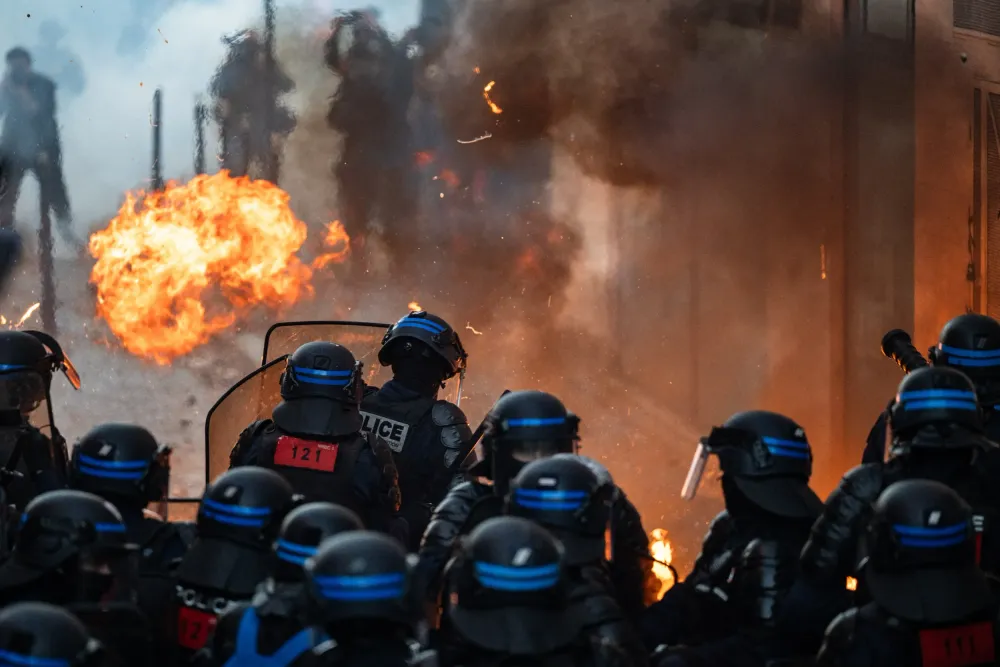
The attack occurred near Porte de Charenton on the evening of France's third consecutive Saturday of cost-of-living demonstrations. A homemade incendiary device exploded among riot gendarmes, and footage of the flames quickly circulated on social media. The officer whose uniform caught fire sustained minor injuries, but the heat melted his leg and shin guards.
Speaking to Le Figaro, the gendarme described burns to his ankle and minor injuries to his hand. He called the device "particularly sophisticated" and said it had "a far greater burning capacity than a standard Molotov cocktail". Gendarmes are members of France's military police.
Accounts of injuries within his unit differed. The officer said 14 colleagues suffered wounds ranging from minor to serious, with some hit by paving stones. RTL reported that the gendarmerie counted 13 injured members of the unit. Prosecutors separately reported second-degree burns and tinnitus among the injuries from the attack, while cautioning that assessments were still underway and the details remained provisional.
The investigation concerns the "attempted murder of persons vested with public authority", which can carry a prison sentence of up to 30 years under French law. No one had been detained specifically in connection with that case as of Sunday, November 1.
Violence at the end of the march
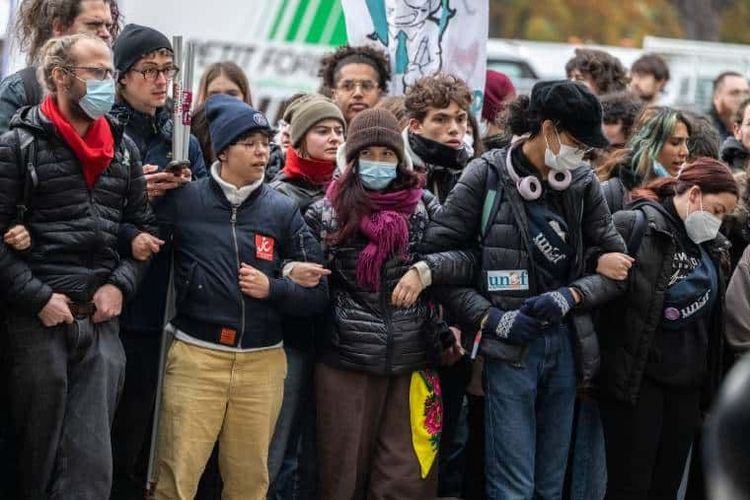
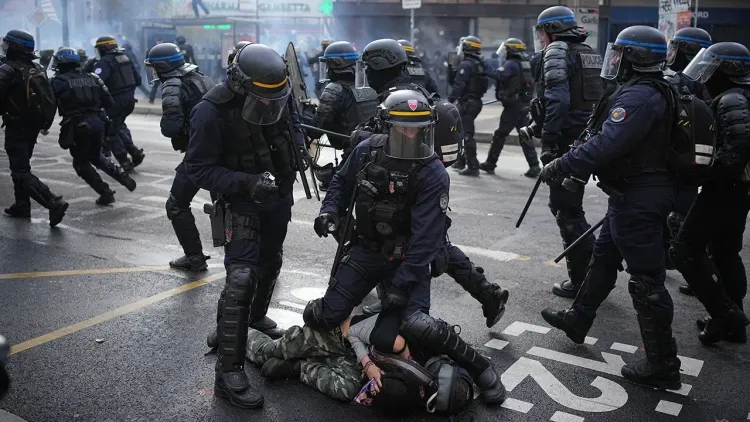
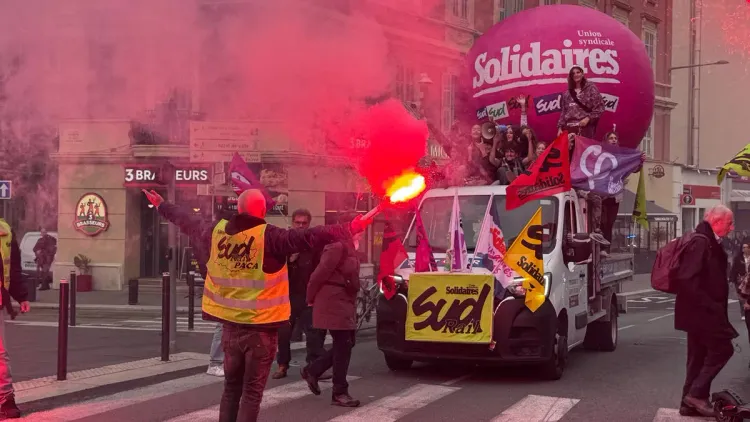
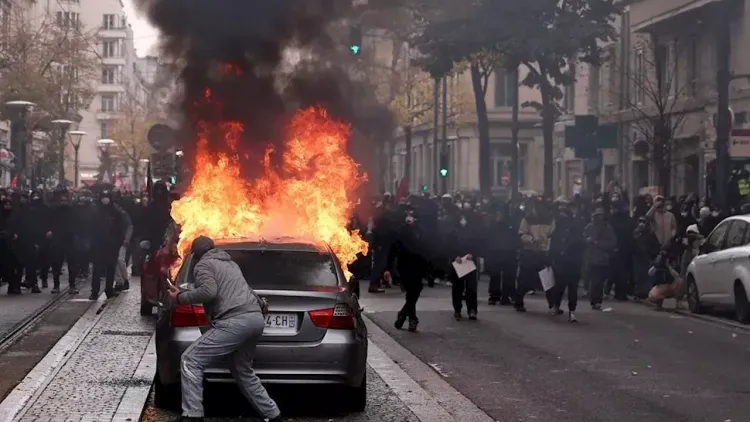
The Paris procession set out peacefully from Porte de Bagnolet, with many participants wearing Halloween costumes for a march organizers had presented as festive. Violence broke out toward the route's endpoint near the 12th arrondissement. According to the Paris police prefecture, several hundred rioters left the authorized march and attacked security forces with rocks, bottles, and incendiary devices.
Interior Minister Laurent Nunez attributed the violence to far-left extremist groups embedded in the demonstration and described the firebomb attack as attempted murder. He reported injuries to four police officers and one gendarme in Paris, including three people burned by incendiary devices. His nationwide count was 159 injured security personnel. The government had mobilized 70,000 police and gendarmes for the day.
Far-right National Rally leader Marine Le Pen called the images of the burning officer "unbearable" and wrote on X that those responsible must be "punished with the utmost severity". The unrest came less than six months before a presidential election, with Le Pen leading opinion polls.
Authorities imposed an overnight curfew in the central Paris neighborhoods of Republique and Chatelet-Les Halles on October 31 and November 1, running from 11 p.m. to 6 a.m. local time.
Arrest totals and competing turnout estimates
The Interior Ministry's updated count put nationwide arrests at 779 for the October 31 demonstrations and Halloween night combined, replacing a provisional figure of 565 released Saturday evening. Paris prosecutors reported 105 arrests in the capital: 88 related to the protests and 17 to Halloween night. Of those arrested, 89 remained in custody, including at least 22 minors.
Despite the attack on the gendarmes, the nationwide arrest total was lower than on either of the preceding protest Saturdays. Authorities recorded 1,314 arrests on October 24 and 2,628 on October 17, when widespread rioting and looting broke out.
Estimates of October 31 participation also varied. The Interior Ministry counted 320,000 demonstrators across France; unions put turnout at nearly 500,000. Youth organizations likewise estimated almost half a million participants nationwide, including 200,000 in Paris.
The first nationwide mobilization, on October 17, brought roughly 550,000 people into the streets and was marred by looting, arson, and clashes. Police recorded 855 arrests in the Paris region alone. Prime Minister Sébastien Lecornu subsequently introduced localized curfews in cities including Paris, Lille, and Nice.
For October 24, nationwide turnout estimates ranged from 410,000 to 800,000. In addition to confirming 1,314 arrests, the Interior Ministry reported that 53 security personnel had been injured.
Students plan further action over living costs and public services
High school students formed the movement's original core, beginning strikes weeks before October 17 to protest teacher shortages, deteriorating school buildings, and crowded classrooms. Labor unions, Yellow Vest chapters, climate activists, and families struggling with inflation later joined them.
Household finances remain a central grievance. INSEE, France's national statistics institute, forecasts a 0.7% decline in purchasing power per consumption unit in 2026, with fuel and housing putting the greatest pressure on budgets.
Related protests took place in Germany and Italy over the same weekend. According to the BBC, mainly youth-led demonstrations have continued in parts of Europe, with differing demands broadly centered on living costs and public services.
The Élysée has made no meaningful economic concessions since the French protests began, and organizers have shown no intention of ending their campaign. The Union Etudiante, or Student Union, announced plans to blockade universities and high schools starting Tuesday, repeat the action Thursday, and then join the November 5 demonstration called by workers and trade unions.