Historical echoes of 2018 movement
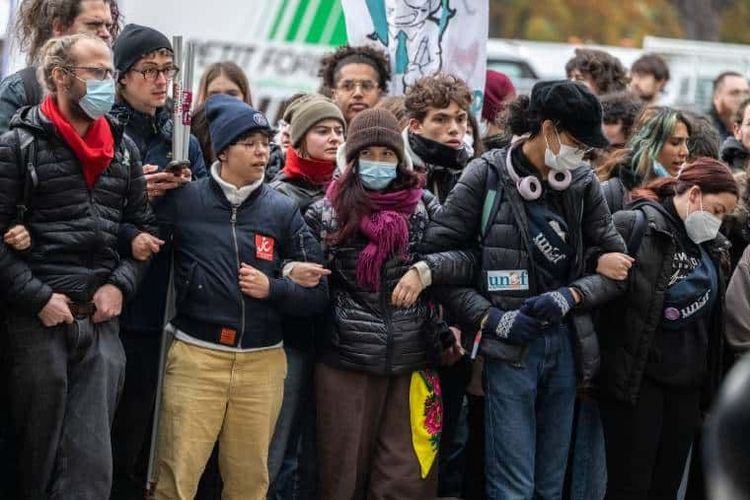
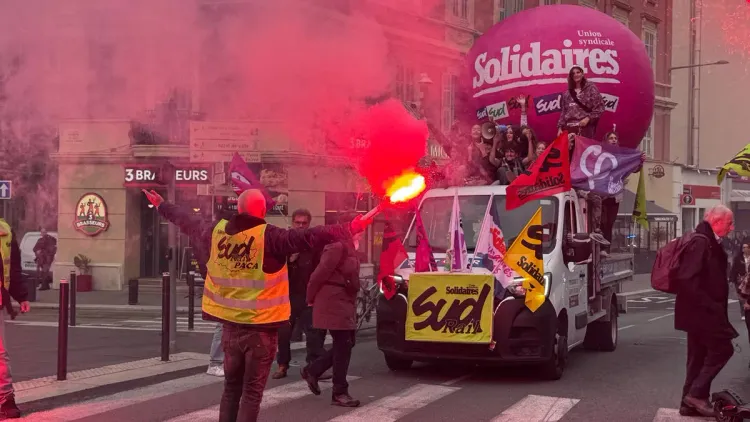
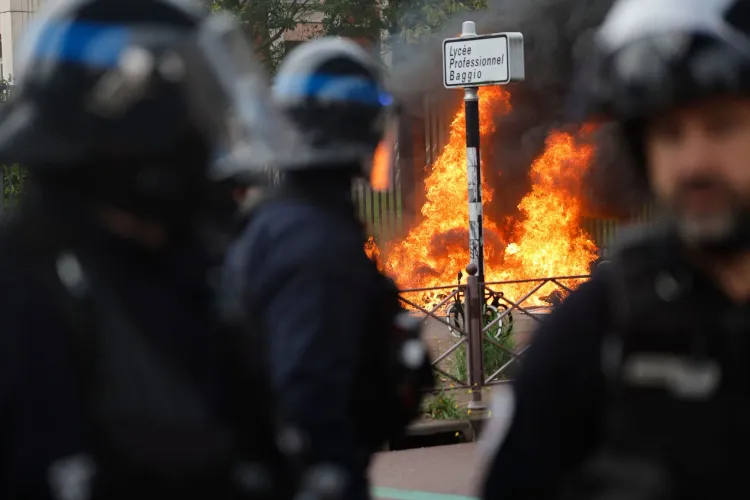
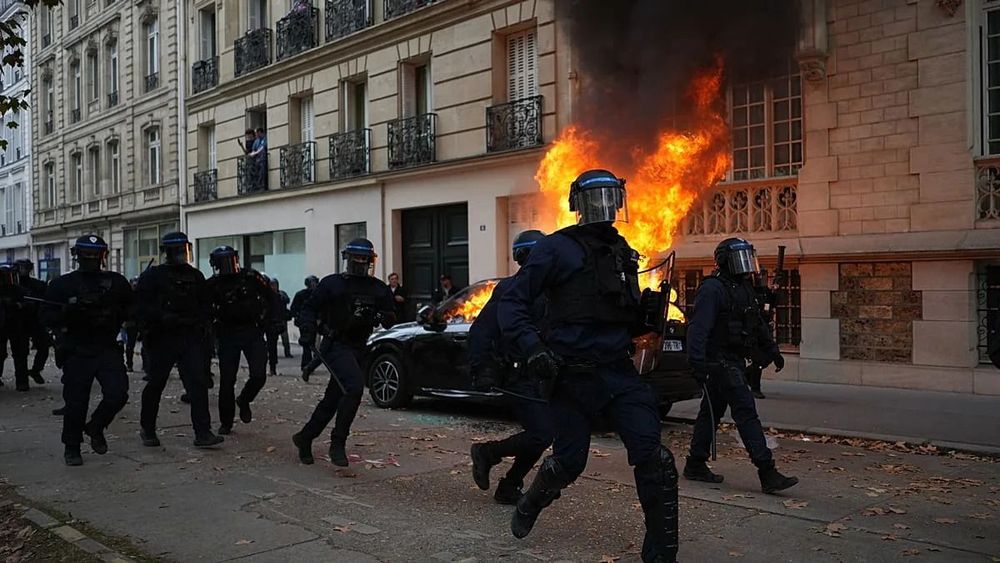
French security forces are preparing for potential unrest as hundreds of protests are planned across the country on 17 October. Unions and citizens identifying with the yellow vest movement will demonstrate against rising living costs and fuel prices, joined by large numbers of students who have been protesting for four consecutive weeks.
A source close to France's Interior Ministry told Euronews that authorities expect 500 actions nationwide, including 90 estimated protests on Saturday. The demonstrations come as student protests continue over issues including teacher absences, overcrowded classrooms and deteriorating school facilities.
The planned demonstrations have drawn comparisons to the yellow vest movement that erupted on 17 November 2018, when approximately 300,000 participants blocked roads at 3,000 locations across France. That grassroots movement, organised through social media rather than traditional unions or political parties, emerged in response to President Macron's announced fuel tax increase, which was intended to transition France from fossil fuels to renewable energy. The protesters were predominantly from rural areas who relied on cars for long distances and said they could not afford the fuel price hikes.
The 2018 protests ultimately forced the government to reverse course. After weeks of demonstrations, authorities suspended the planned fuel tax increase on 4 December 2018, and President Macron subsequently announced a minimum wage increase in mid-December.
Security concerns and planned restrictions
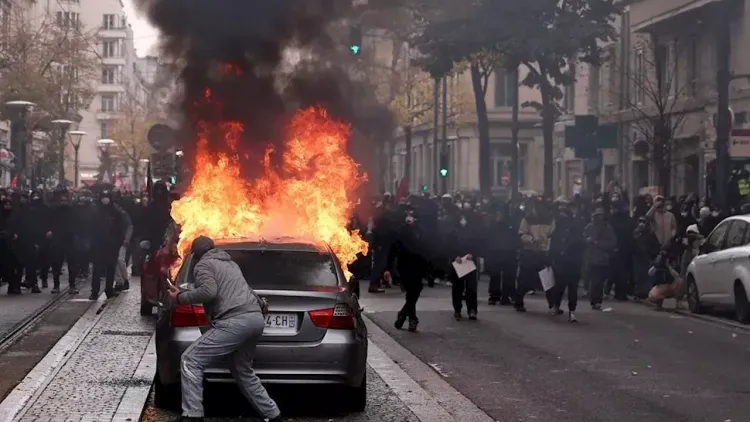
Authorities are particularly concerned about possible violence in Paris and other major cities. The Interior Ministry source warned that far-left groups may attempt to provoke confrontations with law enforcement and breach security perimeters along protest routes. Officials stated that blockades of key transportation routes and essential infrastructure would "not be tolerated."
President Emmanuel Macron said on Friday that whilst the right to protest "is fully respected," it "must be accompanied by respect for people and property." He called for calm and respect, saying "these rights must be preserved."
Police violence allegations fuel tensions
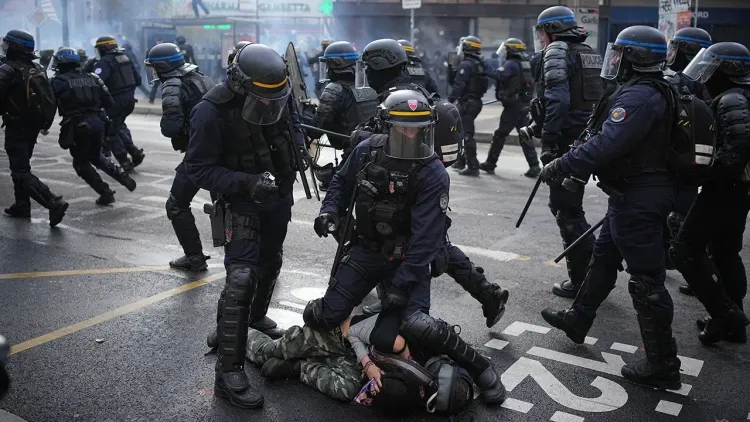
French law enforcement has faced intensifying scrutiny amid multiple allegations of excessive force during recent student protests. A 15-year-old schoolboy allegedly lost an eye after being struck by a police rubber bullet, whilst in a separate incident on 5 October in Lens, a 14-year-old reportedly lost his hand after picking up a police stun grenade. Both cases remain under investigation.
Following the latter incident, France's Interior Ministry suspended the use of stun grenades at student protests on 7 October. Interior Minister Laurent Nuñez stated the suspension would last until the facts were clarified. However, in a Friday interview, Nuñez indicated that stun grenades could be deployed on 17 October if "serious urban violence" occurs, cautioning that such devices are "never used when things are going well."
The GLI-F4 stun grenade, classified as a weapon of war under French law, was previously withdrawn from use in January 2020 by then-Interior Minister Christophe Castaner after causing numerous injuries during protests, and was replaced with the GM2L grenade.
Interior Minister Nuñez told France's Senate on Tuesday that 36 investigations into alleged police violence during student protests had been opened. Four cases relate to mutilating injuries and six to significant injuries, whilst others involve alleged blows, insults and reported sexual violence.
Mounting casualties on all sides
French Prime Minister Sébastien Lecornu reported on Thursday that 937 police officers and gendarmes have been injured since the protests began. He also noted injuries among 248 students and 149 teaching staff members, describing this as the highest number of injuries ever recorded by France's Education Ministry.
More than 1,800 people are being prosecuted following the student protests, including 1,483 minors, whilst at least 715 police officers and 215 teenagers have been reported injured in clashes, according to official sources.
Lecornu warned that the "secondary school student movement" is transforming into a "wave of urban violence."
Police union challenges state over officer safety
Alliance Police Nationale, one of France's largest police unions, announced on Tuesday it would lodge a complaint against the state "for endangering the lives of others." The union condemned what it described as "contradictory orders" given to officers, who have been "exposed to violence and left at the mercy of public hostility" during the student protests.
"After the president's expressions of empathy towards rioters and emphasis on dialogue, we are now faced with vague instructions, contradictory orders and superficial public statements. The discrepancy between Laurent Nuñez's public statements and the verbal instructions passed down through the chain of command has become unbearable."
Political tensions and budget crisis
The demonstrations unfold against a backdrop of severe political instability. The July 2024 snap election produced a hung parliament with three major blocs: the left-wing New Popular Front secured 180 seats, Macron's centrist Ensemble alliance won 159 seats, and the right-wing National Rally obtained 142 seats out of a total 577, with no group achieving the 289-seat majority required to govern effectively.
Since that election, two prime ministers have been toppled through no-confidence votes in December 2024 and September 2025 over budget disputes before Sébastien Lecornu took office. The government is now attempting to pass a 2026 budget that targets a deficit of 4.6% of GDP and includes approximately 43.8 billion euros in savings measures, whilst France's public debt is projected to peak at 118.1% of GDP in 2027.
Accusations of inflammatory rhetoric
The hard-left France Unbowed party has been accused by the government and political opponents of encouraging violence through inflammatory language. The party's leader, Jean-Luc Mélenchon, who founded La France Insoumise in February 2016 and has run for president three times, came third in the 2022 presidential election with 22% of the vote, narrowly missing the second round by just 1.2 percentage points behind Marine Le Pen.
In a 30 September speech, Mélenchon urged supporters to "stand up to police brutality," adding that "there will be neither forgetting nor forgiveness for anyone." He later clarified his comments, stating that he backed peaceful protest methods.