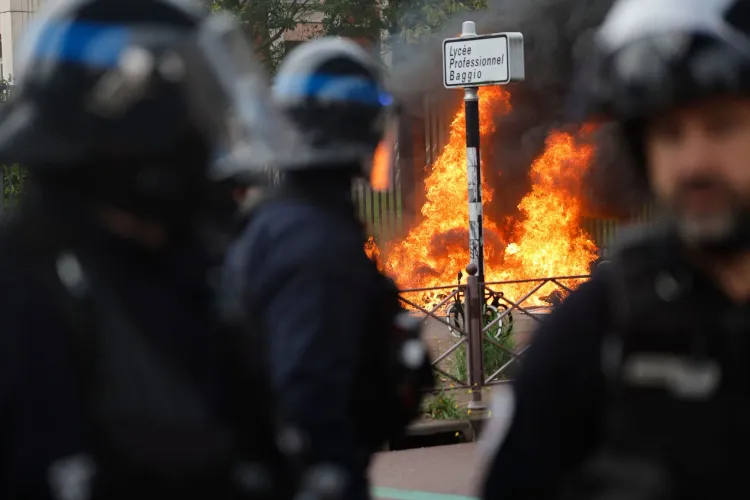
Clashes and injuries in France
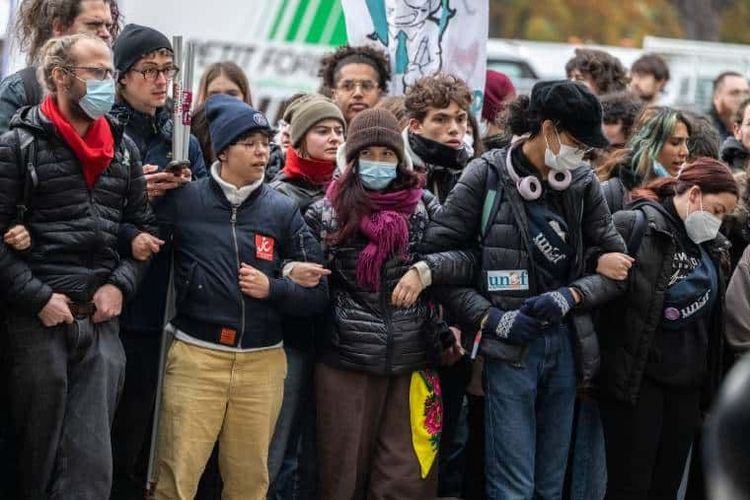
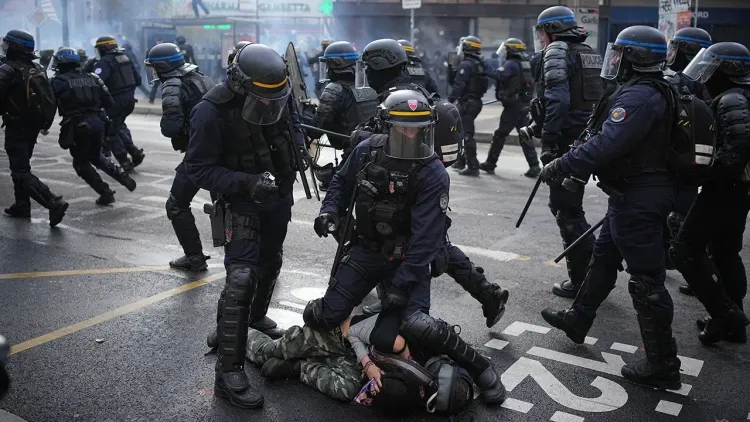
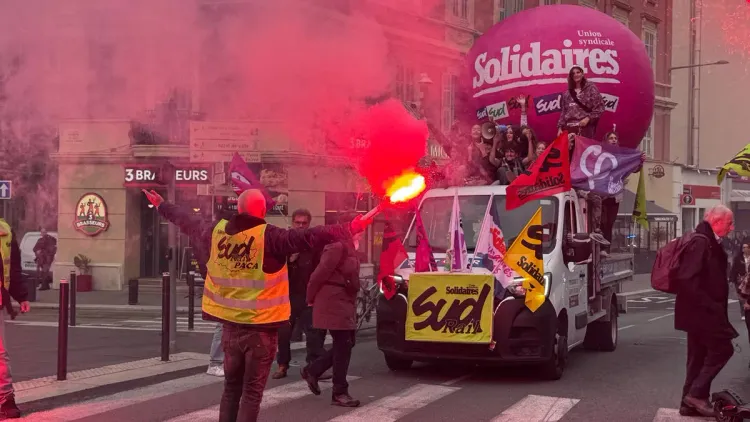
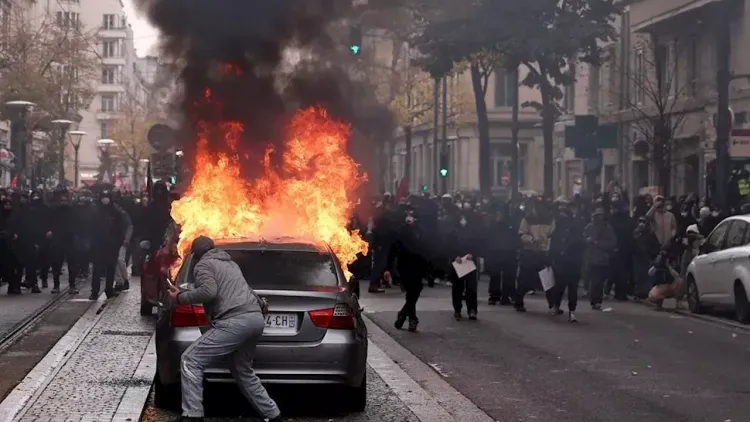
The Paris march was largely peaceful until crowds began dispersing. Several thousand radical activists had assembled at the back of the procession, among them about 500 people identified as rioters. Clashes continued for roughly two hours, with groups throwing projectiles and launching fireworks at officers.
Two people suffered serious injuries outside the capital. In Toulouse, a 20-year-old man reportedly lost fingers in an explosion; the other serious injury was reported in Clermont-Ferrand.
Authorities also reported confrontations between far-right activists and "ultra-left militants" in Cannes and Montpellier. Nuñez said authorities had not witnessed that phenomenon before.
In his Sunday, October 25 update, Nuñez reported 1,314 arrests nationwide and 53 injured officers. He said looting was much less extensive than the previous week, when about 3,000 businesses were damaged or looted. Authorities had made 2,700 arrests during that earlier unrest.
Security preparations and closures
Authorities had assigned 70,000 police officers and gendarmes to security duties across France after Nuñez classified Saturday as a high-risk day. Before the demonstrations, President Emmanuel Macron convened a defense council meeting to coordinate the deployment and public restrictions.
Protecting shopping districts was a priority after widespread looting on October 17, when the Interior Ministry counted 410,000 demonstrators. Police denied central Paris route requests from the national student union UNEF and the Yellow Vest movement, citing the risk of disorder in commercial areas.
Many Paris shops boarded their windows. AFP and CBS News reported that the Louvre and Musée d'Orsay closed for the day and that cancellations included the NFL's first French football game.
School protests grow into a national movement
The unrest began in September 2026 with high school students protesting staff shortages and poor conditions in the southeast of Paris. As demonstrations spread across France, students seeking more education funding were joined by workers demanding relief from rising living costs.
AFP cited inflation, especially higher fuel prices, as a source of the anger. Prices have surged since the Middle East war began in February 2026.
The demonstrations took place about six months before an election to choose Macron's successor, expected around May 2027. CBS News reported that surveys at the time put far-right leader Marine Le Pen in the strongest position to win.
On October 24, a separate march in Orleans opposed a National Rally congress launching Le Pen's presidential campaign. Police estimated attendance at 11,000, while organizers counted 26,000. Roughly 50 organizations, among them unions, left-wing parties and student groups, supported the counter-protest.
Unions, student organizations and the Yellow Vest movement have called for a nationwide strike on November 5. Their grievances include low wages, living costs, deteriorating public services and worsening learning conditions.
German organizers reject violence and austerity
German student groups held peaceful rallies under the Gen Z regelt banner in more than 30 cities. About 160,000 people registered online before the events, and an estimated 10,000 assembled near Berlin's Brandenburg Gate. Berlin police chief Barbara Slowik Meisel assigned an additional 1,500 officers to the capital while saying police had no concrete evidence of plans for coordinated looting.
The initiative has explicitly distanced itself from the violence in France. Its website rejects violence against both people and property and says its protests must remain peaceful without exception.
Ahead of the October 31 protests, Gen Z regelt also published an open letter criticizing Chancellor Friedrich Merz's austerity policies. DPA reported that about 22,500 people had signed by midday Thursday, including Left party parliamentary leader Heidi Reichinek and former Green Party leader Ricarda Lang.
The group's demands include increased funding for schools, addiction support and therapy rather than cuts, along with affordable living costs and a fairer sharing of burdens. It also opposes conscription and expanded surveillance, calls for the protection of fundamental rights, and seeks stronger climate action.