The October 17 France Protests: A Philosopher's Take - Skeptic Society Magazine
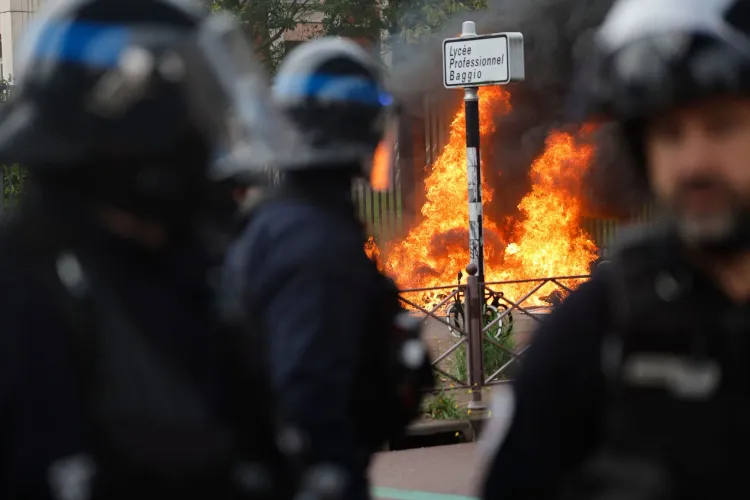
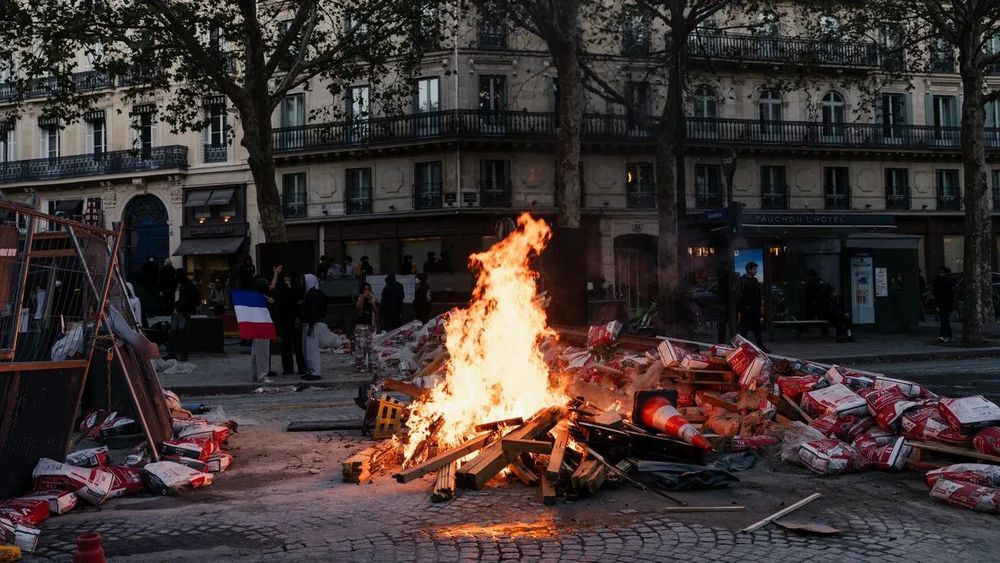
What exactly happened on October 17, 2026? The question demands answers as France grapples with scenes of chaos: the historic Limoges city hall engulfed in flames, Marseille's municipal building stormed by demonstrators, masked figures brandishing French flags, others looting stores and hurling stones at police while applauding the firefighters arriving to extinguish fires they themselves ignited.
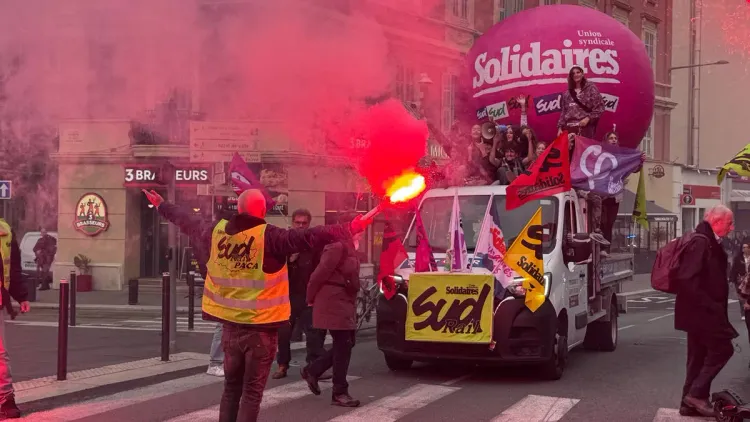
The scale of the unrest was staggering. Interior Minister Laurent Nunez reported approximately 550,000 participants nationwide, while the CGT union estimated 800,000 demonstrators. By day's end, about 1,200 people had been arrested across the country. The protests drew an unusually broad coalition: students, trade unions, remnants of the Yellow Vest movement, nurses, teachers, farmers, and retirees, all united in their opposition to rising living costs and deteriorating public services.
Colliding Narratives on the Same Stage
In the streets, incompatible genres overlap and blur. On one side stands a Ken Loach film: nurses, teachers, students, and Yellow Vest demonstrators—the France that carefully counts what remains at month's end and knows the sum falls short. The Yellow Vests, who first emerged on November 17, 2018, when 290,000 demonstrators donned the fluorescent high-visibility vests French law requires in every vehicle, staged 52 consecutive weeks of protests against economic hardship and inequality. Their presence links today's unrest to a longer struggle.
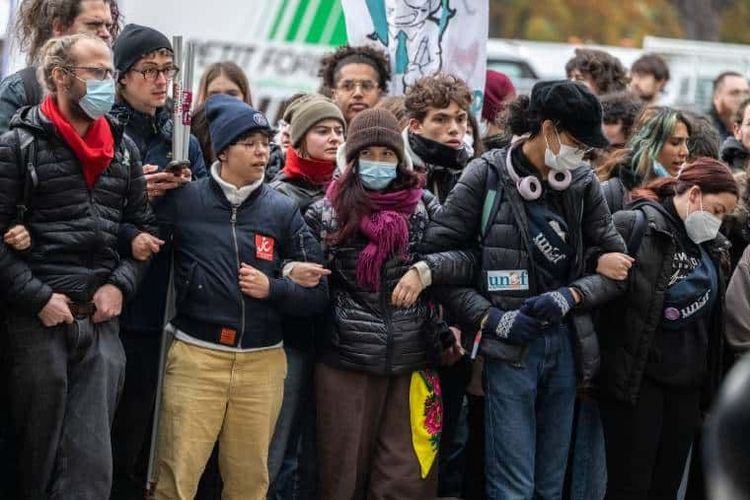
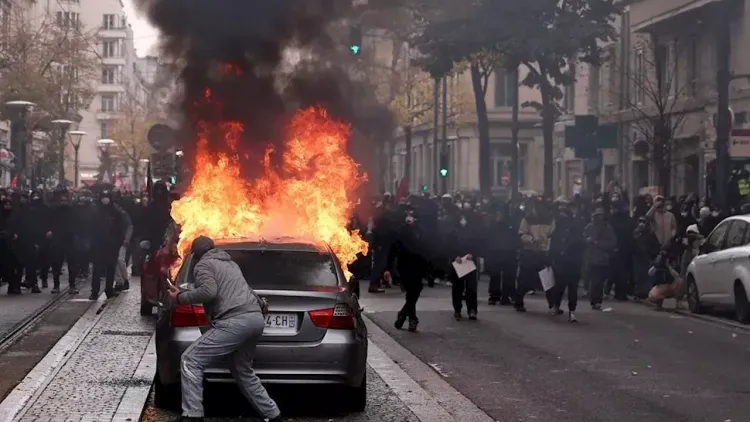
On the other side unfolds an action film reminiscent of Romain Gavras's 2022 Netflix production Athena, which depicted France descending into civil war following police violence, mixed with video game aesthetics. Masked figures kick in store windows, loot merchandise, and engage in high-speed chases. Some march with uncovered faces, making their distress visible as they attempt to build collective solutions; others hide behind anonymity, defying authorities while indulging in opportunistic theft.
But the theft extends beyond sneakers, clothing, and flat-screen televisions. By producing unforgettable images and commandeering public attention, these actors strip legitimate protesters of their most valuable asset: visibility. By occupying the same streets, they hijack the narrative. Everything becomes jumbled together.
Historic Destruction and Symbolic Vandalism
The damage to France's architectural heritage proved devastating. In Limoges, masked individuals set ablaze the city hall, a historic building inaugurated in 1883 and designated a monument historique by the French government in 1975. Two-thirds of the structure was destroyed, with the roof and bell tower collapsing as flames consumed the landmark.
In Marseille, several dozen protesters used street barriers and physical force to batter through the city hall's wooden doors, reportedly shouting revolutionary slogans. Once inside, they overturned furniture and toppled a bust of Marianne, the symbolic representation of the French Republic itself. One protester spray-painted an anarchist symbol on the wall before police intervention cleared the building. The attack on Marianne carried particular symbolic weight, transforming property damage into an assault on republican values.
A Spectacle Without Direction
The result is spectacular and chaotic, resembling a big-budget film without a director, where extras have gone rogue and a runaway algorithm has received an anarchist prompt: show me a protest combining all available footage from the past decade. Everything appears: Palestinian flags, yellow vests, even surgical masks—those scarce commodities during the COVID pandemic now essential equipment for seasoned demonstrators, protecting against both cameras and tear gas.
The chaos begins in this collision of irreconcilable languages, where everyone claims to speak for everyone else. It becomes the Republic of Babel, a Netflix-style multiplex of social reality where competing narratives play simultaneously in parallel worlds.
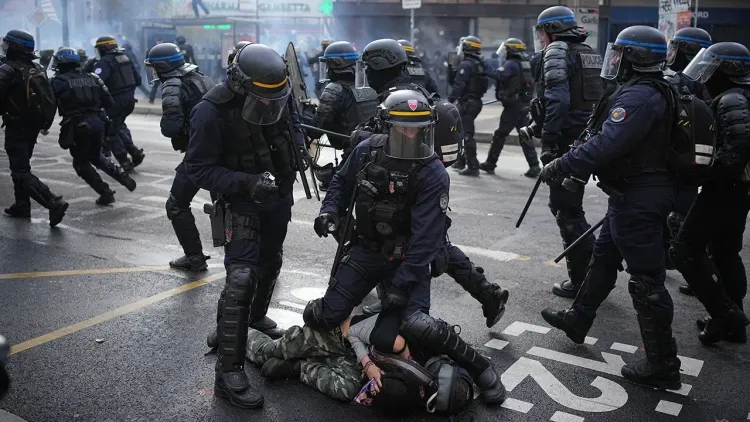
This pattern of civil unrest is not new to France. In 2023, the country experienced months of protest after President Emmanuel Macron's government raised the retirement age from 62 to 64, using Article 49.3 of the constitution to pass the reform without a parliamentary vote. That same year saw violent riots following a police shooting, resulting in attacks on town halls, schools, and police buildings, with over 600 arrests.
A Disorienting Reality for Observers
Consider the tourists' dismay. They arrived hoping to see Paris's lights, only to find the glow of fires instead. They dreamed of romantic comedy, of living out Emily in Paris, but instead find themselves plunged into anarchy in Paris. They wanted, like the pope, to visit the restored splendors of Notre-Dame, and instead encounter an immersive, uncomfortably realistic version of Les Misérables.
The challenge lies in distinguishing political symbolism from senseless frenzy, in understanding why certain acts occur and what they signify. When diverse groups converge in the streets—some seeking to build solidarity, others to exploit disorder—the result is a fractured narrative that resists simple interpretation. The October 17 demonstrations revealed France as a nation struggling not only with economic grievances but with the fundamental question of how to express collective discontent without descending into destruction that obscures the very message protesters seek to convey.