Officials face fallout from the violence
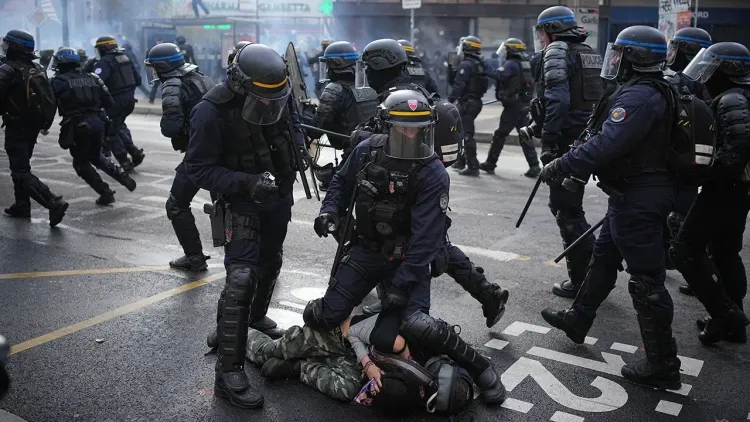
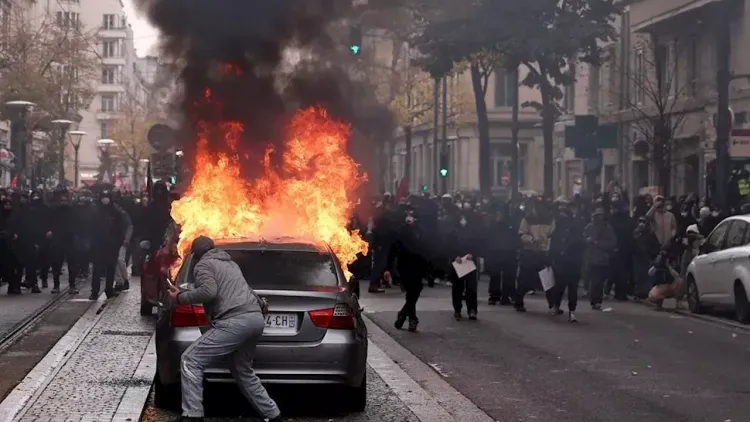
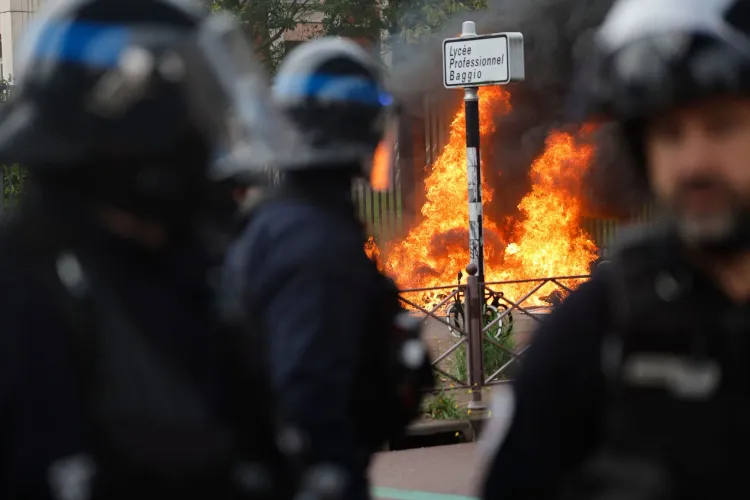
Interior Minister Laurent Nuñez acknowledged on Monday that police had "lost control" as looting and violence continued in some cities. He offered to resign, but President Emmanuel Macron rejected the offer. The Élysée Palace said Macron condemned authorities' "failures in anticipation and intelligence."
The damage included the destruction by fire of Limoges' town hall during the October 17 unrest. The building dated to 1883, drew its design inspiration from Paris's Hôtel de Ville and received historic-monument status in 1975. Its bell tower collapsed, and prefect Maurice Barate described the building as largely lost and the destruction as a catastrophe for the city's heritage.
Reports from authorities and local media initially counted about 300 ransacked shops nationwide; a subsequent update raised that figure to 615. Curfews followed in parts of Paris, Lyon, Lille and Nice.
Prime Minister Sébastien Lecornu blamed organized far-left groups for turning peaceful demonstrations into coordinated violence, calling it a possible "warm-up" for the 2027 presidential election. He promised to advance a "casseurs-payeurs" bill that would require vandals to pay repair costs.
How the school protests spread
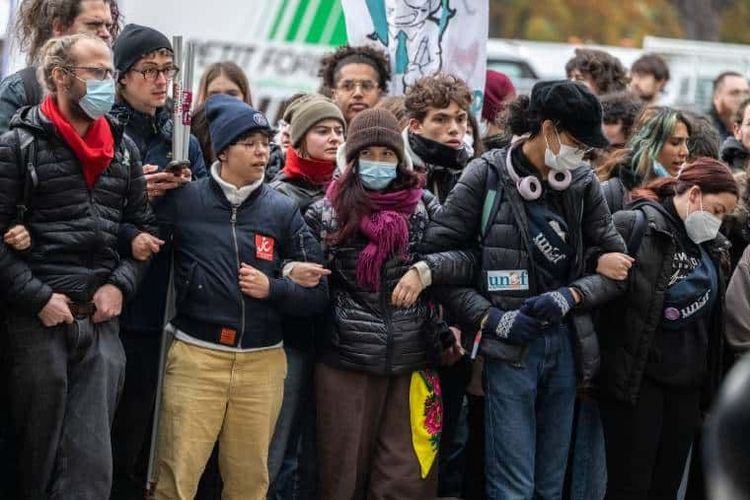
The movement began in September with students blockading a high school in Créteil over staff shortages, according to Newsweek. It then spread through the Paris suburbs, particularly Seine-Saint-Denis. France's 2026 budget eliminated more than 3,000 teaching positions; only after weeks of blockades did the education minister promise 3,000 replacement teachers.
By October 17, the demonstrations had drawn roughly 550,000 people nationwide, according to Nuñez. Organizers estimated attendance at about 800,000, with around 110,000 marching in Paris.
In his opinion column, Goldberg describes a movement that started peacefully over budget cuts, especially in education. As unions and socialist and communist parties joined, its demands broadened into opposition to austerity and calls for greater spending on pensions and other benefits. Many protest leaders and supporters have condemned the violence.
Goldberg separates those demands from the looting. In his view, the violence owes more to France's poor record of integrating immigrants from North Africa and the Middle East than to school funding. He argues that the ransacking of Louis Vuitton stores cannot credibly be explained as an effort to secure classroom supplies or higher teacher pay.
The dispute over taxes and public spending
Goldberg's central fiscal argument is that France has financed its public sector through borrowing for too long. He cites more than half a century of uninterrupted budget deficits and public debt that has climbed from about 15% of GDP in 1974 to 116% today.
He puts government spending at 57% of GDP in France, compared with 23% in the United States. His column also says French spending on social protection, including pensions and family benefits, is three times the U.S. level and exceeds that of every other country in Europe and the Organisation for Economic Co-operation and Development.
That assessment puts him at odds with economist Thomas Piketty, who attributes France's problems to a "capitalist logic" of insufficient public investment and inadequate taxation of the wealthy. Goldberg counters that the highest-earning 10% of French taxpayers supply 74% of personal income tax revenue, while the top 1% supply a third. He also cites France's corporate tax rates as the highest in the OECD.
Pensions are central to his criticism. Retirees account for spending equivalent to 14% of GDP, he writes, and Education Ministry pensions absorb a third of the education budget. He identifies that pension bill as one reason schools face tight funding.
Pension reform and the American comparison
Macron's 2023 move to raise the retirement age from 62 to 64 triggered protests that paralyzed France. The reform was suspended last month. Goldberg describes the country as caught in a "dependency trap": too few workers supporting the living standards of older generations.
He favors economic growth as the clearest response, while acknowledging how difficult it is to achieve. His criticism is not that French governments have ignored public demands, but that they have repeatedly accommodated demands for policies he considers financially unsustainable.
Goldberg extends the argument to the United States. Although the U.S. economy has grown twice as fast as France's over the past quarter-century, he sees similarities between young Americans' criticism of capitalism and the demands heard in France. He also argues that France's universal health insurance has not prevented political turmoil, while warning that U.S. Social Security and Medicare are approaching insolvency. He presents France's experience as a warning to address such pressures before they become crises.
Further demonstrations are already planned. Newsweek reported that Yellow Vest organizers called for an "Act II" on the Saturday following the October 17 protests, while unions called a national strike for November 5.