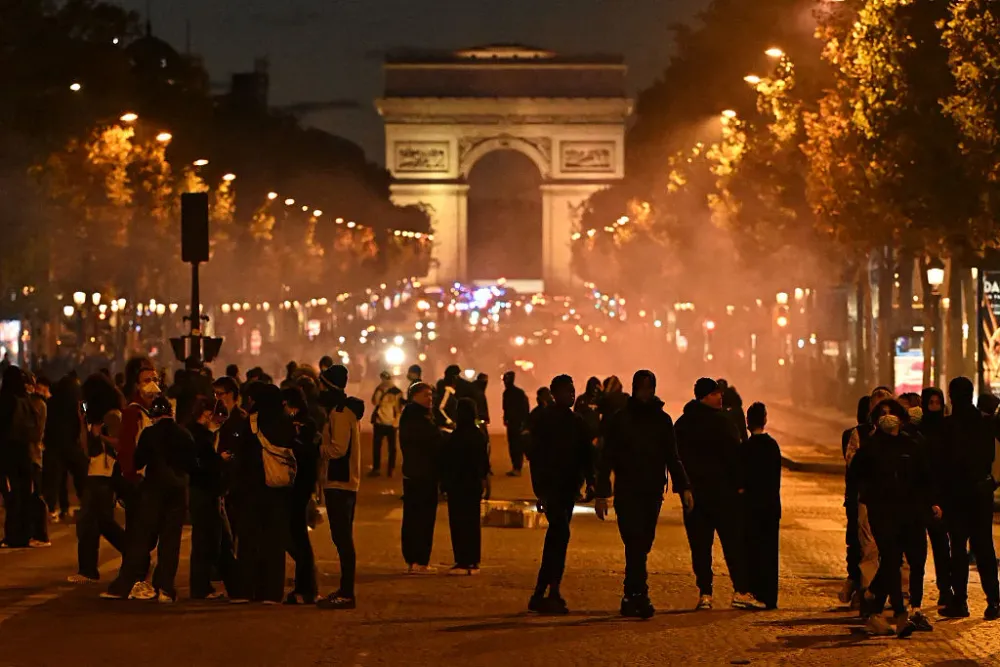
Education concessions amid wider protests
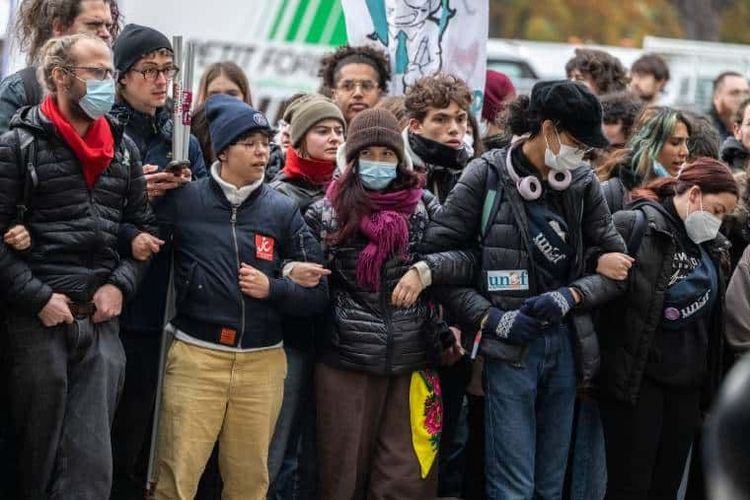
Campus blockades and marches began in late September over pressure on France's education system. By mid-October, the demonstrations had drawn people protesting fuel costs, persistent inflation and falling real wages.
The government responded on October 26 with proposed changes to university admissions, limits on classroom sizes and support for building renovations. According to RFI, Higher Education Minister Philippe Baptiste announced plans for "substantial change" to Parcoursup in the 2027 admissions cycle, followed by its replacement in 2028. No replacement has been designed, leaving implementation to the government that takes over after President Emmanuel Macron's term ends in 2027.
Ministers also pledged 15,000 additional higher education places over 2027 and 2028, far short of the 250,000 sought by student groups.
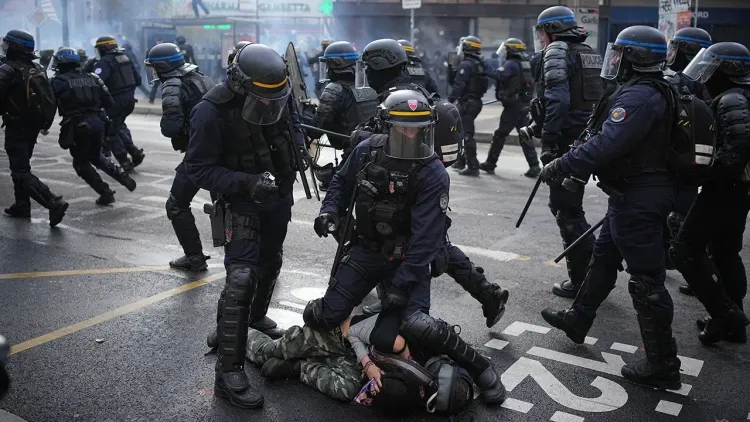
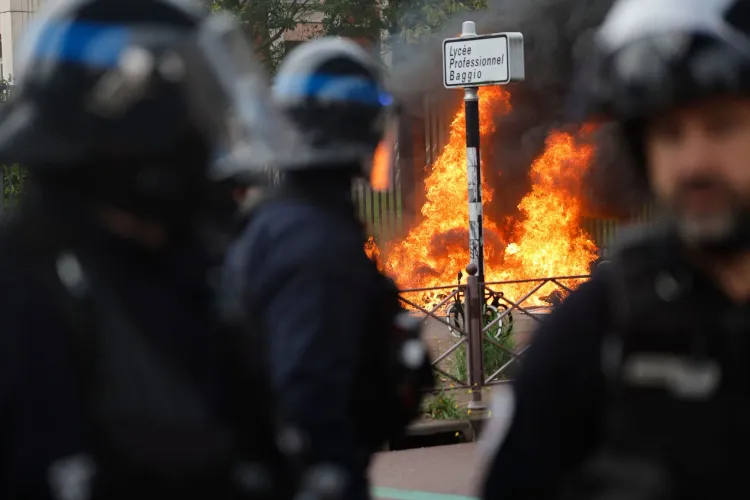
The demonstrations have brought a violent police response. Interior Minister Laurent Nuñez said on October 26 that authorities had arrested 1,435 people nationwide in connection with the latest protests, RFI reported. Official estimates put turnout at 410,000; organizers said nearly 800,000 attended. About 70,000 police officers and gendarmes were deployed.
Borrowing costs narrow the government's options
Prime Minister Sébastien Lecornu is trying to secure parliamentary support for tens of billions of euros in savings in the 2027 budget. His goal is a deficit of roughly 5 percent of GDP next year, but the protests are increasing pressure on opposition parties to withhold support. Macron's allies remain committed to protecting his pro-business tax cuts, another factor in the fiscal dispute.
France's deficit is forecast at 5.4 percent of GDP in 2026, the eurozone's highest. INSEE put public debt at €3.596 trillion at the end of June, equivalent to 119 percent of GDP and among the EU's highest debt ratios. A Bruegel analysis published October 12 placed public spending at about 57 percent of GDP, among the highest levels in advanced economies.
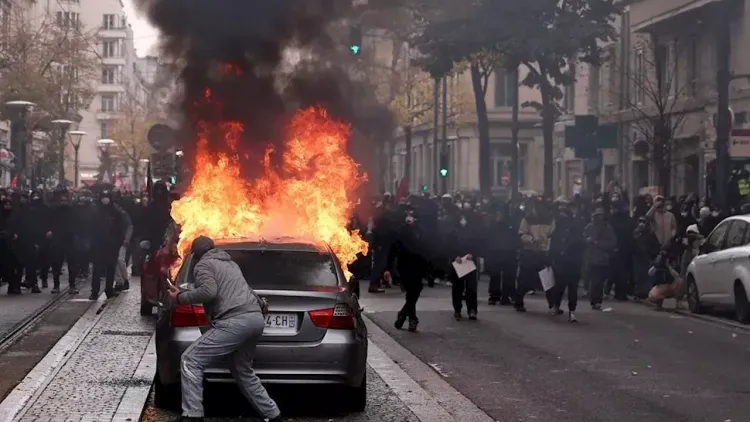
The government expects interest payments to rise from €79.2 billion in 2026 to €91 billion in 2027, an increase of almost €12 billion. Le Monde estimates that this year's debt-servicing bill will exceed the education ministry's operating budget. French government bond yields reached 5 percent in the week after the October 17 marches, some of which escalated into rioting.
ECB President Christine Lagarde has emphasized a domestic response. In remarks made the week before October 19 and reported by Euronews, she said the means to contain France's rising borrowing costs "must first be found in France," through budget measures that reassure investors.
Oxford Economics does not include a French debt crisis in its central forecast. Its severe bond-market shock scenario, however, would send both France and Italy into recession in 2027. Under that scenario, France's 10-year bond yield would reach 7 percent in the second quarter, and its deficit would exceed 6 percent of GDP.
Cost-of-living anger beyond France
Household finances help explain the breadth of the French protests. Le Monde reports that cumulative inflation of 21.7 percent since 2019 has outstripped an average salary increase of 18.7 percent, leaving real wages lower. Diesel prices have been around €2.36 per liter in October; gasoline cost €1.50 per liter when the Yellow Vest revolt began in November 2018.
During a trip to Gulf states last week to negotiate stopgap energy purchases, Macron attributed the loss of purchasing power to external shocks affecting the EU. Energy markets have been disrupted by the latest US-Israeli war on Iran, adding to inflation that persisted after Europe's efforts to reduce reliance on Russian oil and gas following Moscow's 2022 invasion of Ukraine.
Elsewhere, housing-cost protests in Spain prompted Prime Minister Pedro Sánchez to call snap elections for late November. Youth demonstrations have disrupted cities in Italy, Belgium and Greece. Some commentators describe a "Gen Z" revolt driven by economic insecurity, uncertainty about artificial intelligence and dissatisfaction with the political response to climate change.
These protests come as Europe faces pressure from Donald Trump's tariffs and Chinese competition in core industries, while trailing US and Chinese companies in high technology and AI. The Organisation for Economic Co-operation and Development expects eurozone growth of 0.8 to 1 percent in 2026. Former Italian Prime Minister Mario Draghi's September 2024 report warned of a European "slow agony," linking weak investment in infrastructure, green technology and public services with low wages and prolonged economic stagnation.
Disagreement over Europe's next budget
At the mid-October European Council meeting, German Chancellor Friedrich Merz and fiscally conservative allies sought cuts of "several hundred billion euros" to the EU's proposed 2028-2034 budget. They want an agreement before elections next year in France, Italy and Poland.
Germany, Austria, Denmark, Finland, the Netherlands and Sweden form the so-called frugal camp, contributing about 40 percent of the common budget, according to POLITICO Europe. In October, the Irish EU presidency offered a reduction of around 8 percent, or €159 billion in current prices, from the European Commission's nearly €2 trillion proposal. Merz and most of those countries considered that insufficient.
The EU budget already amounts to roughly 1 percent of the bloc's annual GDP. Merz wants lower allocations for agricultural subsidies and cohesion grants, freeing resources for priorities such as rearmament.
Sandro Gozi, a member of the European Parliament and leader of Macron's Renew Group, challenged that approach in comments to Jacobin. "It's difficult to insist on the need for more Europe when it comes to defense and innovation and then push to cut an already woefully low and insufficient budget," he said.
An adviser close to former Italian Prime Minister Enrico Letta described the French crisis as a warning for other countries: "The situation in France is an image of our future." The adviser cited weak parliamentary majorities, difficult budget negotiations, large investment needs, public discontent and rising market interest rates.
Presidential candidates propose confrontations with the EU
Ahead of the April 18, 2027, first round of France's presidential election, Jean-Luc Mélenchon is polling a distant second to Marine Le Pen. His party, La France Insoumise, advocates freezing government debt held by the Bank of France, which is part of the ECB system. It has also threatened to reduce France's EU budget contribution by 10 percent.
Le Pen told the Financial Times she was ready for a "trial of strength" over France's contribution. Her five-year counter-budget, presented October 6, seeks €140 billion in net savings by 2032 relative to 2026 and a deficit below 3 percent of GDP by 2030.
The plan calls for saving €11 billion through a reduction in France's EU contribution in 2027, eventually limiting its net contribution to €5 billion, the level of the early 2000s. OFCE economists questioned more than €80 billion of the proposed savings, describing them as poorly defined or difficult to implement.
Le Pen also supports a constitutional debt brake and steep spending cuts, while calling on the ECB to intervene to lower interest rates.