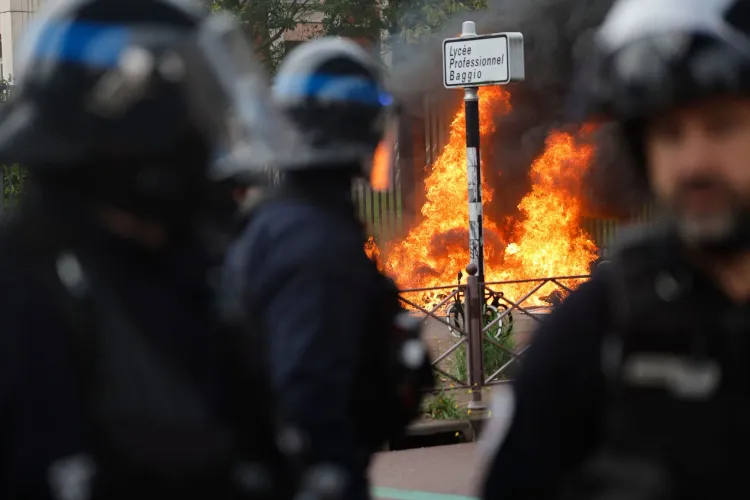
School grievances give way to wider unrest
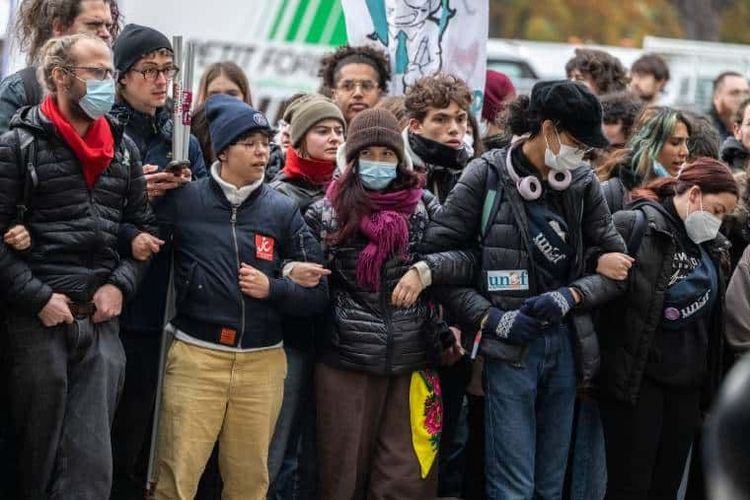
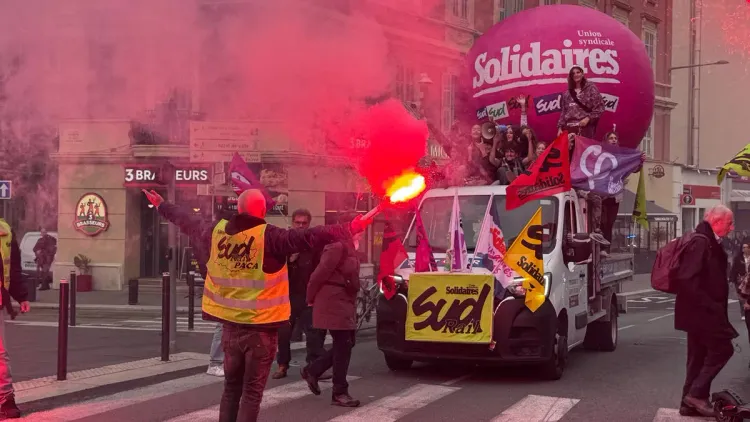
The demonstrations began in late September with high school students protesting staff shortages. Complaints expanded to crowded classrooms, deteriorating buildings and long school days, Deseret News reported. A New York Times opinion article, republished by the Post and Courier, describes the movement's subsequent growth into protests over economic conditions and violence directed at the state.
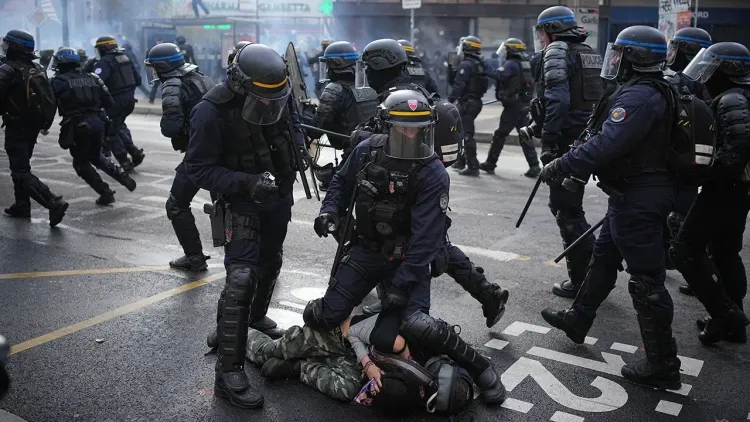
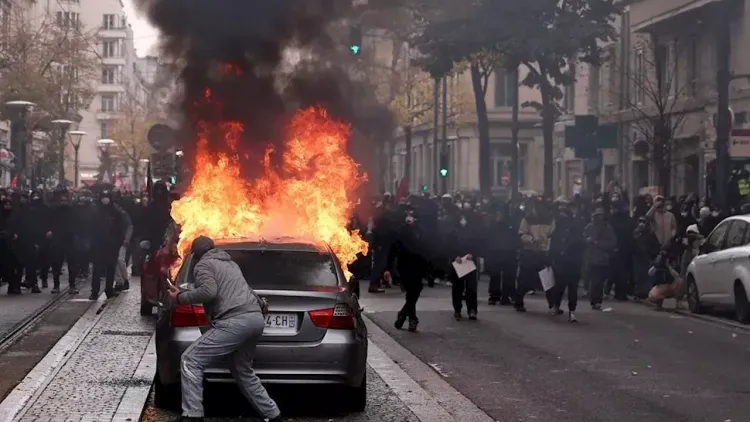
Following the October 17 demonstrations, the Interior Ministry reported 2,397 arrests and injuries to 997 police officers and gendarmes, seven of them critically, as well as the protester's death. Commerce Minister Serge Papin said at least 3,000 businesses had been damaged or looted, according to Deseret News.
In Limoges, rioters burned the town hall, a listed historic monument that opened in 1883. Its roof and upper floors were destroyed, and its bell tower collapsed. Town halls in Marseille, Lille, Grenoble and Angers were also entered by rioters or damaged, Deseret News reported.
Paris police imposed an overnight curfew in parts of the capital "to protect people and property from the violence and looting." Prime Minister Sébastien Lecornu called for limited local curfews, while President Emmanuel Macron rejected Interior Minister Laurent Nunez's offer to resign, according to Deseret News.
Retirement policy divides the candidates
Pensions are one of the central disputes surrounding the 2027 election. The Times opinion article argues that successive prime ministers have struggled to secure an increase in the retirement age from 62 to 64, describing the measure as politically untenable and its postponement until after the election as a way for the current prime minister to remain in office.
The French government's Service-Public portal sets out the current timetable: under the 2026 Social Security Financing Law, increases in both the statutory retirement age and the required contribution period introduced by the 2023 reform are suspended until 2028. The retirement age of 64 will apply starting with people born in 1969, rather than 1968. For those born from 1964 through 1968, the legal retirement age ranges from 62 years and nine months to 63 years and nine months.
Far-right front-runner Marine Le Pen proposes lowering the retirement age to 62, at an estimated annual cost of €9 billion, while far-left leader Jean-Luc Mélenchon favors a return to 60, according to POLITICO.
Center-right candidate Édouard Philippe took the opposite approach in a plan unveiled on September 29, 2026. He proposed gradually moving the legal retirement age from 64 to 65 within a decade, increasing the required contribution period from 43 to 45 years and introducing mandatory private pension savings. His campaign director estimated annual savings of €35 billion, POLITICO reported.
An argument over France's economic model
The Times opinion article places the unrest within a broader critique of France's social and economic system. It says American liberals have admired the country's universal healthcare, inexpensive daycare, worker protections and extensive benefits, but argues that this model can no longer deliver on its promises.
The author's central contention is that France has failed to reconcile support for older people and opportunity for the young with the demands of a competitive economy. The article cites youth unemployment of about 20%, nearly three times Germany's rate, alongside statutory employer social costs of roughly 45% of gross salary, which it identifies as Europe's highest.
With government spending accounting for 57% of gross domestic product, the author attributes deteriorating public services to an overextended state rather than insufficient spending. That is the opinion article's diagnosis, not a finding of the reports on the demonstrations.
The piece also cites average annual wages, measured in U.S. dollar purchasing power, as more than 30% below U.S. levels. It points to France's 32nd-place position in the World Bank's final ease-of-doing-business rankings in 2020 and its limited representation among the world's 100 largest companies by market capitalization: four French companies, compared with 62 from the United States and 11 from China and Hong Kong.
Polling and the foreign-policy stakes
A Cluster 17 poll for POLITICO offers a snapshot of the electoral contest after the violence. Conducted online on October 19–20, 2026, among 3,000 people, it put Le Pen at 33% of first-round voting intentions in a scenario with Philippe representing the centrist bloc, according to RFI. Mélenchon drew between 18.5% and 19.5%, depending on the scenario tested; Philippe stood at 16% and Raphaël Glucksmann at 13%.
The Times article raises the possibility of a Le Pen–Mélenchon runoff and emphasizes their shared opposition to military aid for Ukraine, despite their otherwise opposing politics. It also says both favor France's partial or complete withdrawal from NATO.
The author argues conditionally that, insofar as the unrest improves either candidate's presidential prospects, it also increases the likelihood of Vladimir Putin eventually winning the war. The article ends by suggesting that the violence and curfews could instead prompt the French to reconsider the dangers of taking political conflict into the streets.