A proposal predating the latest unrest
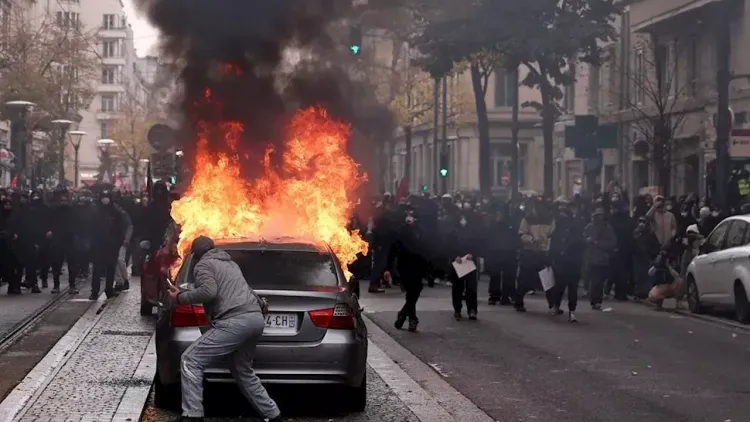
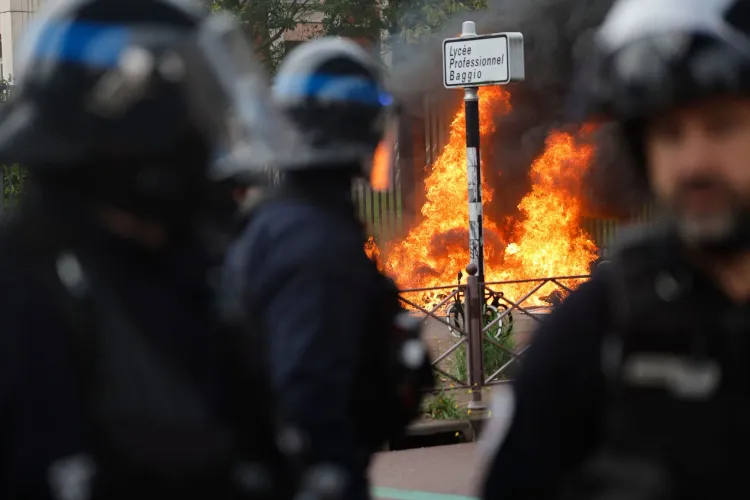
President Emmanuel Macron's government is pressing the legislation as it faces pressure to contain social protests and some of France's worst unrest in years. But the proposal began before the nationwide looting and rioting of October 17.
According to Amnesty International, the government announced the bill in summer 2026 following violence and property damage during the UEFA Champions League final that May. Officially titled "Compensation for damage resulting from violence or property damage in public spaces and the recovery of damages," it went before the Council of Ministers on September 16.
The Senate's law committee approved the proposal on October 21. RFI reported that the committee is dominated by a right-wing and centrist alliance and that lawmakers rearranged the parliamentary calendar to hold the full Senate debate on October 27 and 28.
Who could be held responsible
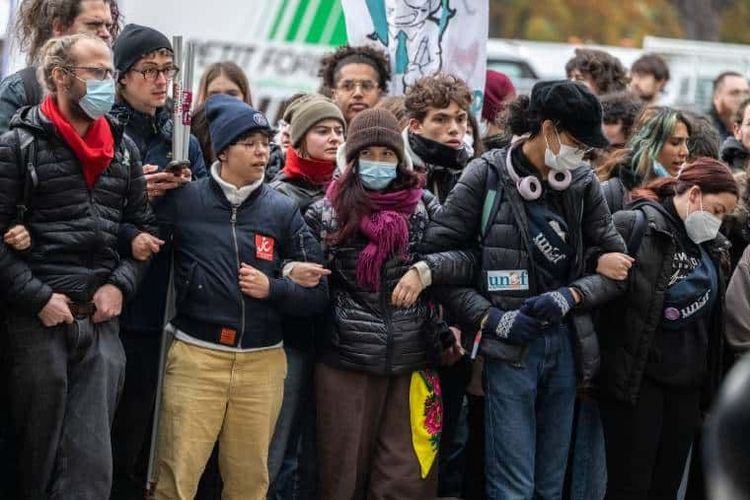
Under the draft, knowingly joining a group could make a person jointly liable for damage done by another member, Reuters reported. Critics argue that this wording could expose legitimate demonstrators to legal responsibility and prosecution simply because they were near violence.
Paris-based lawyer Hanna Bouchareb, who represented people accused of involvement in the October 17 rioting during fast-track trials, said peaceful participants should not be held responsible for violence on the fringes of demonstrations.
"Around the edges of a protest there can be those who engage in violence or damage with no involvement from the vast majority of peaceful, legitimate demonstrators," she told Reuters. "It's very problematic because it undermines the right to protest."
Interior Minister Laurent Nunez disputed the claim that the proposal breaches the principle of individual accountability. "What this draft law changes is that we are creating a joint responsibility - not a collective one," he told TF1. Nunez had offered to resign the previous week after security forces were overwhelmed by the unrest, but Macron asked him to stay.
France's Human Rights League, known as LDH, and a group of trade unionists rejected that distinction. In a column published in Le Monde over the weekend, they called for the bill to be withdrawn.
Legal experts have also raised constitutional concerns, RFI reported. French law limits criminal responsibility to a person's own actions, while the 1789 Declaration of the Rights of Man and of the Citizen protects the presumption of innocence. In its September 3 opinion, the Conseil d'État sought clear limits on collective liability in both time and place, to prevent someone identified near violence from having to pay for damage without a sufficient connection to their participation.
Benefits and other powers at issue
The proposal would allow the state to recover compensation from the welfare entitlements of people convicted, or from their parents' benefits when those convicted are minors. Amendments adopted by the Senate's law committee on October 21 widened the range of benefits subject to seizure.
Amnesty International urged lawmakers to reject the bill on October 26, warning that it would discourage people from exercising their freedom of peaceful assembly. The organization said family social security allowances and housing benefits are generally protected from seizure under current law. The bill would introduce exceptions permitting recovery from those payments and from the Active Solidarity Income, or Revenu de Solidarité Active.
The committee also supported an additional ban on remaining in France for foreign nationals convicted of certain serious offenses connected with urban violence.
A separate provision concerns social media. France 24 reported on October 27 that senators were to vote on whether the government could block platforms that respond too slowly to authorities' reports of dangerous content.
The government's compensation argument
The government says people whose property is vandalized during protests need compensation. Authorities estimate that damage to shops and public buildings during the October 17 unrest totaled several hundred million euros, according to RFI. Businesses and retailers also report losses running into millions from looting, vandalism and the need to close stores and board up windows during demonstrations.
Prime Minister Sébastien Lecornu called the legislation "absolutely essential," saying taxpayers should not repeatedly have to cover damage from protests that turn violent.
Supporters cite surveys indicating broad public backing. Marine Le Pen's far-right National Rally, or RN, wants the legislation to go further. Le Pen is the far-right frontrunner for next year's presidential election.
"The vandal's law is good in that it recognises the principle of joint responsibility," RN senator Edwige Diaz told French television. "But not with a cap at 10,000 euros."
The party proposed a similar measure in 2024, RFI reported, but both the government and the left rejected it at the time.
Renewed scrutiny of policing
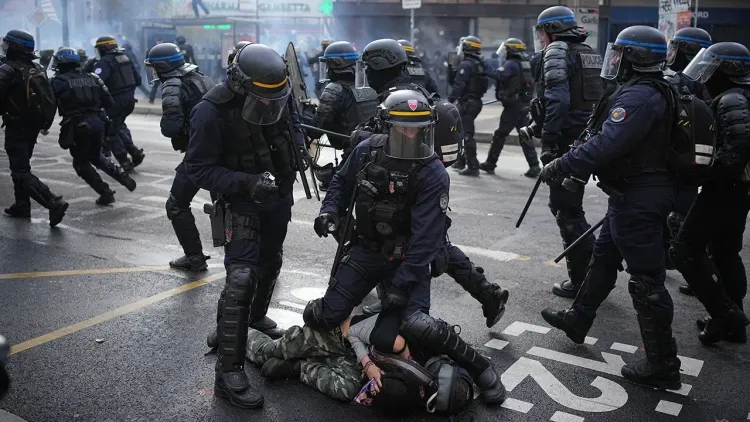
The dispute comes amid renewed allegations about police conduct. In recent weeks, protesters have accused officers of heavy-handed treatment of student demonstrators, while Bouchareb and other lawyers have questioned the legality of fast-tracked convictions following the rioting.
Earlier disputes included accusations of excessive police force against anti-government "yellow vest" protesters in 2020. A law restricting the circulation of police officers' images in certain circumstances also drew criticism then and was subsequently watered down.