From school protests to wider unrest
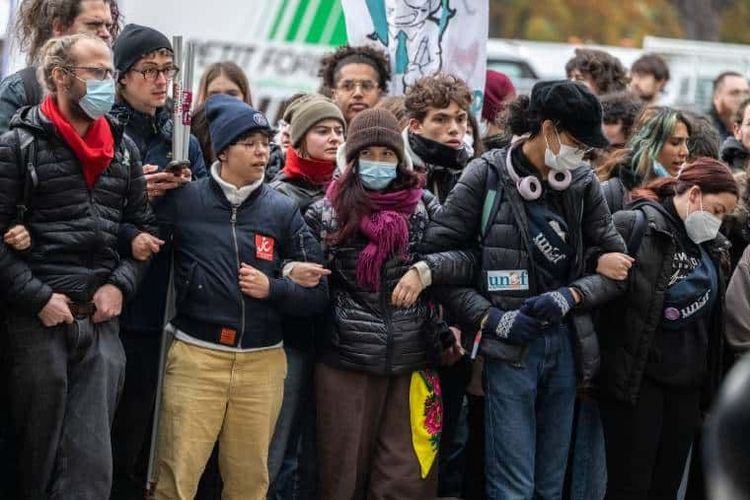
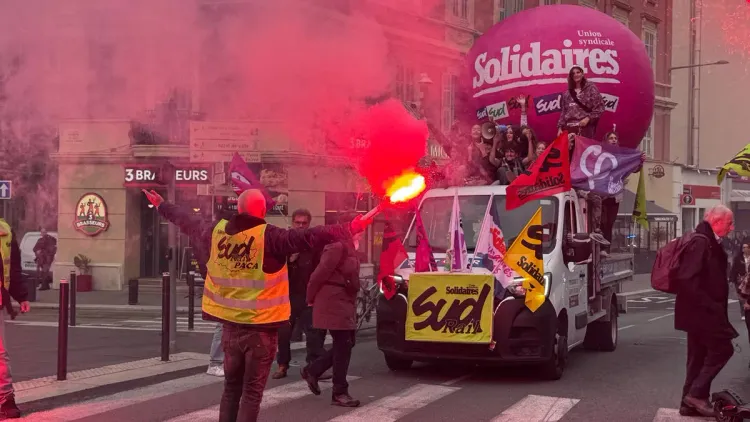
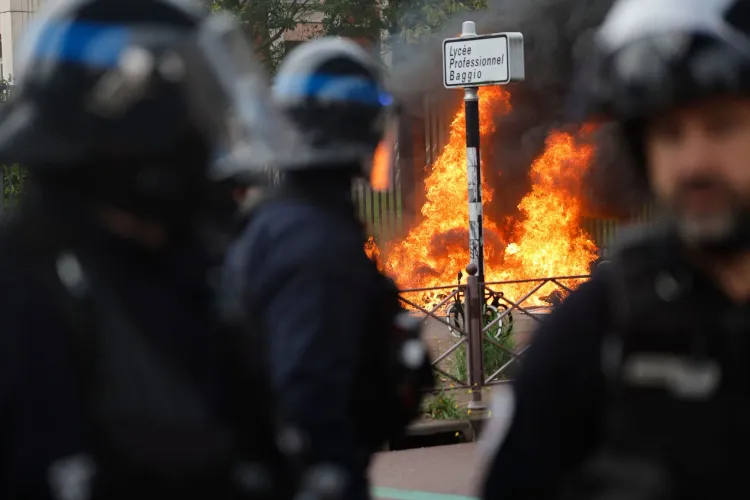
The protests began in late September over conditions in French schools: too few teachers, overcrowded classrooms, deteriorating buildings and long school days. According to CNN, the BBC and Deseret News, the student-led demonstrations later expanded into a broader movement over the cost of living.
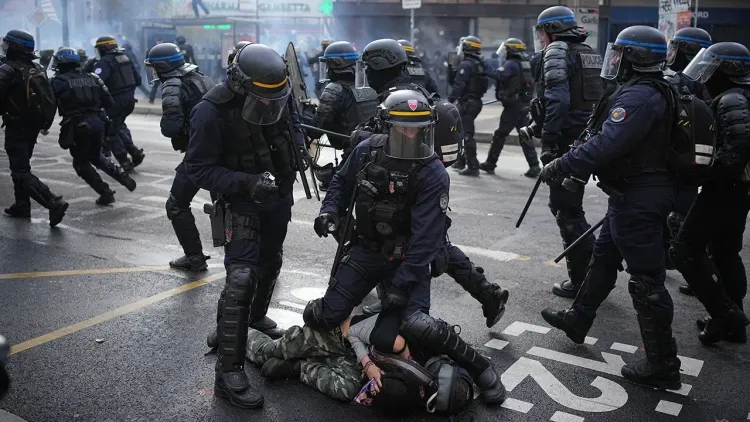
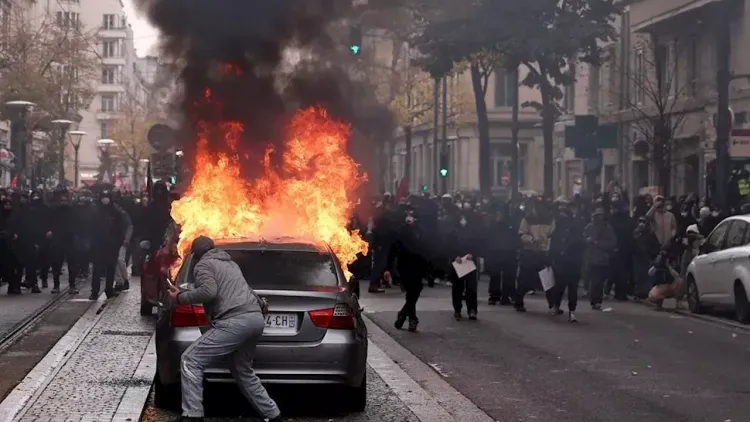
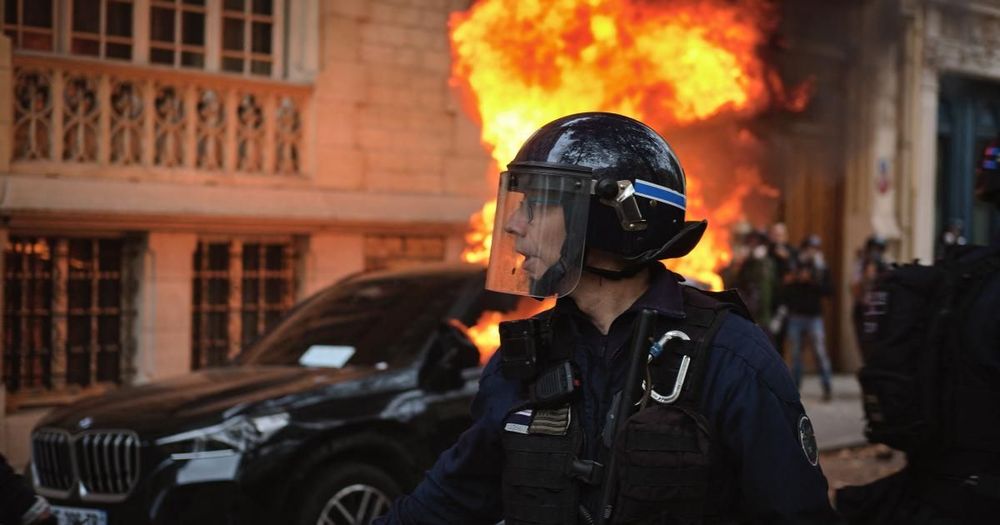
CNN reported about 2,400 arrests during the October 17 weekend of rioting, with property damage and theft estimated at several hundred million dollars. Those figures followed more than 6,000 arrests and damage to more than 100 schools during the preceding weeks of student protests.
Interior Minister Laurent Nuñez offered to resign because police had failed to contain the violence, according to CNN and Deseret News. Macron declined the offer and ordered the security review, while Prime Minister Sébastien Lecornu called for limited curfews at the local level.
Allegations of political involvement
A September 29, 2026 French intelligence report, published by Le Figaro and covered by the BBC, alleged that student unions and political movements aligned with the radical left were manipulating the demonstrations. It also suggested that La France Insoumise, or LFI, was using violence as an electoral strategy ahead of the 2027 presidential vote. LFI denies that allegation.
Violent protests also occurred in Belgium in the days after the French riots, the BBC reported. Belgian Interior Minister Bernard Quintin warned on October 20 of the "TikTokisation" of violence and blamed unrest in Brussels and Liège on "known far-left groups."
What the comparison with de Gaulle rests on
A Heritage Foundation commentary, originally published by the Washington Examiner, places the unrest in France's history of street protests that challenge political authority. It argues that Macron lacks de Gaulle's stature, portraying the current president as weak and his economic record as a failure. De Gaulle, by contrast, led the Free French during World War II.
The commentary recounts de Gaulle's secret flight on March 29, 1968, to the French military base at Baden-Baden in Germany as leftist protests paralyzed France. He wanted to establish whether the army remained loyal. Gen. Jacques Massu later recalled de Gaulle telling him: "Everything is ruined, the communists have caused a total paralysis of the country. I command nothing anymore. I'm going to quit."
According to Massu's account, he assured de Gaulle of military support and urged him to go back to Paris. The next day, de Gaulle declared, "I will not resign." He dissolved the National Assembly and called a snap election. Supporters filled the Champs-Elysées, and the Gaullists' election victory weeks later restored his authority.
De Gaulle had himself returned to power amid the 1958 crisis over the war in Algeria. The commentary argues that street pressure helped bring down the Fourth Republic and usher in the Fifth Republic's stronger presidency.
The commentary also identifies differences from 1968. Clement Liebard, president of the conservative student organization La Cocarde Etudiante, told its author that trade unions are less involved today. The author also describes Islamic demonstrators carrying Palestinian and Algerian flags as participating in an alliance with communists.
Electoral stakes and Le Pen's pending appeal
The Heritage commentary argues that the violence benefits the Right electorally and describes Marine Le Pen of Rassemblement National as poised to defeat LFI's Jean-Luc Mélenchon by 67% to 33% in a presidential runoff. Liebard told the author that the riots and LFI's involvement give Le Pen "the perfect arguments," but also help Mélenchon mobilize voters and train activists. The commentary says Mélenchon has promised a Sixth Republic with a new Marxist constitution if elected.
Separately, The Rio Times reported that an Ifop poll conducted October 17-19, 2026, for LCI, Le Figaro and Sud Radio placed Le Pen at 36% and Mélenchon at 16.5% in the first round. Its hypothetical runoff gave Le Pen 68% to Mélenchon's 32%.
The election's first round is scheduled for April 18, 2027, and the runoff for May 2, according to The Connexion and The Rio Times. Macron is ineligible for another consecutive term because the constitution limits presidents to two in succession.
Le Pen also has an unresolved legal case. According to The Rio Times, her March 2025 conviction for misusing European Parliament funds brought a five-year ban from office that took effect immediately. An appeals court upheld the conviction on July 7, 2026, but reduced the ban to 45 months, suspended 30 of those months and removed its immediate effect. Her final appeal remains pending before the Court of Cassation.