Unrest puts French authorities under pressure
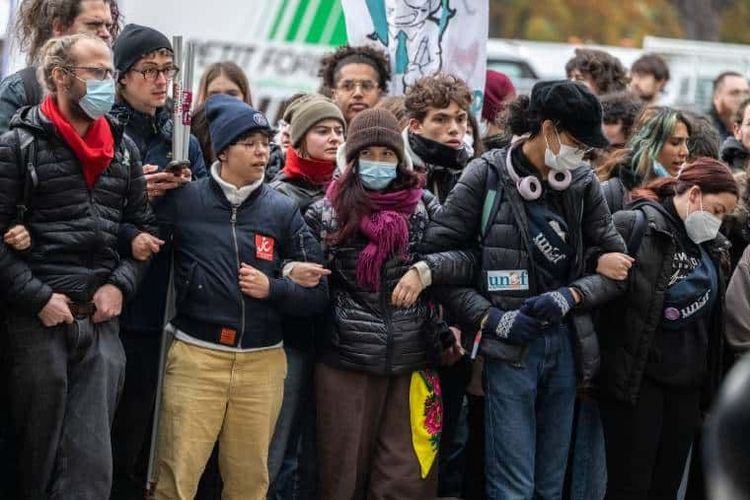
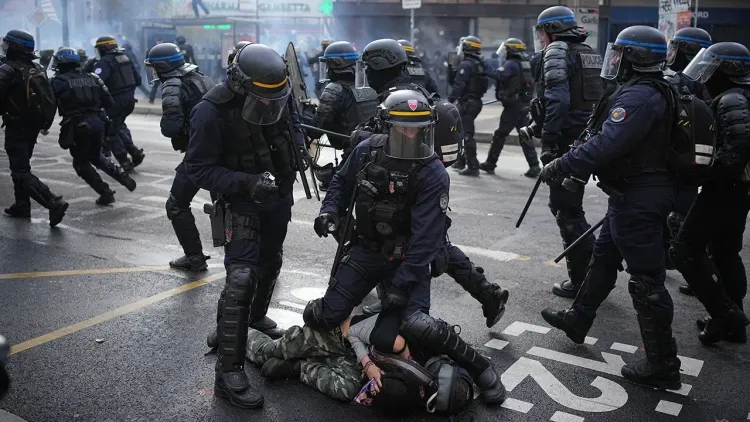
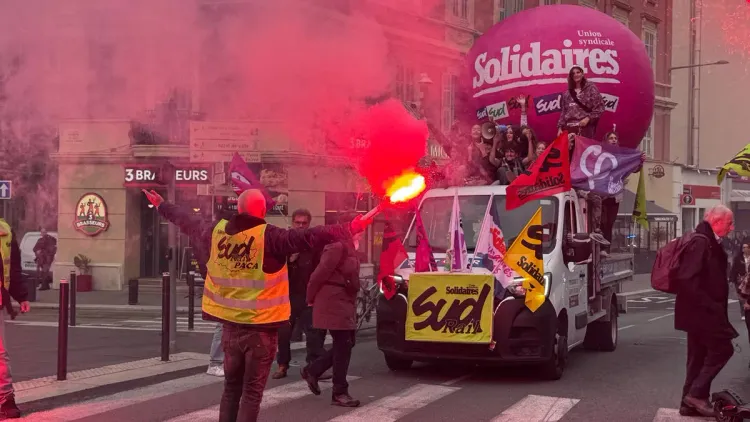
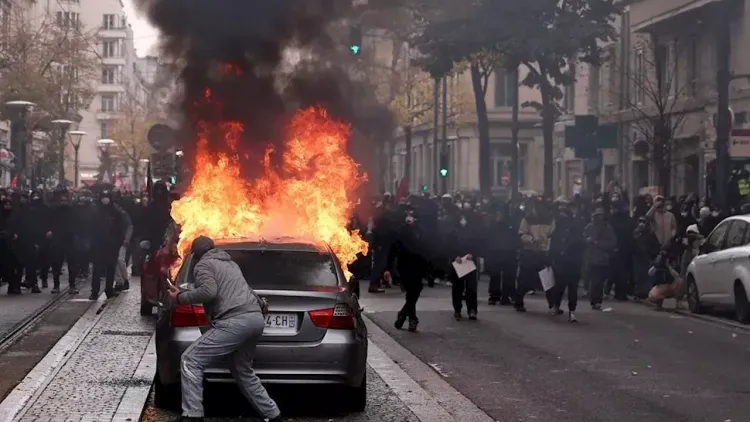
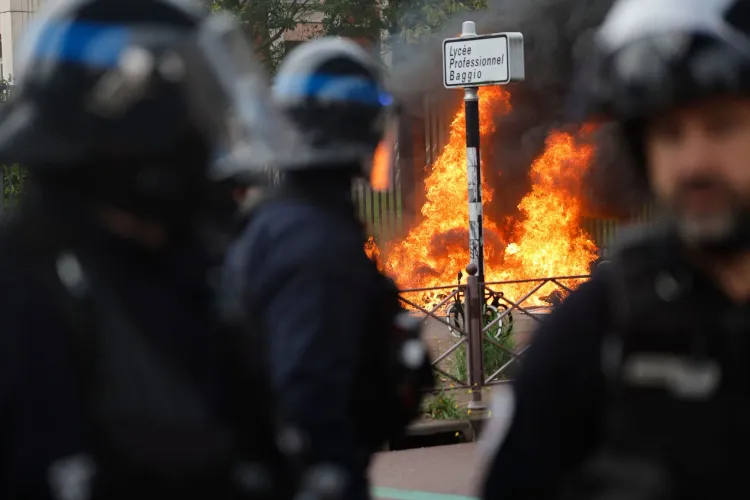
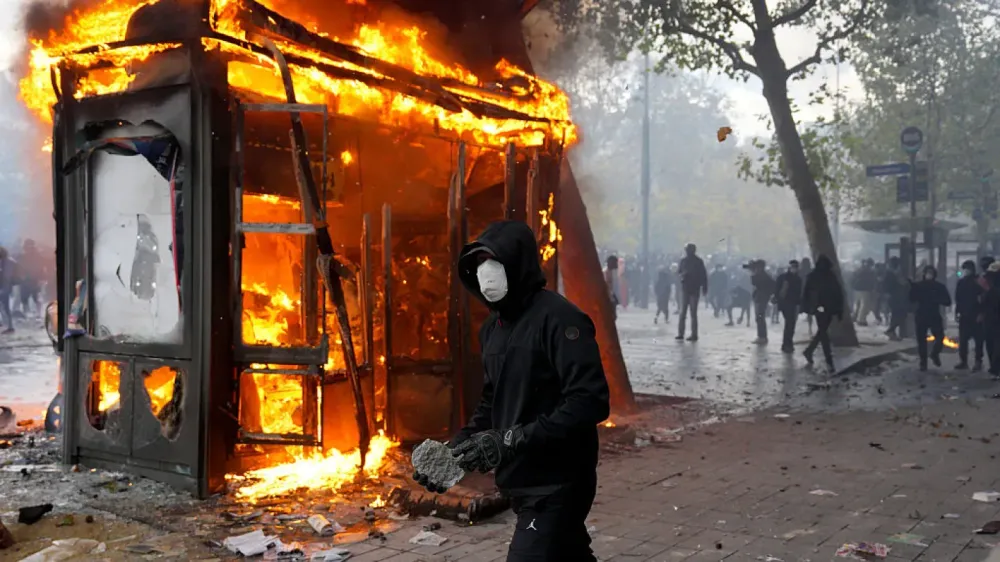
The mid-October violence included burning cars and public buildings, with about 3,000 businesses damaged or looted across France, according to Dror's account. Authorities imposed nighttime curfews in some areas. A week later, more than 400,000 people joined another round of marches, with clashes in Paris and Marseille.
Interior Minister Laurent Nuñez offered to resign after acknowledging that police had "lost control" in some major cities, RFI reported on Oct. 19. President Emmanuel Macron refused the resignation and instead asked him to examine ways to improve street safety and bring those responsible for the weekend's violence to justice, according to BBC News.
The Interior Ministry said roughly 1,000 police officers were injured during the Oct. 17 protests, including seven seriously. The Paris public prosecutor's office reported that more than 700 people had been taken into police custody in Paris in connection with that weekend's unrest.
Reports that stolen goods were appearing on resale websites prompted Commerce Minister Serge Papin to announce an Oct. 19 meeting involving the platforms and the interior and justice ministries. He said the platforms were expected to remove those listings immediately.
Before the following weekend, representatives of the Yellow Vest movement had called for demonstrations on Oct. 24, RFI reported. The movement previously held months of protests over fuel price increases and living costs in 2018 and 2019. Elsewhere in Europe, Italy approved an additional deployment of 500 soldiers after riots in Milan.
A warning about exploitation, not orchestration
Dror distinguishes the causes of the protests from his concerns about their aftermath. Students, unions and people protesting school conditions and living costs drove the demonstrations, he writes. French security sources identified radical-left activists as leading participants in the violence and described much of the looting as opportunistic.
His argument is not that the unrest constitutes a Muslim uprising or an Islamist operation. Rather, he contends that sustained damage to public trust can give established networks an opportunity to expand, even when they had no role in starting a crisis.
In Dror's account, Europe's strong institutions make a government collapse unlike the upheavals in Egypt and Syria implausible. The concern is instead local: where residents believe public authorities have failed, a network offering education, charity, sports activities and a shared explanation for their grievances may gain influence.
He cites security sources who attributed much of the looting to young men from housing estates, many with substantial populations of immigrant origin. He explicitly rejects treating those looters as Islamists. His concern is that alienation could make some susceptible to recruitment in neighborhoods where Brotherhood-linked organizations have developed local networks.
What France's report said about local networks
A May 2025 report commissioned by France's Interior Ministry provides the basis for much of Dror's warning. Its examination of the Muslim Brotherhood and political Islam described entryism: efforts to gain influence through religious, educational and community institutions rather than overt violence.
The report used the term "municipal Islamism" for a bottom-up approach involving mosques, schools, sports clubs and pressure on local elected officials. It did not establish a scheme to take over the French state, Dror notes, but warned of a long-term undertaking that could damage "the fundamental interests of the nation."
According to BBC News, two senior civil servants prepared the report, which went before a security cabinet chaired by Macron on May 21, 2025. Macron subsequently requested new government proposals responding to its findings.
The report identified the Federation of Muslims of France as the Brotherhood's principal French branch. It attributed control of 139 places of worship to the federation and listed another 68 as affiliated, together representing about 7% of Muslim places of worship in France. It also described a network of approximately 280 associations working in areas including sports, education and charity, along with 21 schools.
Dror cautions that providing charity or religious education does not itself amount to subversion. He proposes judging organizations by whether they seek to put religious authority above civil law, silence dissent or weaken equal citizenship.
Funding and the push for an EU listing
On Jan. 22, 2026, France's National Assembly adopted a European resolution asking the European Commission to put a proposal before the Council to list the Muslim Brotherhood movement and its leaders as terrorist organizations. The resolution was a political request, not an EU terrorist designation.
The adopted text also cited Jordan's April 23, 2025, decision to prohibit all Brotherhood activities, shut its offices and begin confiscating its assets.
Dror writes that the committee report supporting the French resolution estimated Qatari investment in Brotherhood-oriented European institutions at tens of millions of euros since the early 2000s. Drawing on the 2019 Qatar Papers investigation, it discussed roughly 140 projects financed through Qatar Charity, largely mosques, schools and Islamic centers.
French journalists Georges Malbrunot and Christian Chesnot conducted that investigation. In an April 2019 Gulf News interview, Malbrunot described 140 Qatari-funded projects across Europe, including 50 in Italy, with funding totaling about €90 million.
The committee report also acknowledged limits and changes in that support: Doha had moderated its funding, and stricter scrutiny had closed some channels. Cultural, educational and sports associations, however, remained outside that oversight, according to the report.
Why Dror turns to Egypt and Syria
Dror uses Egypt's 2011 uprising to illustrate how an organized movement can benefit from demands for change that others initially lead. Secular activists, students and civil society organizations spearheaded protests against Hosni Mubarak. When the Muslim Brotherhood joined, it brought longstanding religious, charitable and political connections.
Mohamed Morsi, the Brotherhood's candidate, won the presidency in June 2012, although the military removed him a year later. For Dror, the episode shows that initiating an uprising and being positioned to gain power from it are different things.
His Syrian comparison follows a more violent sequence. Protests seeking dignity and reform began against Bashar Assad in 2011; repression, civil war and the fragmentation of state authority then created room for armed Islamist factions to grow. An offensive led by Ahmed al-Sharaa, formerly the commander of al-Qaeda's Syrian affiliate, brought down Assad in December 2024.
Dror argues that al-Sharaa's subsequent presentation of himself as a pragmatic national leader warrants scrutiny. According to Wikipedia, the interim president signed a constitutional declaration in March 2025 setting a five-year transition, with elections planned afterward, and making Islamic jurisprudence the main source of legislation. The same source says his government's campaign against the Kurdish-led Syrian Democratic Forces culminated in the SDF's dissolution and the integration of its civil institutions in August 2026.
Dror also draws on his command of Operation Good Neighbor, Israel's humanitarian mission for Syrian civilians across the Israeli border, from 2016 to 2018. He describes a fragmented setting shared by families, local armed factions and jihadist groups with sharply different aims. Distinguishing people in need from ideological actors, and understanding how organized factions accumulated influence, were central challenges, he writes.
These examples are intended to explain a process, not forecast a similar outcome in Europe, Dror emphasizes.
Political alliances and the response Dror advocates
Dror also examines temporary alignments among groups with incompatible goals. He contrasts the radical left's secular individualism with Islamists' commitment to religious authority, while arguing that hostility toward Israel, political elites or police can bring them together tactically without a shared long-term program.
French security sources described an "unprecedented" alliance on the streets between the ultra-left and young people from housing estates during the October violence. Dror does not characterize that cooperation as Islamist. He uses it to illustrate how groups can unite around an immediate adversary despite broader differences.
In Lille, Palestinian flags appeared alongside union banners at a demonstration over schools and living costs. Dror distinguishes expressions of solidarity with Palestinians from the use of the flag as a symbol of resistance to Western governments, warning against assigning every participant the same meaning.
Far-right and far-left parties also hope to turn the unrest into electoral gains, he notes. He contrasts that open competition for votes with what he describes as a less visible Islamist effort to build durable local influence through institutions, often with foreign funding.
Dror frames his concern as a defense of constitutional rights, not a conflict with Europe's Muslim citizens, millions of whom want the same freedom and security as their neighbors. Equating Islam with Islamism, he argues, would serve extremist propaganda.
He invokes Israel's experience on Oct. 7, 2023, as a warning against assumptions about an ideological movement's intentions and capabilities, while explicitly distinguishing Europe's demonstrations from the Hamas massacre.
His proposed response combines prosecution of arson and looting with protection for peaceful demonstrations, transparent foreign-funding rules and action on grievances that deepen alienation. In his view, maintaining order requires both legitimate public institutions and scrutiny of organizations seeking to weaken the rights those institutions protect.