Frankfurt bears the brunt of German unrest
Frankfurt was the main flashpoint after Germany's Halloween demonstrations. Hesse Interior Minister Roman Poseck said on Nov. 1 that 17 stores had been damaged, including five that were looted. About 1,300 officers were deployed, more than 100 were injured in clashes, and police took 54 people ages 13 to 29 into custody.
A gun store was among the businesses looted. At least two firearms were stolen before police arrested a suspect and recovered the weapons. Police also came under attack with a Molotov cocktail. Much of the footage showing youths looting and clashing with officers was livestreamed on TikTok.
The violence extended beyond Frankfurt. In Hamburg, burning barricades were erected near the central bus station; police detained 120 people, and 11 officers were injured. Berlin recorded at least 60 detentions and 27 injured officers. Police reported more than 200 arrests across Germany.
Federal Interior Minister Alexander Dobrindt said on Nov. 1 that authorities would identify the rioters and looters and that severe penalties should follow. He blamed violent left-wing groups and troublemakers from migrant communities for taking over otherwise peaceful demonstrations.
Poseck estimated that 1,000 to 1,500 violent troublemakers were involved, describing them as predominantly from immigrant backgrounds. He also said most of those arrested were German nationals. Visegrád 24 had separately attributed the store attacks to young first- and second-generation migrants in posts on X.
Organizers reject violence and call another protest
The Gen Z regelt initiative, whose name means "Gen Z's got this," organized the German rallies to press for education, health care, climate protection and affordable living, and to oppose the return of military conscription. Organizers estimated attendance at about 120,000 across 34 cities, short of their projection of roughly 180,000.
The initiative distanced itself from the looting and violence after the rallies. A spokesperson said organizers had no influence over what happened once the demonstrations ended. The group has called for another round of nationwide protests on Nov. 14.
Conscription remains under debate. Under the Military Service Modernisation Act, which took effect on Jan. 1, 2026, more than 300,000 letters were sent to 18-year-olds. Al Jazeera reported that only about 500 recruits had enrolled by late July, while 6,000 young men had sought conscientious-objector status during the first half of the year. A senior politician said Germany must decide by July 2027 whether to restore compulsory military service.
France records a third weekend of clashes
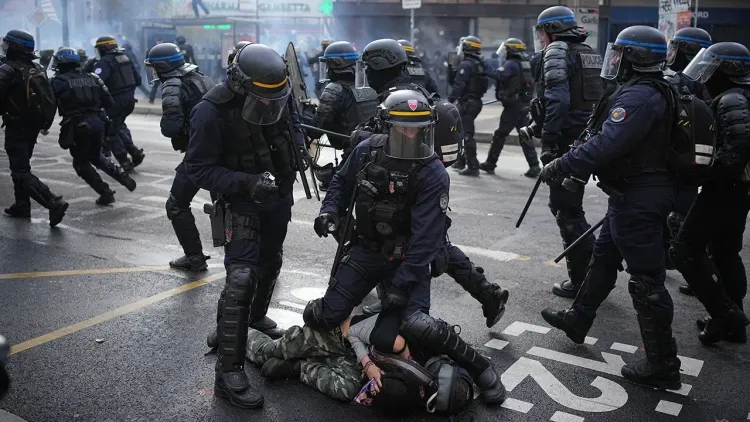
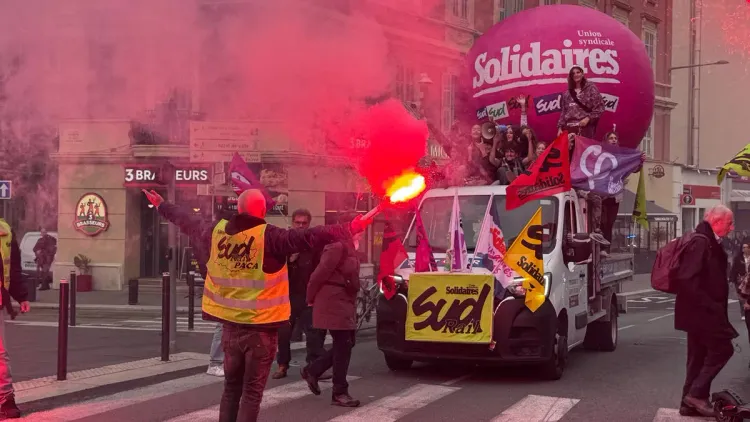
In France, the Oct. 31 demonstrations were the third consecutive weekend of nationwide left-wing protests. The Interior Ministry estimated turnout at 320,000, including 70,000 in Paris, compared with 410,000 nationwide the previous Saturday and roughly 550,000 on Oct. 17, when hundreds of shops were looted. Organizers gave a higher estimate for Oct. 31: nearly 500,000 nationwide and 200,000 in Paris. Authorities reported 565 arrests by 9 p.m.
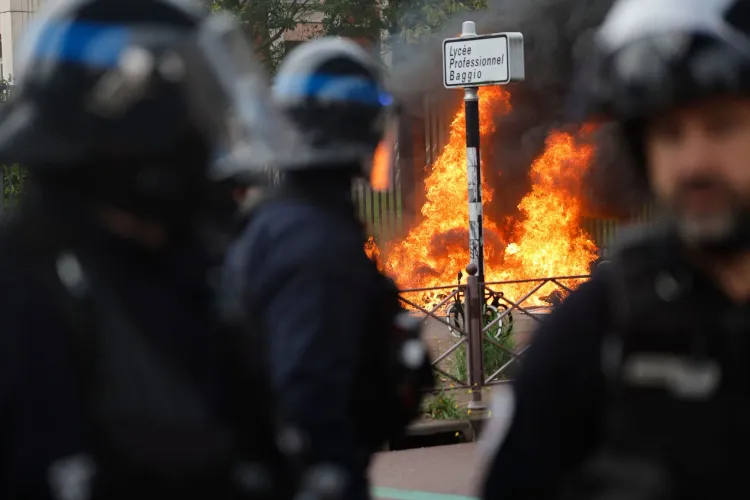
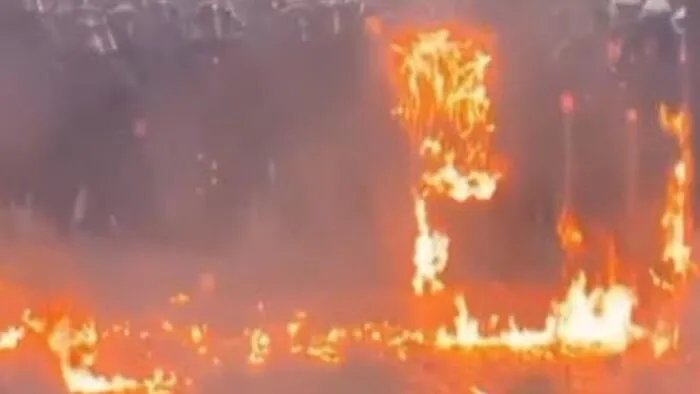
The authorized Paris march followed a route along the capital's eastern edge. Near its endpoint at Porte de Charenton, a Molotov cocktail struck a mobile gendarmerie unit's shield and set an officer on fire. Colleagues extinguished the flames, and Interior Minister Laurent Nuñez said the gendarme suffered minor injuries.
"When you throw a Molotov cocktail at a police line, I call that attempted murder," Nuñez said. He pledged to pursue those responsible.
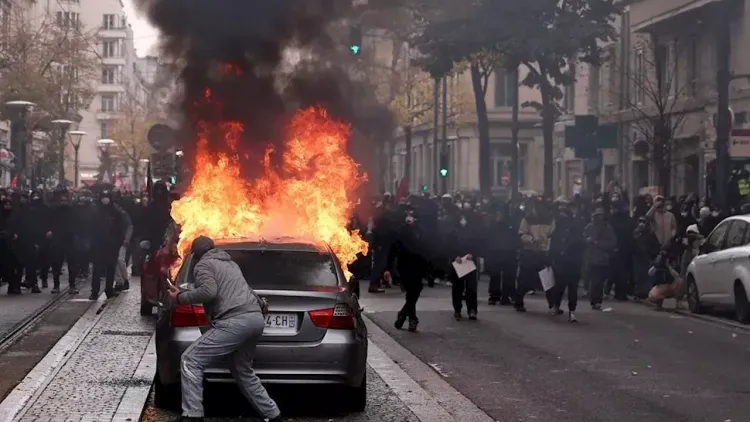
Nuñez said rioters and looters had appeared in every march, with many driven by the ultra-left and radical far left. He described groups numbering several hundred trying to force their way through police lines in Paris, Montpellier, Toulouse, Rennes, Marseille, Nantes, Angers and Tours. They used mortar fireworks, paving stones and other projectiles, he said, while firefighters responded to numerous fires.
Security restrictions again disrupted Paris. More than 40 metro and RER stations closed, and businesses along the march route covered windows with plywood or kept their shutters down. The Élysée Palace, the prime minister's office and the National Assembly were heavily guarded, despite being several miles from the authorized route. Overnight curfews restricted access to Place de la République and Les Halles, both ransacked on Oct. 17.
Across France, authorities deployed about 70,000 police officers and gendarmes. Nuñez said officers conducted 40,000 checks on roads and at train stations to intercept weapons, including 15,000 in the Paris region. Face coverings, including Halloween masks, were prohibited around the demonstrations.
French students blockade campuses ahead of strike
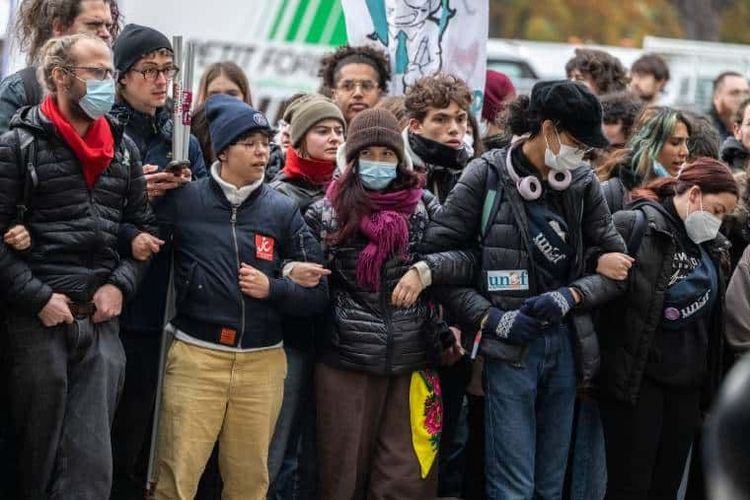
Far-left student unions followed the weekend protests with a call to block high schools and universities beginning Tuesday, Nov. 3. Authorities reported blockades at 48 of France's 3,700 high schools that day; the USL student union put the number at 500. Officials also reported disruption at 51 of the country's 184 higher-education institutions.
The government had announced measures the previous week intended to address student demands, including replacing Parcoursup, the criticized university admissions platform. Student leaders rejected the proposals as insufficient and demanded €10 billion in investment. Trade unions were preparing for a nationwide strike scheduled for Thursday, Nov. 5.
Demonstrations in Italy, Portugal and the Netherlands
Italy's protests took place on Oct. 30 after a call from the trade union USB. The union estimated participation at more than 1 million across 70 cities; the Interior Ministry counted 255,000. Corriere della Sera reported violent confrontations between police and demonstrators in Rome, Turin, Mestre, Vicenza and other cities.
Thousands gathered again in Lisbon to protest Portugal's housing crisis. The Portuguese right criticized the movement, accusing left-wing and far-left groups of driving it.
In The Hague, demonstrations followed calls circulated online. Dutch police reported 34 arrests and said an officer was hospitalized with suspected hearing damage after fireworks were thrown at police. Shops across the city boarded up windows in anticipation of possible rioting.