French ban faces legal challenge
The Administrative Court of Cergy-Pontoise rejected the organizers' challenge on October 30, according to Bault's account for the Ordo Iuris Institute. An appeal to the Council of State remains possible. Bault had been scheduled to participate in a legal panel at the international conference.
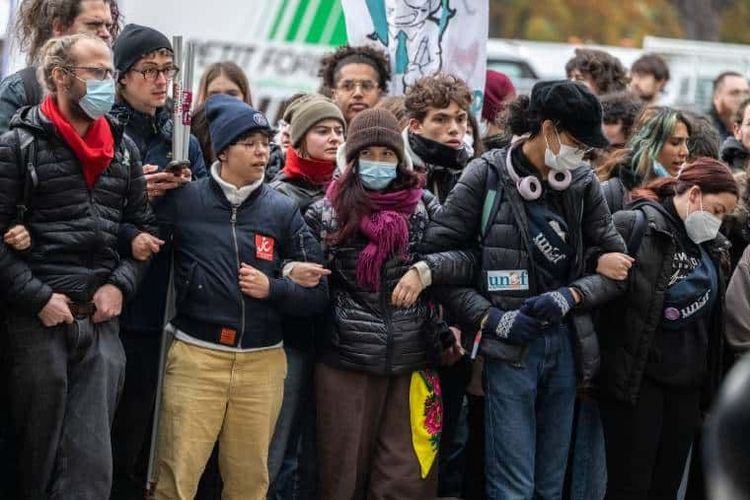
Polémia, a French think tank, planned to hold the colloquium, titled "Remigration: Let's open the debate", at the Maison des Arts in Le Plessis-Robinson, Hauts-de-Seine. The department's prefect, acting as the Interior Ministry's representative, prohibited it on October 29.
According to Brussels Signal, Interior Minister Laurent Nuñez requested bans covering both the conference and a separate November 1 street demonstration in Paris organized by the Objectif Remigration collective. Austrian activist Martin Sellner, a scheduled conference speaker, was stopped at Beauvais-Tillé airport north of Paris on October 29 and given an administrative ban from French territory.
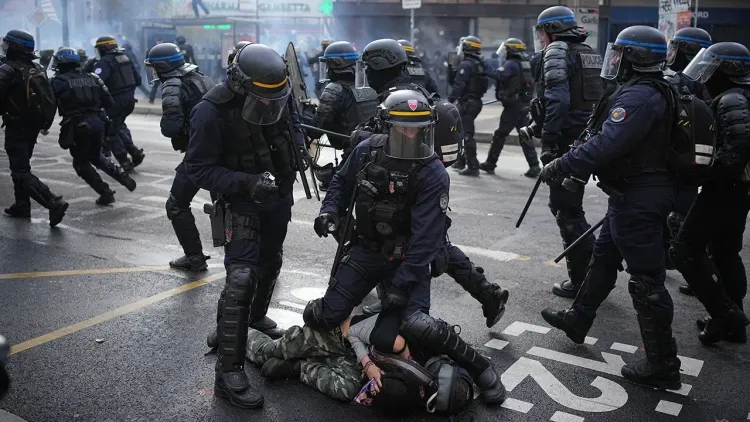
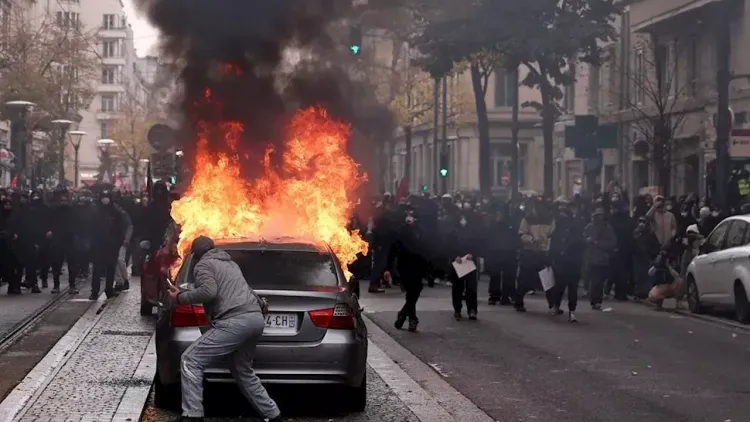
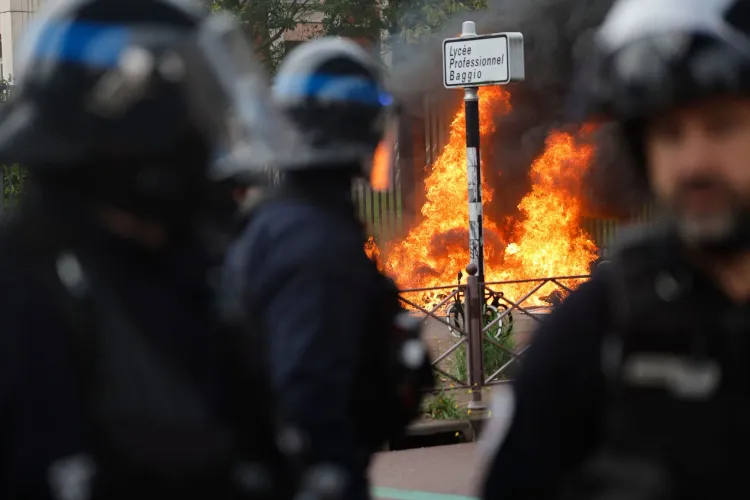
Authorities justified the conference ban by describing its theme as xenophobic, anticipating unlawful statements and citing the public-order threat posed by counter-demonstrators. Brussels Signal also reported that officials pointed to the October 23 shooting in Trappes and La Verrière, in the Yvelines department. Pengo Bossio Wangi was killed and seven people were injured; French media reported that the suspect admitted targeting Muslims and Africans.
The organizers' attorney submitted a legal opinion from Ordo Iuris contesting the prohibition. The institute argued that the measure did not meet international and European legal requirements for necessity and proportionality. Its position was that restrictions must be content-neutral, that authorities should prohibit an entire event only as a last resort, and that hostility from opponents does not justify preventing a peaceful gathering.
Competing claims over Poland's Constitutional Tribunal
In Poland, Łukasz Bernaciński, who directs Ordo Iuris's Department of Constitutional Studies, reported that police forcibly took over the empty Constitutional Tribunal building overnight on October 29-30 while Nawrocki was abroad. He said officers barred the tribunal's security personnel, vice president and director from entering. Nawrocki ordered his Senegal-bound plane to return.
Bernaciński cited Article 128 of Poland's Penal Code, which provides for a prison sentence of up to 20 years for attempting to remove a constitutional body by force. Ordo Iuris said it would continue reporting developments through his thread on X.
Notes From Poland reported a separate account from tribunal spokeswoman Weronika Ścibor: State Protection Service officers escorted seven people elected as tribunal judges in 2026 into the building. According to Ścibor, they used a gate connected to the prime minister's chancellery, not the main entrance from the street.
The dispute also involves the status of newly selected judges. Nawrocki has declined to swear in five of the eight judges parliament chose in 2026, citing objections to their selection or qualifications, according to Notes From Poland.
On the evening of October 30, judge Anna Korwin-Piotrowska announced that she had suspended tribunal president Bogdan Święczkowski and deputy president Bartłomiej Sochański. A statement posted on the tribunal's website ordered a "break in the activities" of both men.
Prime Minister Donald Tusk defended the action on social media. "Restoring the rule of law is our duty," he wrote. "After years of PiS-led lawlessness, this is a difficult process, sometimes painful, and it requires decisive action. There is no other way."
Hungarian appeal calls for criminal justice safeguards
The concerns raised by Bault also included an October 29 declaration by 32 Hungarian lawyers and public figures spanning the political spectrum. Their document, "Ten Points of Criminal Justice under the Rule of Law," condemned politically motivated charges, the use of pretrial detention to obtain confessions, and surveillance targeting defense lawyers.
Ordo Iuris president Jerzy Kwaśniewski contends that these practices have spread in both Hungary and Poland under the auspices of European Union institutions. He proposed a joint international initiative to document the practices and counter what he described as an erosion of the rule of law.