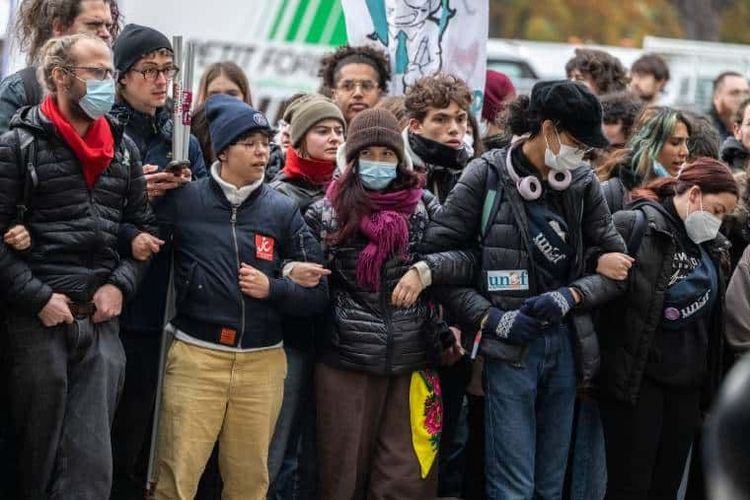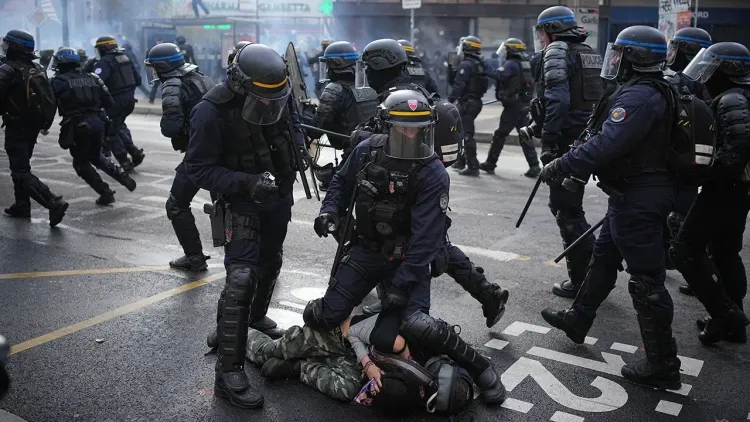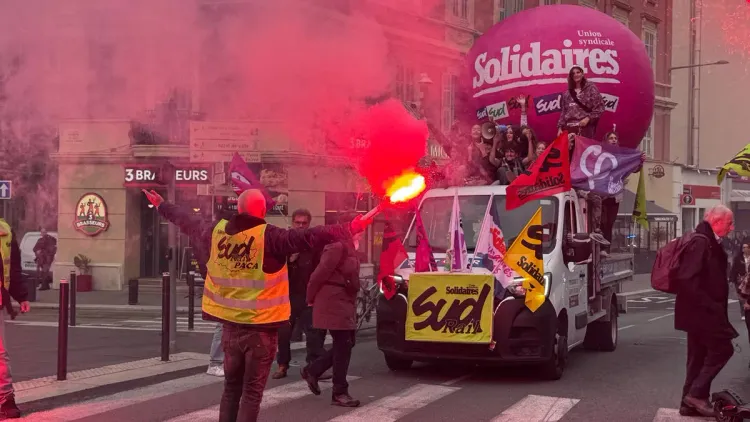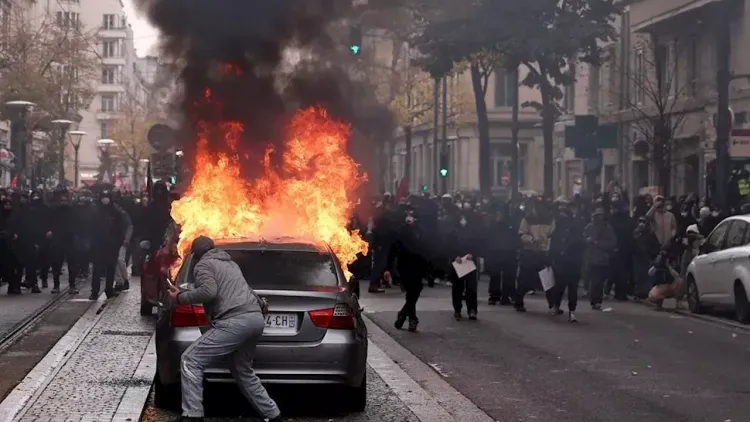
Clashes after the marches
The Interior Ministry estimated Saturday's turnout at 320,000 across France, including 70,000 in Paris. Youth organizations and student unions gave higher figures: about 500,000 nationwide and 200,000 in the capital.
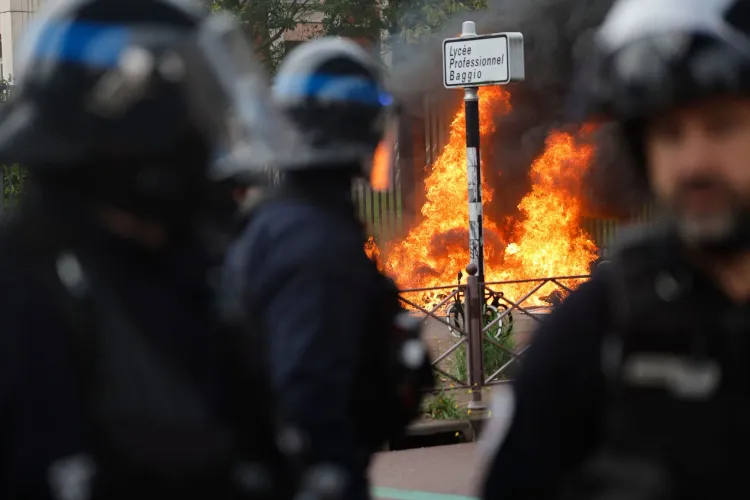
After a daytime rally in the Paris suburbs, confrontations broke out in several cities later Saturday. Interior Minister Laurent Nuñez said roughly 150 planned demonstrations had been peaceful, but described the violence by some rioters as rallies ended as "extraordinary."
Reporting for Al Jazeera, Natacha Butler described police "firing a lot of tear gas into this crowd." She said her team "had to move out of the way because it was simply too much for us to breathe."
According to The Guardian, dozens of black-clad, masked people broke paving stones loose with hammers and threw them at officers. Police responded with tear gas and baton charges. The Interior Ministry said "extremist elements" tried to enter city centers in Bordeaux, Toulouse, Marseille and other cities to carry out vandalism and looting.
The ministry reported more than 290 detentions nationwide. A separate tally put arrests at 511, with police using tear gas and stun grenades in several cities to disperse crowds joined by masked rioters toward evening.
School grievances and broader demands
The movement began in September at high schools in Créteil, a Paris suburb, where teacher shortages prompted demonstrations and school blockades, according to Anadolu Agency. The Connexion reported that students' complaints included classes with as many as 35 pupils, inadequate facilities, missed teaching hours and too few substitute teachers.
The government's response included an online platform for student grievances, a pledge of teaching hours for 3,000 professionals and extra funding for certain institutions. It also announced that a new orientation tool would replace the Parcoursup university-admissions platform in 2028.
Other groups have pressed wider political and economic demands. The Yellow Vests, or gilets jaunes, re-emerged on Oct. 17. The Connexion described the movement as decentralized and without a single leader. Demands posted on forums supporting it include President Macron's resignation, a new Constitution establishing a "Sixth Republic" and a referendum on leaving the European Union.
In a meeting with Prime Minister Sébastien Lecornu, CGT leader Sophie Binet sought a 10 percent minimum-wage increase, a freeze on fuel and essential-goods prices, and additional help for companies facing layoffs. She also urged the government to reverse social-spending cuts in next year's budget.
Earlier unrest and its toll
Saturday's official turnout estimate was below those for the previous two weekends. Government figures put participation at more than 500,000 on Oct. 17 and 410,000 on Oct. 24. The BBC reported that authorities had made extensive preparations to prevent a repeat of the violence, rioting and looting two weeks earlier.
Following the Oct. 17 unrest, French authorities said violence had affected roughly 3,000 businesses and injured nearly 1,000 security personnel. Justice Minister Gérald Darmanin reported that 2,513 people had been taken into custody.
Anadolu reported serious injuries among protesters during the October unrest, including two 17-year-olds: one lost an eye, and another lost a hand in a grenade explosion. Authorities also imposed localized overnight curfews in parts of Paris, Lyon and other cities.
Protest activity continued between the weekend marches. On Monday, Oct. 19, demonstrators blocked the entrance to the Louvre museum in Paris.
Further protests planned in France and elsewhere
The BBC also reported demonstrations in Albania, Germany and Italy amid youth protests across Europe. Anadolu described a broader European protest wave, with further action planned in Spain and Italy.
Spanish unions and tenant organizations called a housing-related general strike for Nov. 11, while Prime Minister Pedro Sánchez announced an early election for Nov. 29. In Italy, the CGIL union announced a general strike for Nov. 20.
In France, preparations for a general strike were underway. Student protesters pledged further high school and university blockades on Tuesday and Thursday and said they would join the Nov. 5 demonstration called by workers and trade unions.