Smaller crowds amid tighter security
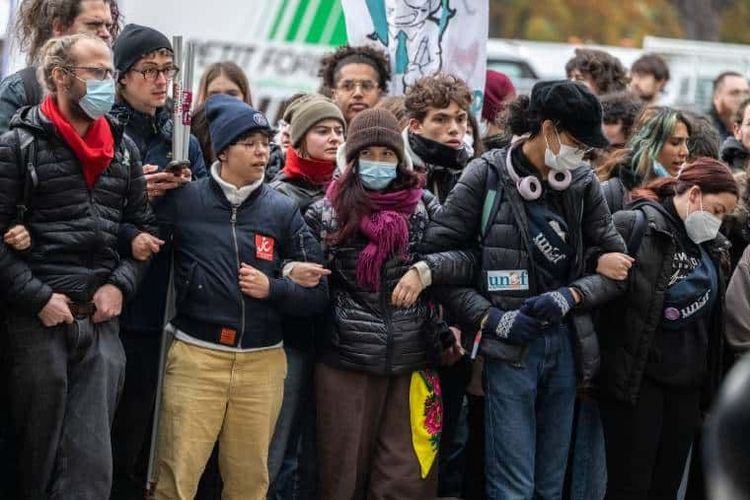
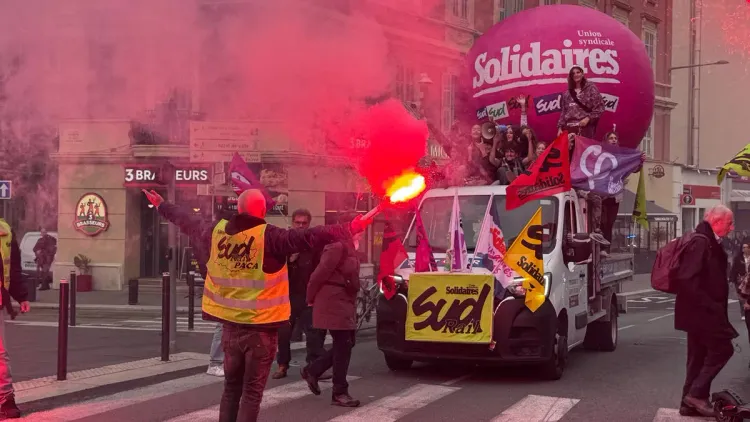
By 1 p.m., 35,000 people had demonstrated across France, the Interior Ministry said, compared with 60,000 at the same point the previous Saturday. Several thousand assembled at Porte d'Italie in southern Paris early in the afternoon, with unions at the front of a march that included raincoat-clad protesters carrying flags and homemade signs.
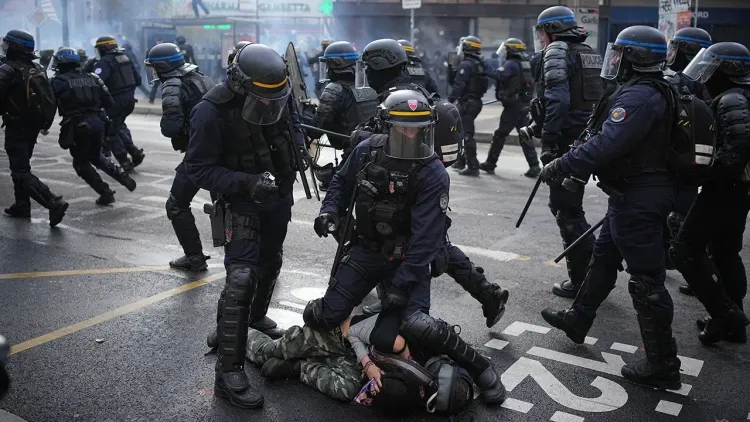
Interior Minister Laurent Nunez announced a deployment of up to 70,000 officers, with helicopters, armored vehicles and water cannons available to support them. Ahead of the protests, Jean-Didier Berger, the minister delegate to the interior minister, said the street-level police presence would rise by 20%.
Authorities kept the Paris march on the capital's southeastern outskirts, barring it from the city center. On Friday, officials replaced the planned route from Bastille to Nation with one from Porte d'Italie to Porte de Vincennes. Police at Bastille warned over loudspeakers that anyone who remained risked a fine of 135 euros.
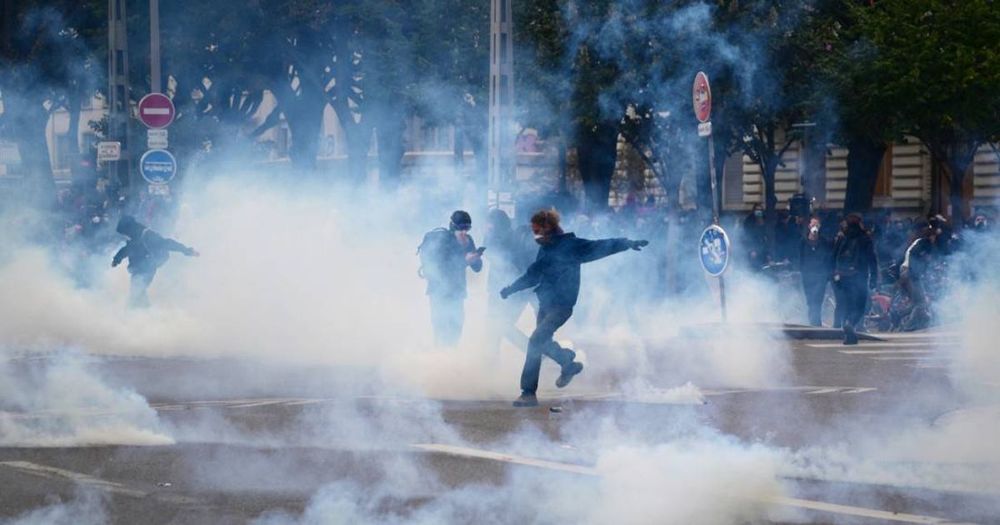
In Lyon, officers used tear gas on Saturday morning despite a local ban on the rally. French media reported that police in Clermont-Ferrand used tear gas and stun grenades against protesters attempting to enter the city center. Local officials also prohibited rallies in Nice and Montpellier; Marseille was among the cities where demonstrations were scheduled to proceed.
Unions said the bans infringed on the constitutional right to freedom of expression. President Emmanuel Macron defended the restrictions as necessary to safeguard businesses, public buildings and city centers.
Soumaya Abed, a 58-year-old nurse wearing a red CGT union vest, said that in more than 30 years of attending protests, she had never known a march to begin at Porte d'Italie. "They are using what happened last week as an excuse to quiet protesters," she said. "But it won't stop the movement. It won't stop students from demanding better conditions in schools."
Paris closes venues after last weekend's unrest
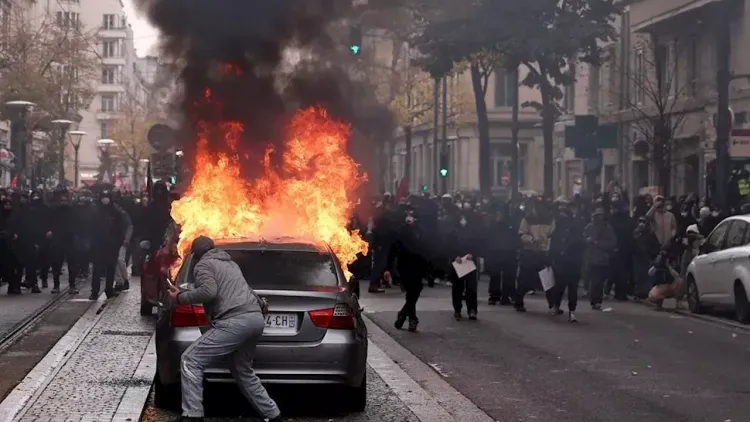
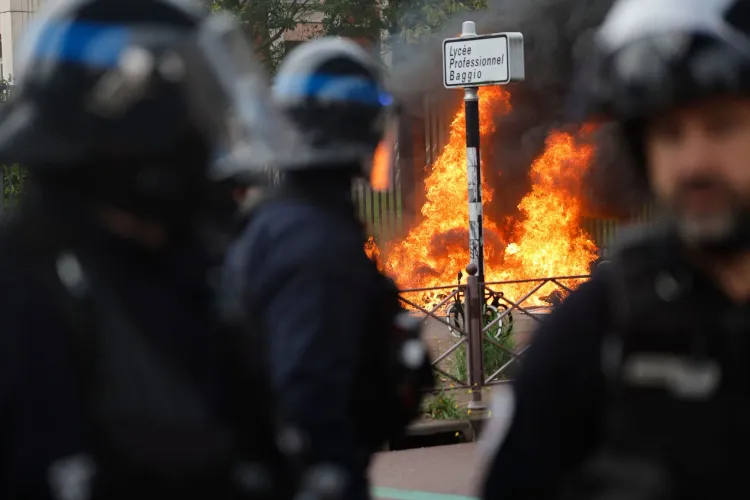
More than half a million people protested the previous Saturday. Over that weekend, roughly 3,000 shops nationwide suffered damage or looting, alongside vehicle fires and attacks on public property.
Nunez admitted on Monday that police had lost control in some cities during the unrest. He offered to resign, but Macron refused his resignation.
For this Saturday's demonstrations, armed officers were positioned beneath the Arc de Triomphe, while businesses around Paris boarded up their storefronts. The Louvre, Orsay Museum, Picasso Museum and Grand Palais all closed. The Grand Palais is hosting a major Cezanne exhibition.
Art Basel admitted visitors on Friday but canceled its weekend program because of the threat of unrest, leaving the fair open for only one day.
Elsewhere, thousands joined a separate peaceful march against the far right in Orleans, south of Paris, on Saturday afternoon. Marine Le Pen's National Rally was holding a two-day congress in the city.
School grievances broaden into a national campaign
The movement started last month with a staffing dispute at one secondary school in the suburbs southeast of Paris. It has since spread nationwide, bringing students seeking better schools together with workers demanding higher pay and improved pensions.
Education Ministry figures illustrate the staffing shortfall: public middle and high schools missed 15.4 million hours of instruction in the 2024-25 school year because absent teachers had no replacements. Those lost hours represented 7.5% of scheduled teaching time.
The protests also reflect pressure on household finances. According to the national statistics agency INSEE, energy prices in September 2026 were 21.3% higher than a year earlier, contributing to an overall inflation rate of 3.1%.
The campaign comes in the final months of Macron's presidency, with his approval ratings at their lowest since he entered office in 2017. During an earlier wave of economic protests, the yellow vest movement that swept France in 2018, he offered 10 billion euros, about $11.2 billion, in tax cuts to quell the unrest.
Victoria Ambrosini, an art critic who also teaches art at Saint-Denis University, described the distribution of wealth as a central concern. "The money is now concentrated in the hands of very few people," she said.
Student demands and the government's response
Student groups' 10-point plan calls for 250,000 more higher-education places, the abolition of the national admissions system Parcoursup, additional teaching staff, and repairs to schools and universities. It also seeks an extra 200 euros a month in student grants and a rent freeze in public student housing.
Al Jazeera reported that other student organizations and unions want another 10 billion euros, about $11.2 billion, for education, along with more teachers employed on permanent rather than precarious contracts. Nathanael Combary, the 18-year-old president of Renouveau Lyceen, identified two priorities: a comprehensive overhaul of Parcoursup and an emergency school-infrastructure program costing 1.5 billion euros, about $1.7 billion, to prepare buildings for winter and summer.
Representatives of students in the final years of secondary school met Macron on Friday. Afterward, they said he had promised to overhaul university admissions, but urged protesters to keep demonstrating until concrete measures were in place.
Higher Education Minister Philippe Baptiste has ruled out abolishing Parcoursup, describing that proposal as "pure demagogy," while saying he is willing to make "profound changes" to the system.
By late October, the government had announced 3,000 additional substitute teachers and an online consultation, according to Al Jazeera. Its 2027 budget allocates another 1.1 billion euros, about $1.2 billion, to national education. The government's budget bill projects public debt at 121.7% of GDP in 2027, compared with 119.3% in 2026.