Security and economic pledges
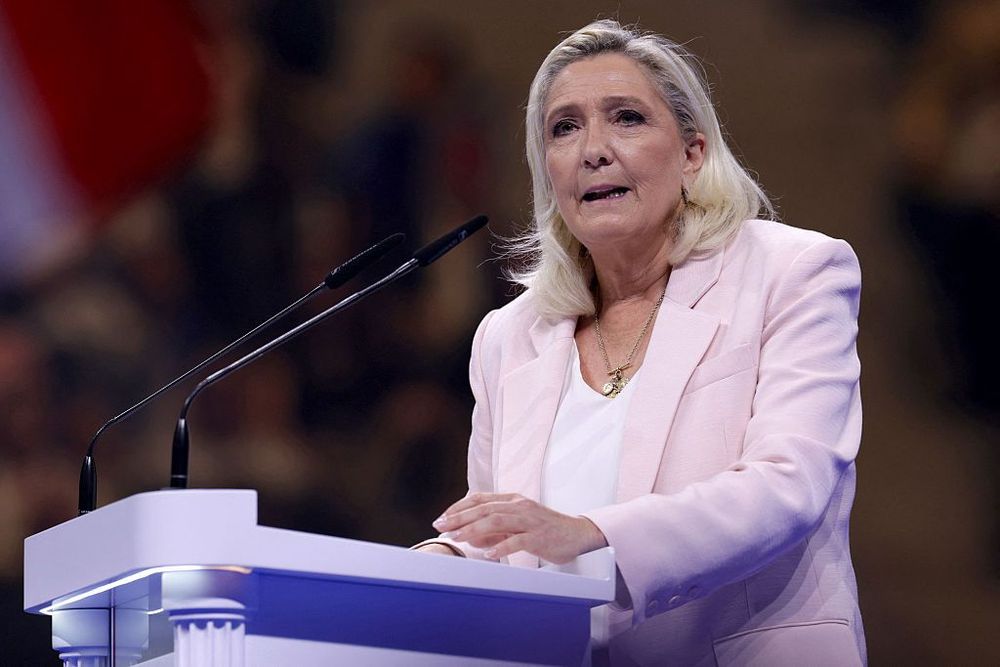
Le Pen, 58, cast herself as an alternative to President Emmanuel Macron's administration on immigration, public safety and living costs. Organizers estimated that about 8,500 supporters attended Sunday's launch; POLITICO Europe reported more than 8,500 people in the conference hall.
"We are not living through the end of the world but the end of a world, their world," she said of her political opponents, according to Reuters. Her security agenda calls for automatic deportation of foreign nationals convicted of crimes, the restoration of border controls, and stronger action against drug trafficking and organized gangs.
Criticizing the government's response to recent violence, she declared, "The rule of law is not the law against the state," Euronews reported. She also advocated tighter immigration enforcement and greater national sovereignty.
On the economy, Le Pen proposed cutting business taxes, restraining public spending and reducing bureaucracy while supporting industrial investment and technological innovation. She opposed any further increase in the retirement age.
Her energy proposals include overturning the 2017 ban on new domestic oil and gas exploration permits. The Associated Press reported that she called the legislation "the stupid Hulot law." She did not call for France to leave the European Union, instead promising to limit Brussels' role in domestic policy. She also emphasized keeping France out of foreign military conflicts.
The economic pledges come amid pressure on France's public finances. According to POLITICO, borrowing costs exceeded 5% in the week before the launch, a level last reached in 2002. The eurozone's second-largest economy was struggling to adopt a state budget while facing rising debt and deficits and protests over living costs.
Le Pen ended the rally with the words "The future belongs to us" before leading supporters in the French national anthem, Reuters reported.
A polling lead ahead of the spring election
France's presidential election is scheduled for April 2027, with a runoff expected in early May, according to POLITICO and Reuters. Several surveys place Le Pen well ahead in first-round voting intentions, though their estimates differ.
Reuters reported that a poll published on the day of her launch gave Le Pen between 32% and 33.5%, compared with 17% for her closest rival, far-left leader Jean-Luc Mélenchon. POLITICO's mid-October Poll of Polls put her at 34%, followed by center-right candidate Édouard Philippe at 16% and Mélenchon at 15%. POLITICO said most polls also showed her winning a runoff if no candidate secured a first-round majority.
An Ifop-Fiducial survey for Le Figaro, conducted Oct. 17-19 among 2,081 people, measured Le Pen's first-round support at 36% to 38%, more than 20 percentage points above her rivals. Mélenchon received 16.5%, Raphaël Glucksmann 13.5%, Philippe 12% and Gabriel Attal 5%. The same polling series projected a 68%-32% runoff victory for Le Pen over Mélenchon.
Court appeal and party leadership
Le Pen can currently contest the election under a July 2026 appeals ruling. Her case began with a March 2025 conviction for misappropriating European Parliament funds, when a French court barred her from holding public office for five years.
The Paris appeals court left the conviction in place but shortened the electoral ban enough to permit a 2027 candidacy. It also ordered a three-year prison sentence: two years suspended and one year of electronically monitored home detention.
Le Pen has appealed to the Cour de Cassation, France's highest court. Reuters' legal analysis said that appeal puts both the sentence and electronic monitoring on hold during the proceedings. Further court action could still affect her campaign.
After the July decision, she said in a televised interview, "Tonight, I am a candidate in the presidential election." She added, "The French will have the last word," according to Reuters.
At the Orléans congress, the National Rally re-elected Jordan Bardella as party president. He is Le Pen's preferred choice for prime minister. For more than a decade, she has sought voters beyond the party's traditional anti-immigration base while distancing it from the more extreme positions associated with her father, Jean-Marie Le Pen.
Protests, clashes and opposition in Orléans
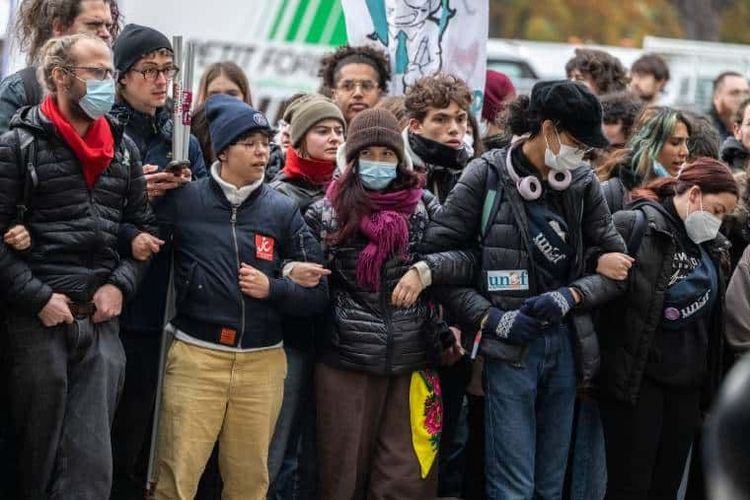
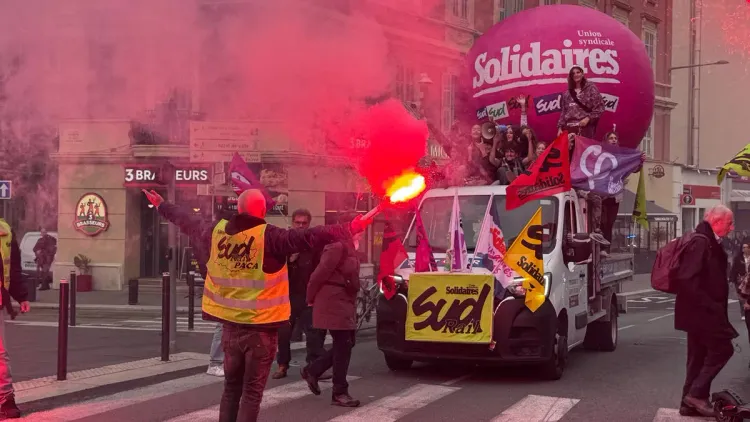
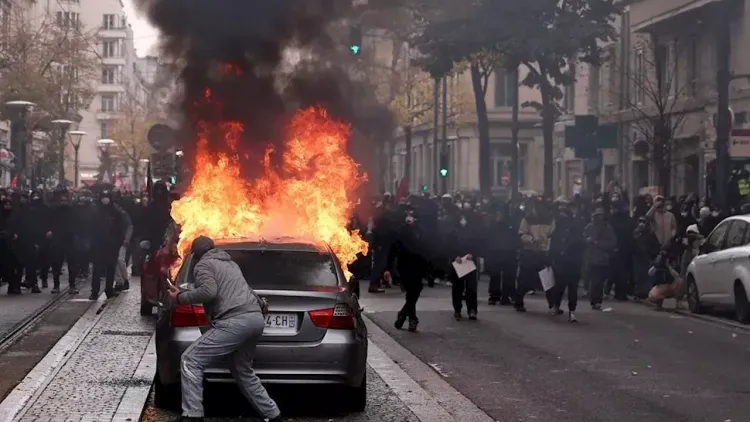
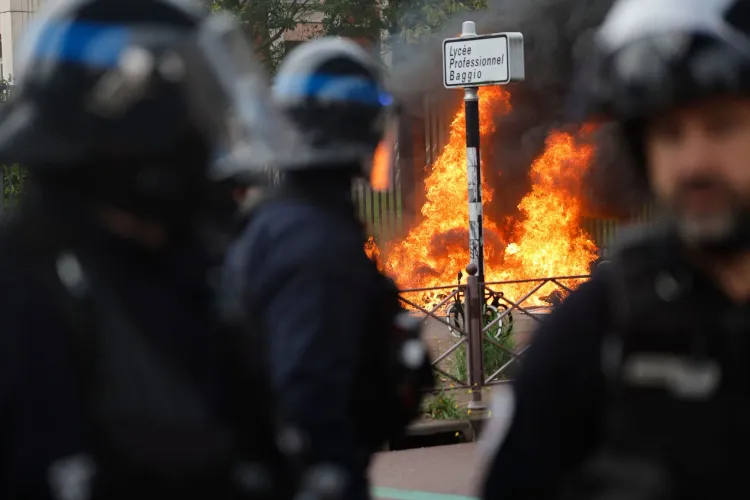
The campaign launch came after two successive weekends of protests across France, with violence and looting at some demonstrations. The movement began over student concerns about education funding and later drew in trade unions and the Yellow Vest movement, with demands also covering living costs and public services.
For Saturday, Oct. 24, the Interior Ministry recorded 410,000 demonstrators nationwide, including 110,000 in Paris, EU Perspectives reported. That was below its estimate of 550,000 the previous weekend. The CGT union confederation put the Oct. 24 turnout at 800,000.
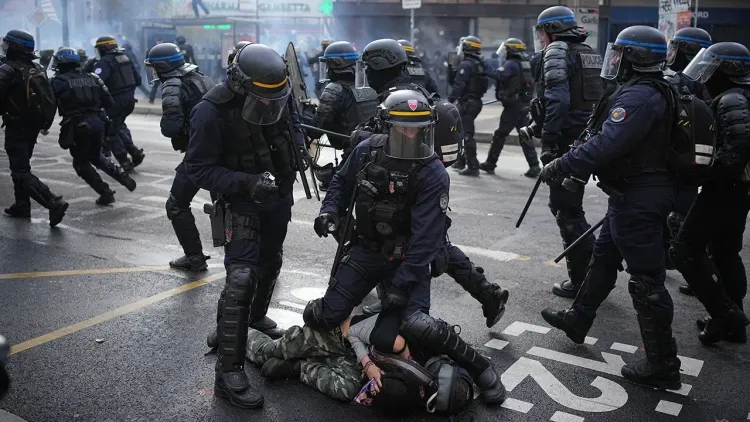
Interior Minister Laurent Nuñez said police arrested 1,435 people. Most protests remained peaceful, but Paris, Marseille and Lyon were among the cities where clashes broke out. Authorities deployed roughly 70,000 police and security personnel across the country to avoid a repeat of the widespread violence on Oct. 17.
According to EU Perspectives, Nuñez reported injuries to 267 police officers and gendarmes and estimated that about 150 demonstrators were hurt, including three seriously. He also said organized far-right groups confronted far-left activists in several cities.
Orléans itself hosted a large demonstration against the National Rally congress on Saturday. Authorities counted approximately 13,000 participants; organizers claimed 26,000. Around 3,000 police officers and emergency personnel were deployed in and around the city over the weekend.
Bally Bagayoko, the mayor of Saint-Denis, accused the party of divisive rhetoric. "We have come to tell the far right, looking them straight in the eye, that we are not afraid," he told Euronews.
Separately, a gunman opened fire on passersby in the Paris suburb of Trappes on Friday, Oct. 23. One person was killed and five were injured, including a 12-year-old girl. POLITICO reported that Macron described the shooting as "a racist terrorist attack."
Student concessions and more demonstrations planned
The expanding protest movement has brought together several sources of discontent. "We see an aggregation of anger," Murielle Guilbert, co-leader of the Solidaires trade union federation, told BFM TV.
On Monday, Oct. 26, the government announced education concessions following talks between Prime Minister Sébastien Lecornu and student organizations. EU Perspectives reported commitments to reverse planned teaching-post cuts, finance improvements to school buildings, expand study places and student grants, and overhaul Parcoursup, the higher-education admissions system.
Student representatives said the package fell short. "Not all our demands were met," Louis Letoublon told Reuters, pledging that demonstrations would continue. Further protests were planned for Oct. 31, followed by a union-led strike and protest day on Nov. 5, according to EU Perspectives.