Demands over wages and education
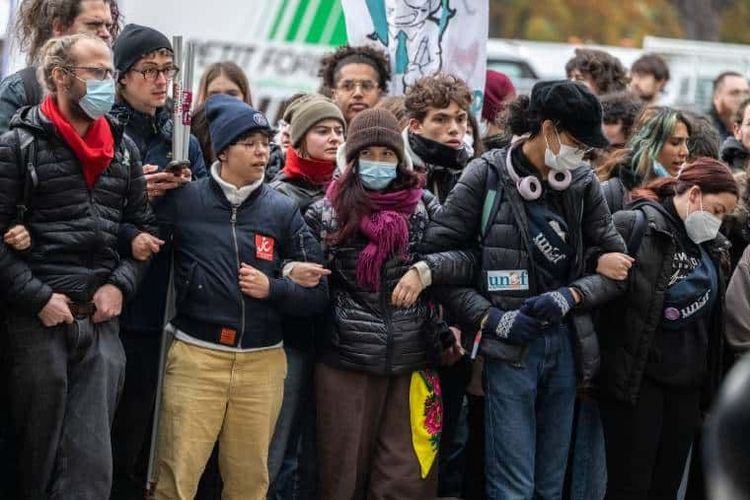
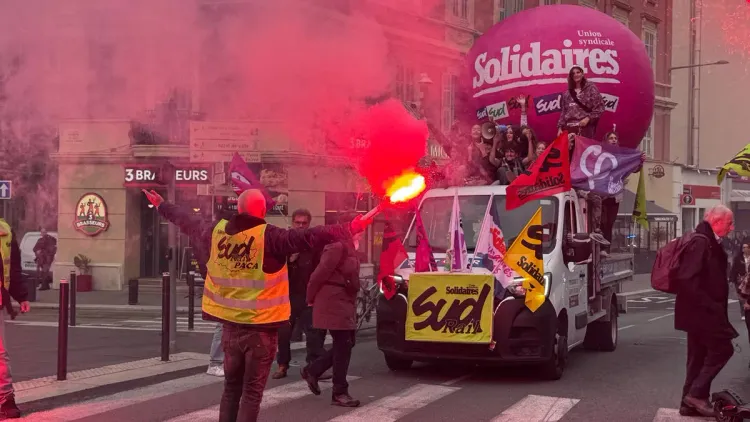
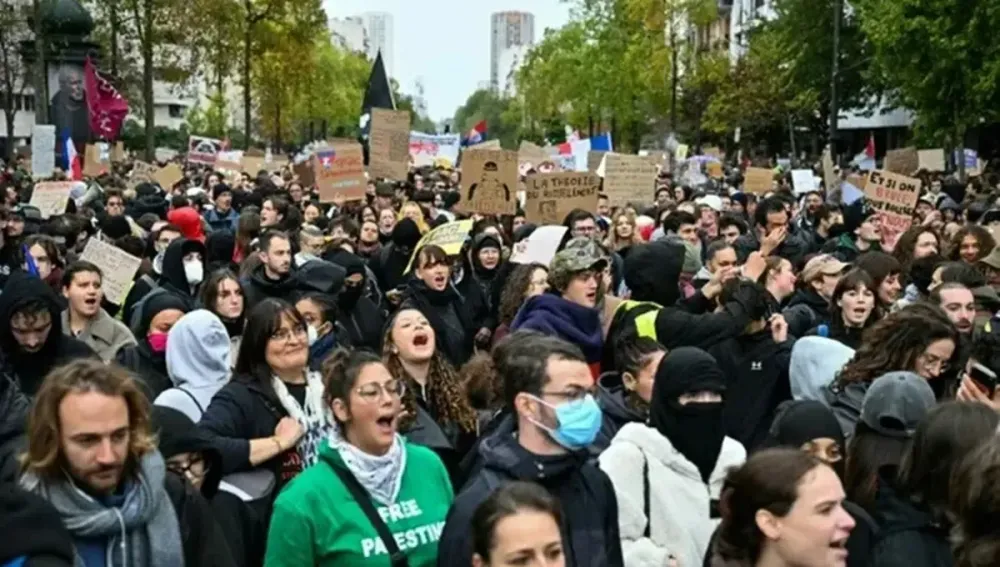
Unions, students and the Yellow Vests movement called Saturday's demonstrations to demand relief from rising living costs and more public money for education. In Paris, Melenchon joined the procession from Porte d'Italie to Porte de Vincennes, according to EFE's reporting carried by teleSUR.
"You still have time to give in; afterward, you will have no choice but to leave. Give in and stop wasting our time," said Melenchon, a four-time presidential candidate.
The France Unbowed (LFI) leader said demonstrations would recur every week if the government failed to address social demands. Describing the mobilization as "a very important moment in the history of popular movements in our country," he said he was convinced that "a general strike is coming."
In a written statement about the Paris procession, Melenchon listed demands to repeal Parcoursup, provide 10 billion euros for high school students, raise the minimum wage and salaries, and defend the right to protest.
He argued that Macron could concede now or face much less predictable circumstances later. He accused the president of behaving like an "absolute monarchy" and insisting he was "always right." Melenchon also dismissed the administration's meetings with political parties during the week as useless political theater. "They live in a bubble, make decisions that have no connection to reality and are not even coordinated among themselves. That is why they are dangerous," he said.
Route dispute and accusations of provocation
The Paris march followed a dispute over its route. Hurriyet Daily News reported that police revoked permission on October 23 for a procession from Bastille to Nation, offering the Porte d'Italie-to-Porte de Vincennes route instead. Organizing unions initially rejected that alternative and said they would stick to their original plan. Saturday's procession nevertheless took the newly authorized route.
Melenchon wrote that demonstrators had assembled at the approved starting point and were moving calmly along a route longer than four kilometers. He claimed attempts by the police prefect and Lecornu to provoke disorder had failed, and separately criticized the actions of Nuñez and Lecornu.
He also accused Macron of exploiting the shock following the racist terrorist attack in Trappes to alter the protest route and confuse marchers.
The attack occurred on October 23 in Trappes and La Verrière, west of Paris. According to AFP, a gunman shooting from a car killed one person and wounded five others, among them a 12-year-old girl who was shot eight times. Police arrested a 39-year-old suspect in nearby Coignières. Prosecutors opened an investigation for "murder in connection with a terrorist enterprise," and Macron described the shooting as a "racist terrorist attack."
Melenchon challenged the use of military personnel to guard public buildings and official advice that businesses hire private security, saying those measures heightened tensions. While accusing authorities of trying to provoke an incident, he urged marchers to remain calm, follow union instructions and maintain collective discipline. He called on the government to "stop provoking" demonstrators and respond to "demands that are not so difficult to meet."
70,000 police and gendarmes deployed
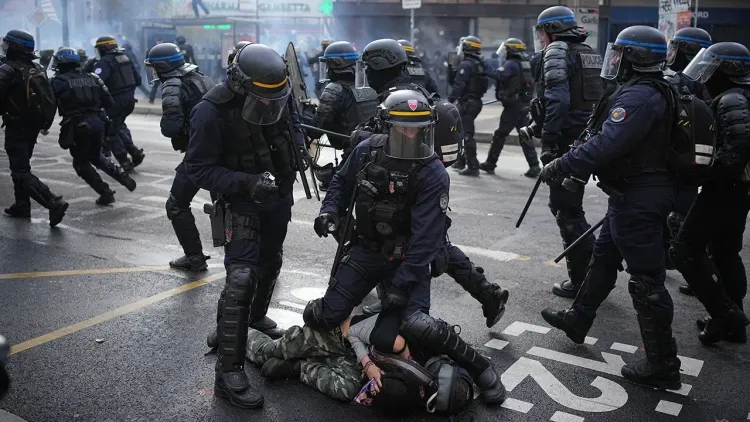
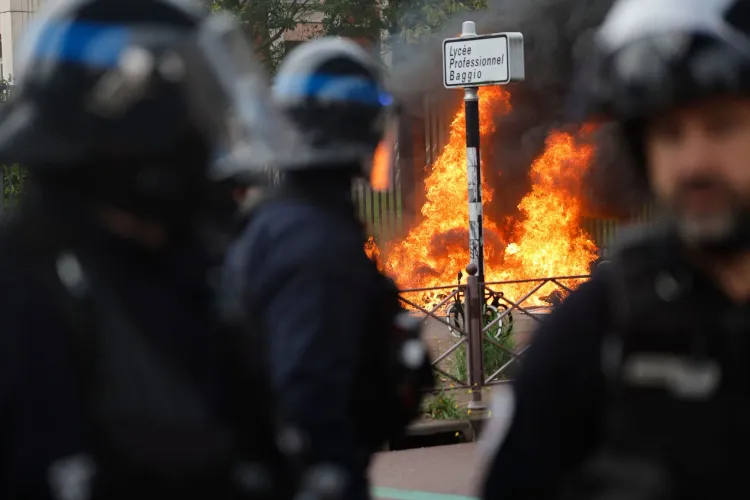
Authorities mounted a nationwide security operation after violence and looting during the October 17 protests. France deployed 70,000 police and gendarmes on October 24, Hurriyet Daily News reported. Interior Minister Laurent Nuñez said helicopters, drones, water cannon and armored vehicles would support them, promising to be "uncompromising with rioters, looters and all those who commit acts of violence."
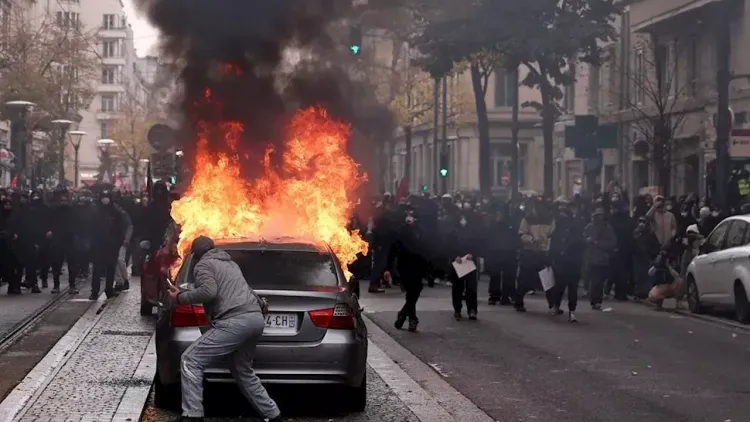
The previous Saturday's unrest left about 3,000 businesses damaged or looted. In Paris, the Louvre, Musée d'Orsay, Picasso Museum and Grand Palais closed for the day on October 24.
Nighttime curfews in parts of Place de la République and Les Halles were set to remain in force until October 26. Authorities also restricted or prohibited demonstrations in several cities, particularly gatherings not organized by unions. Restrictions covered large parts of central Lyon, while Lyon and Marseille imposed complete protest bans for October 24.
The movement and the previous week's toll
The high school protest movement began on September 21 at Lycée Antoine-de-Saint-Exupéry in Créteil, a Paris suburb, following a teachers' strike on September 17. By mid-October, it had led to about 6,800 arrests, most involving minors.
For the October 17 nationwide demonstrations, Nuñez reported 550,000 participants across 110 marches, including 110,000 in Paris. Organizers put total turnout at 800,000. The Interior Ministry said about 2,400 people had been arrested and roughly 1,000 police officers injured, seven seriously.
Political and economic repercussions
AFP reported that the unrest unsettled financial markets: Paris stocks and French government bonds fell on Monday, October 19. Moody's had been expected to downgrade France's public debt rating on Friday, October 23. The United States, China and Germany were among the countries that issued travel advisories for citizens in France.
An Ifop poll taken after the October 17 riots suggested Marine Le Pen would hold a wide lead in first-round presidential voting intentions, with Melenchon the far-right candidate's most likely runoff opponent. French lawmakers also agreed to open a parliamentary inquiry examining possible intelligence failures, policing tactics and the government's preparedness for the unrest.
The Yellow Vest movement, which called the October 24 Paris march, also planned nationwide follow-up demonstrations for November 5.