France Protests: Yellow Vests Return as Thousands Rally Over Rising Costs and Police Violence
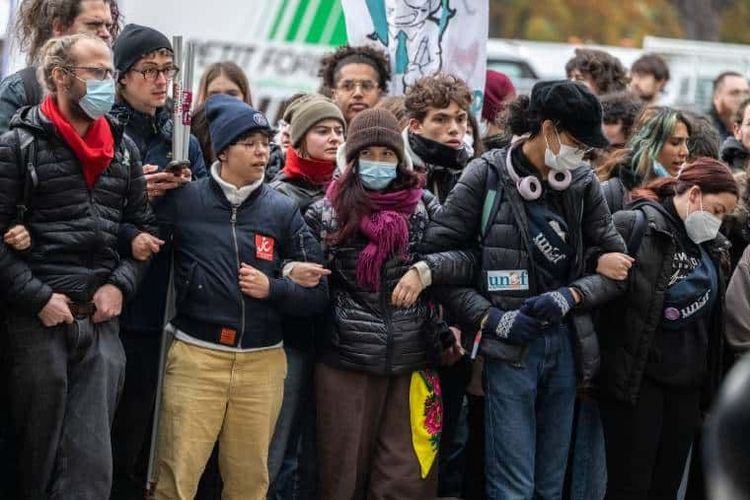
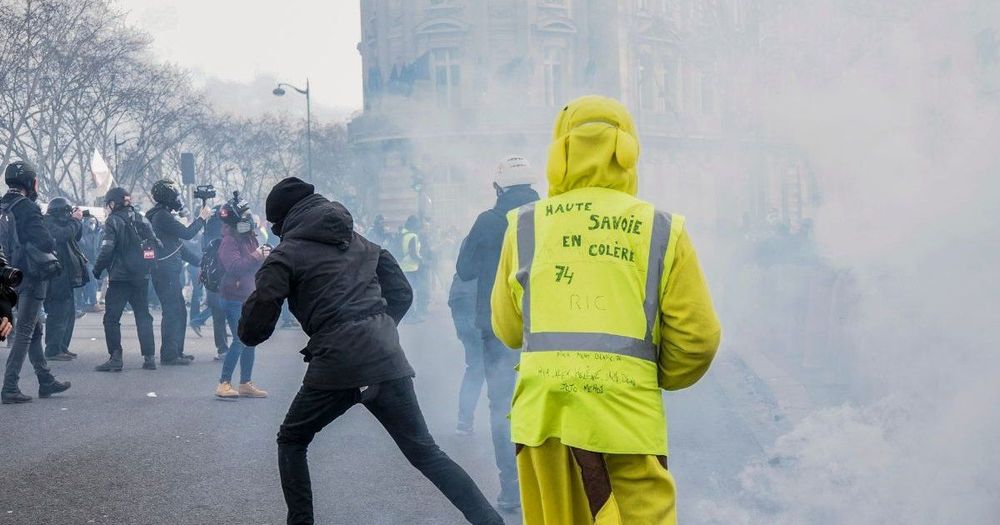
France confronted a nationwide wave of demonstrations on October 17, 2026, as protesters rallied against rising living costs, inadequate public services and allegations of excessive police force. The mobilization brought together students demanding better school conditions, workers seeking higher wages and supporters of the Yellow Vest movement, creating one of the broadest protest coalitions since the original Yellow Vest demonstrations began in November 2018.
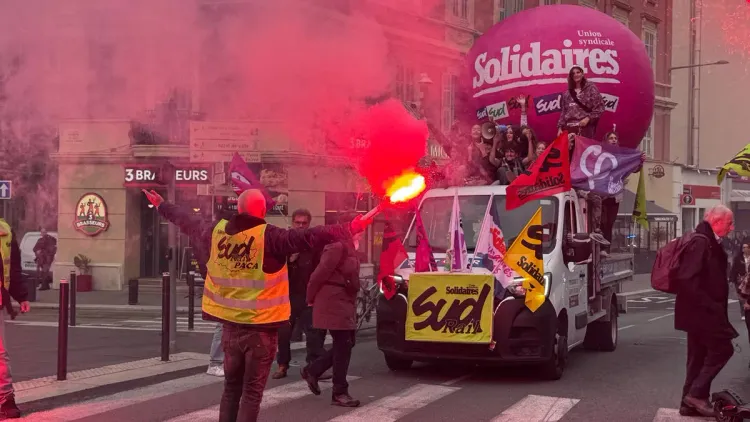
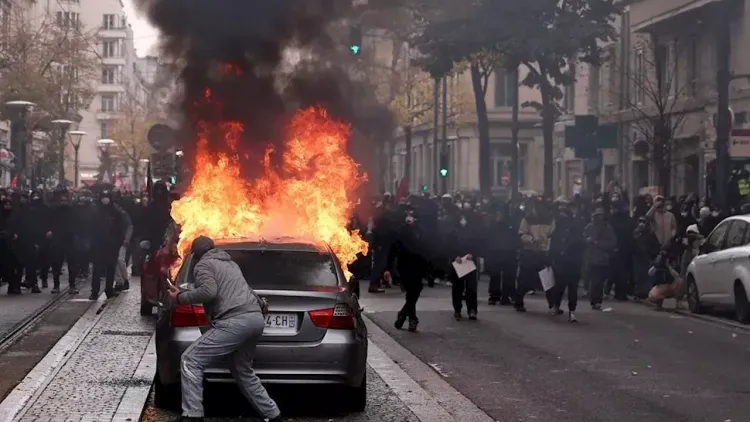
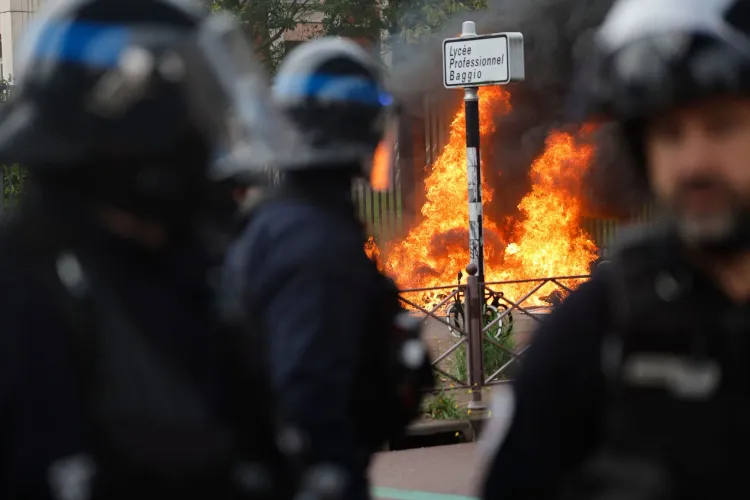
Authorities prepared for hundreds of protest actions across the country amid concerns about clashes and property damage. In Paris, demonstrators gathered under heavy police surveillance around major landmarks and transport hubs, with several Metro stations closed at police request. In Marseille, bins and electric scooters were set alight on Saturday morning, prompting police intervention, while businesses in multiple cities boarded up storefronts in anticipation of vandalism.
Economic Grievances Unite Disparate Groups
The demonstrations reflect deepening frustration over fuel prices, public services and economic inequality. Student protests, which began in September over teacher shortages, overcrowded classrooms and deteriorating school facilities, have expanded into a broader movement challenging government spending priorities and the rising cost of essential goods.
The General Confederation of Labour, founded in 1895 and one of France's most influential labor unions with approximately 610,000 to 710,000 members, backed calls for higher wages, better pensions, lower prices and protection of public services. Despite France having one of the lowest trade union membership rates in Europe at just over 10 percent—18.4 percent in the public sector and 7.8 percent in the private sector—unions retain significant capacity to mobilize large-scale demonstrations.
Supporters of the Yellow Vest movement, which first mobilized 290,000 demonstrators on November 17, 2018, in response to President Emmanuel Macron's fuel tax increase, have also joined the current protests. Social media calls encouraged former Yellow Vest participants to unite with students and other demonstrators, suggesting that discontent over education could become part of a wider challenge to government policies. However, the extent to which these groups will maintain a coordinated movement remains uncertain.
Police Violence Allegations Intensify Public Anger
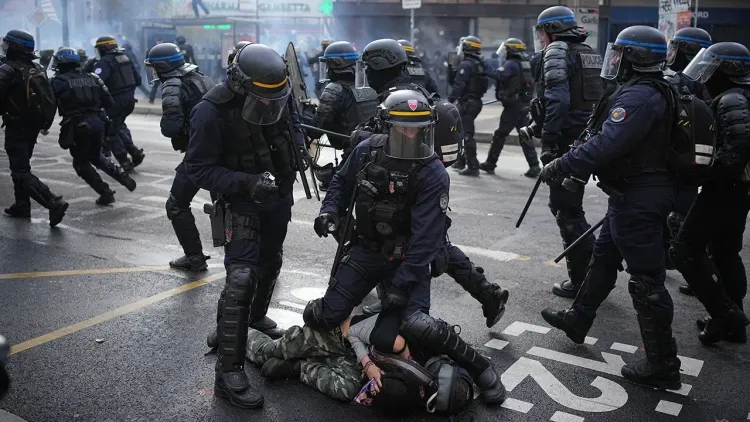
Recent demonstrations have intensified scrutiny of police tactics following allegations of excessive force. A 15-year-old reportedly lost an eye after being struck by a rubber bullet, while a 14-year-old lost a hand after picking up a stun grenade during student protests. The circumstances surrounding these incidents remain under investigation.
French police use the LBD40 rubber bullet launcher, which fires 40-millimeter semi-rigid rubber projectiles at 100 meters per second. Such weapons are prohibited for riot control use in most Western European countries. Authorities suspended the use of certain stun grenades during student demonstrations following the hand injury, though Interior Minister Laurent Nuñez indicated such weapons could be deployed if serious urban violence occurred.
Nuñez confirmed that 36 investigations into alleged police violence during student protests had been opened, including cases involving serious injuries, blows, insults and reported sexual violence. The allegations echo the original Yellow Vest protests of 2018-2019, when campaign groups reported approximately 20 protesters lost eyes from police rubber bullets, while the French Interior Ministry acknowledged that over 2,200 protesters were injured.
President Macron called for calm, stating that the right to protest must be respected alongside the need to protect people and property. Meanwhile, a major police union announced plans to file a complaint against the state, arguing that officers had received contradictory instructions and had been exposed to violence, adding another dimension to the debate over how authorities are managing the demonstrations.
Severe Fiscal Pressure Constrains Government Response
The protests are unfolding against a backdrop of mounting fiscal pressure. France's public debt reached 119 percent of GDP by the second quarter of 2026, equivalent to €3,595.5 billion—the highest ratio since 1946 and more than double the 60 percent of GDP reference limit that EU member countries are required to aim for under EU rules.
Debt servicing costs reached approximately €79 billion in 2026, exceeding the country's entire defense budget and representing the single largest line item in government spending. France's 10-year government borrowing costs climbed to 4.94 percent in October 2026, the highest level since 2002, with the country now paying more to borrow than Italy and Greece.
The government's 2026 budget was only passed on February 2, 2026, after months of political turmoil, when Prime Minister Sébastien Lecornu used special constitutional powers to pass it without a parliamentary vote, surviving two no-confidence votes in the process. The government now faces the challenge of passing a new budget containing austerity measures through a fragmented parliament while managing widespread public opposition to spending cuts.
The government has accused the hard-left France Unbowed party of inflaming unrest, an accusation the party denies. The demonstrations have drawn attention to broader questions about education funding, social protection and the cost of essential goods.
Whether the protests develop into a sustained nationwide movement will depend on how the different groups maintain their demands and how the government responds to both economic grievances and concerns about policing. For now, the convergence of student activism, cost-of-living protests and Yellow Vest mobilization has created a significant political challenge for French authorities navigating severe fiscal constraints and declining investor confidence.