Peaceful marches followed by clashes
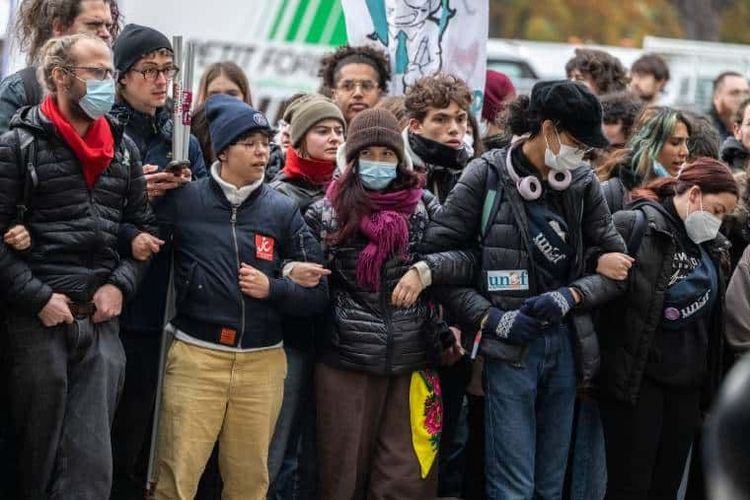
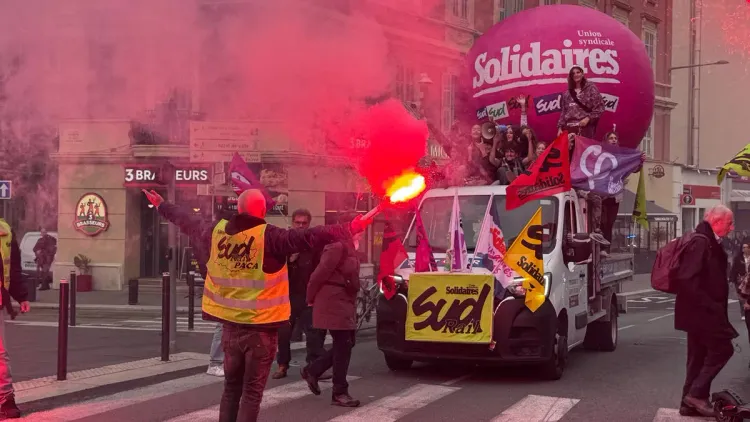
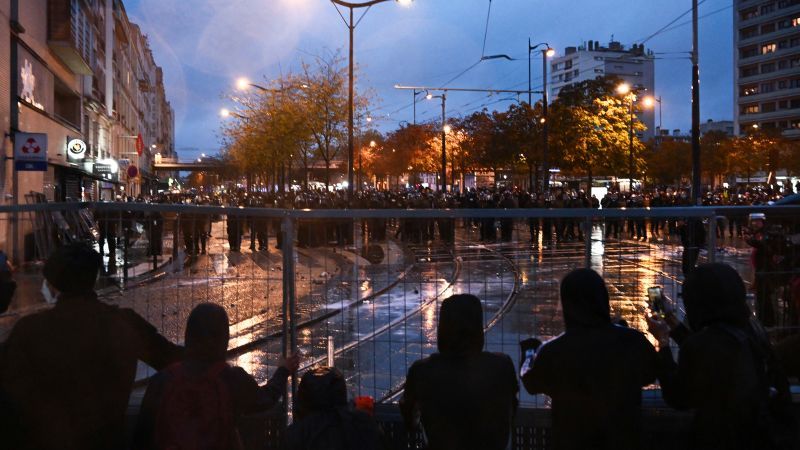
Paris accounted for about 110,000 demonstrators, according to the ministry, putting turnout in the capital roughly level with the previous weekend. Nationwide, more than half a million people had marched the Saturday before.
"In Paris, we had a major demonstration that took place peacefully, like most protest marches across the entire country," Nuñez told reporters. He put the previous week's detention count at 385.
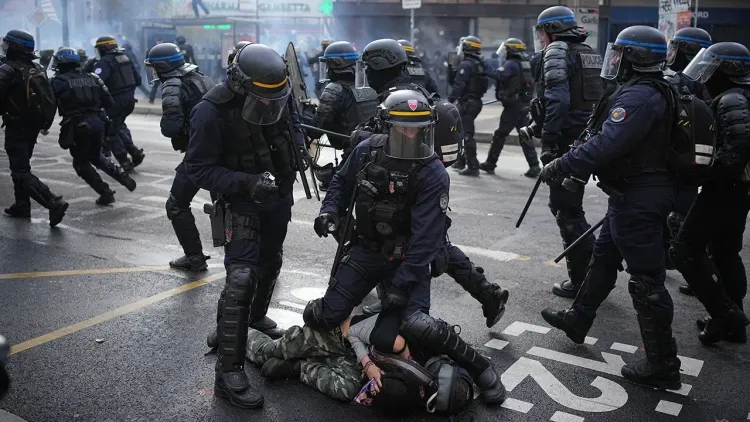
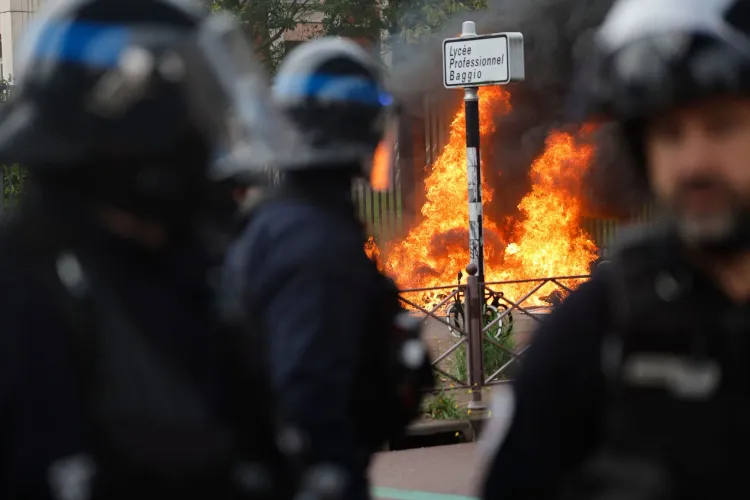
At Porte de Vincennes, where the Paris march ended, several thousand protesters later confronted police. A CNN team witnessed officers using tear gas and a water cannon to hold the crowd back.
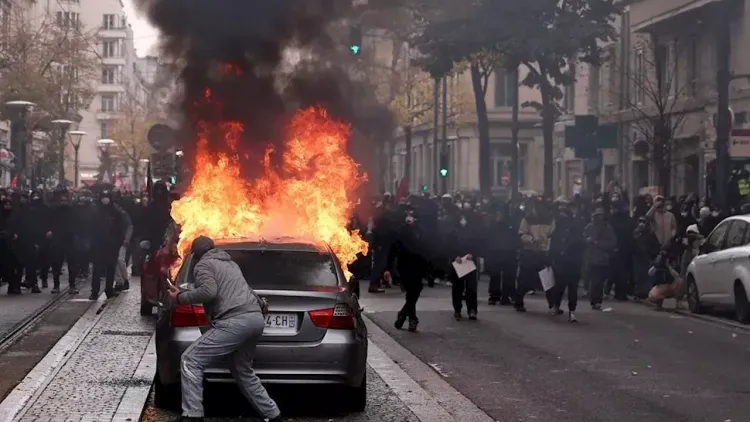
In Marseille, street skirmishes included protesters firing mortar fireworks toward police. BFMTV, CNN's French affiliate, reported looting across several parts of the city, with windows smashed at a jewelry store and a supermarket being pillaged.
Footage from Bordeaux's Place de la Bourse showed masked protesters throwing objects at police as tear gas spread through the square. In Nice, BFMTV reported that dozens of far-right activists attacked peaceful demonstrators.
70,000 officers mobilized
The Interior Ministry deployed some 70,000 police officers nationwide for the second round of protests. The operation also had specialist SWAT teams, helicopters, armored vehicles, police dogs and water cannons ready for use.
Nuñez said officers prevented unauthorized roving demonstrations and stopped protesters from moving toward city centers. Damage and looting affected a limited number of businesses in some cities, he said, and were far less extensive than a week earlier. Unlike the previous weekend, there were no targeted attacks on public buildings, including town halls and police stations.
Despite that assessment, Nuñez said security forces encountered an "extremely high level of violence," including continual projectile throwing and mortar firework attacks. He said officers would remain deployed until very late Saturday night to prevent looting.
From a school protest to a wider movement
Demonstrators' demands include more education funding, better prospects for young workers and relief from rising living costs. The movement began with a staffing dispute at Lycée Saint-Exupéry in Créteil, a Paris suburb, according to TheJournal.ie.
Teachers protested at the school on September 17, 2026, and pupils started a blockade the next day. Over the following two weeks, the protests reached hundreds of secondary schools and dozens of universities, gaining backing from parents, teachers and trade unions.
Secondary school students, supported by university students, want better-maintained school buildings, replacements for absent teachers, additional education resources and the abolition of the Parcoursup university-admissions platform, Euronews reported. Education Minister Édouard Geffray has promised initial measures to address their demands.
Unions press for November 5 action
Union leaders left an October 21 meeting with Prime Minister Sébastien Lecornu at Matignon disappointed after nearly two and a half hours of talks, according to Euronews. CGT general secretary Sophie Binet said the government had announced no measures. She called for the widest possible turnout on November 5 and urged workers to hold general assemblies to broaden strike action beyond that day.
At Saturday's Paris demonstration, Jean-Luc Mélenchon, leader of the far-left La France Insoumise party, warned of nationwide industrial action on November 5 unless President Emmanuel Macron responded to protesters' demands. "A general strike, called by the CGT, looms over the government for the 5th of November," he told BFMTV.
Macron was touring the Middle East during the crisis. Speaking from Qatar, he called for firmness against those responsible for violence and convened an intelligence-services meeting to examine the failings of October 17, Euronews reported. He subsequently traveled to Saudi Arabia. His decision to continue the trip drew criticism from figures including Horizons presidential candidate Édouard Philippe.
Demonstrations elsewhere in Europe
France's protests coincided with anti-government demonstrations elsewhere in Europe on Saturday. Businesses in Naples, Rome and Milan boarded their windows before planned protests, following looting at earlier demonstrations. In Tirana, Albania's capital, protesters set dumpsters on fire and threw stones and tear gas canisters.
Students in Brussels displayed placards and blocked streets with barricades. Belgian public broadcaster VRT reported that police used a water cannon.
The World Socialist Web Site reported that protests concerning housing, war and living costs had spread from Spain and Portugal to Belgium, Italy, Albania and Greece. Greece held a nationwide education day of action on October 20, with about 10,000 people marching in Athens. In Italy, at least 100,000 people joined a nationwide day of action, with another planned for October 30.