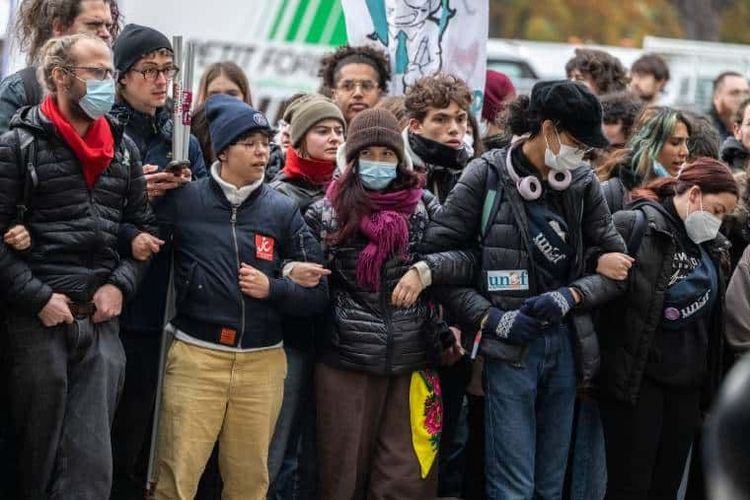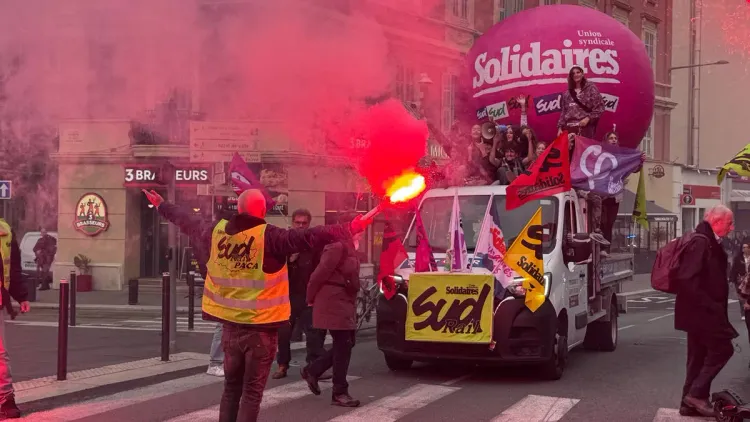
Crowds nationwide, clashes in several cities
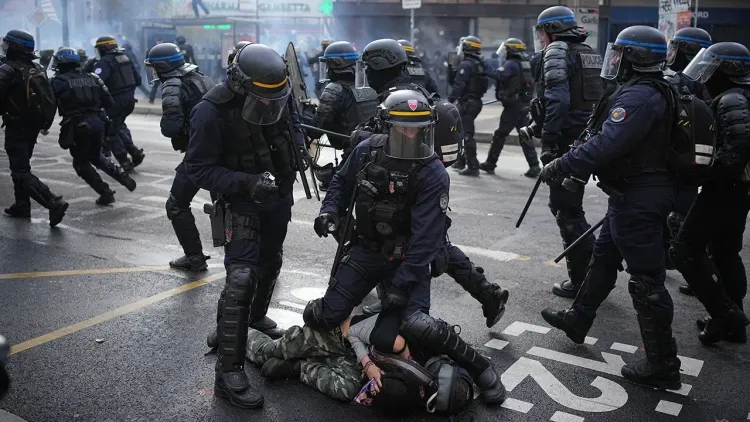
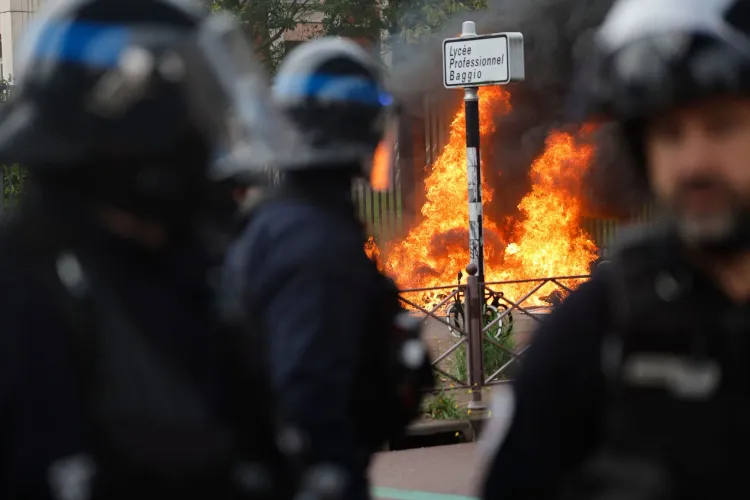
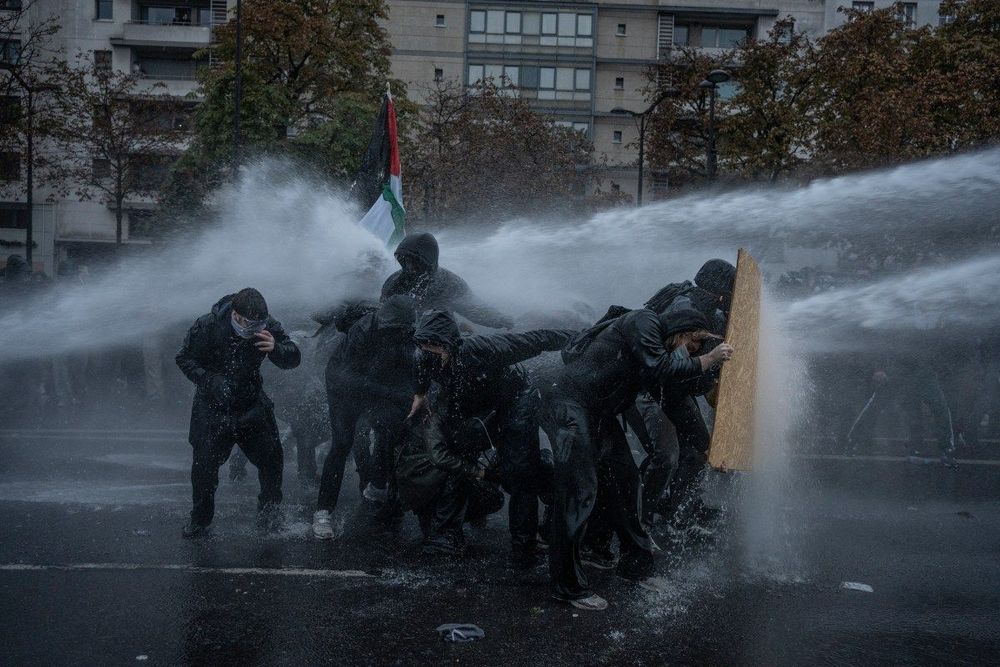
Video from near Porte de Vincennes in southeastern Paris showed riot police confronting masked protesters amid fireworks. Officers charged with batons, and Reuters reported that police used tear gas and water cannons against about 500 hooded youths before the group dispersed.
The Interior Ministry counted 410,000 demonstrators across France, compared with the CGT trade union's estimate of more than 800,000. Paris police put attendance at the main march at approximately 110,000.
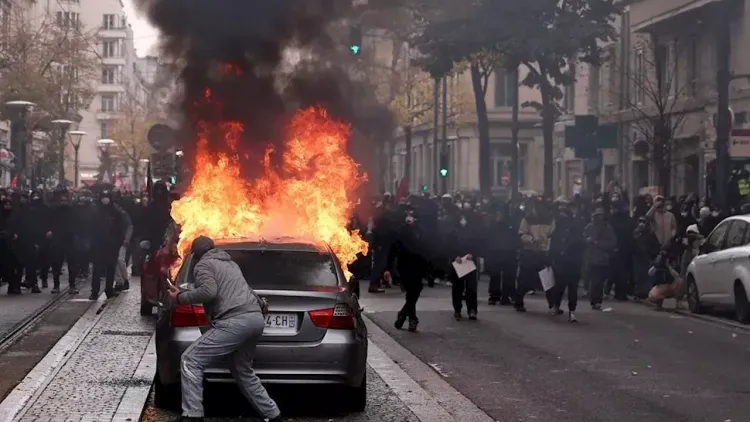
Marseille, Lyon, Bordeaux and Grenoble also saw clashes, although most demonstrations remained peaceful. France 24 reported that 53 law enforcement officers were injured nationwide, alongside the 1,314 arrests. Authorities said they responded to 75 fires and reported looting at 24 shops.
The reported toll was substantially lower than on October 17. According to DW, authorities recorded 2,628 detentions and 1,144 injured security personnel that day.
Expanded policing and restrictions
Following the previous weekend's violence and looting, authorities increased the nationwide deployment to about 70,000 police officers and gendarmes, roughly 10,000 more than a week earlier. Officers checked demonstrators and called on crowds to disperse.
Precautions disrupted central Paris before the march. More than 20 metro stations closed, businesses secured their properties, and the Louvre, Musée d'Orsay and Paris Opera suspended public access for the day. Business organizations had urged stores not to open after damage and looting affected thousands of businesses across France the previous weekend.
The Paris march followed a revised route along the city's southeastern edge. According to Al Jazeera, authorities had prohibited the central route originally negotiated between Place de la Bastille and Place de la Nation. Protests were also banned in Lyon and several city centers, including Montpellier, Rouen and Nice, while a union-organized march in Marseille received authorization subject to strict conditions.
Earlier restrictions followed the October 17 riots. Wikipedia's account says police issued curfews in Paris and other cities, while protests were banned in Bouches-du-Rhône and Lyon.
Interior Minister Laurent Nuñez condemned the violence and thanked police for their work. RFI reported that he listed seizures of metal balls, lead pellets, fireworks, slingshots, improvised weapons, a katana sword and airsoft weapons. Nuñez said the confiscated items showed that certain far-left and radical left-wing groups intended to turn demonstrations violent.
Student grievances and fuel costs
Accounts of the protest wave's beginnings emphasize different grievances. Al Jazeera traced it to high school students who blockaded schools in mid-September over deteriorating buildings, teacher shortages and what they considered an unfair higher-education admissions system. The movement subsequently expanded to include broader anger about living costs and inequality.
Wikipedia's account dates the start of the fuel-price protests to September 15, 2026, and describes a revival of the Yellow Vests movement. It says diesel prices in France reached €2.37 per liter, near the record of €2.38, amid the Strait of Hormuz blockade during the 2026 Iran war and the escalation of Yemen's civil war.
The original Yellow Vests movement emerged in 2018 in opposition to fuel tax increases, later taking on wider concerns about living costs and government economic policy.
Election politics and further demonstrations
The demonstrations come ahead of presidential elections in April and May 2027, when France will choose President Emmanuel Macron's successor. La France Insoumise leader Jean-Luc Mélenchon joined the Paris march and predicted weekly mobilizations. Macron "is going to understand that this is going to repeat itself every week", he said, according to RFI.
Also on October 24, Marine Le Pen's far-right National Rally held a congress in Orléans to launch her presidential campaign. A counter-demonstration drew 11,000 people by the police estimate and 26,000 by organizers' count, RFI reported.
French unions and protest groups have called for demonstrations on October 31 and a nationwide strike on November 5, according to DW. The Local France also reported the Yellow Vests' call for October 31 protests. Wikipedia's account says the movement's planned "Act III" includes sit-ins outside the National Assembly and town halls, preceded by pot-banging protests on October 30.