Clashes at the march's endpoint
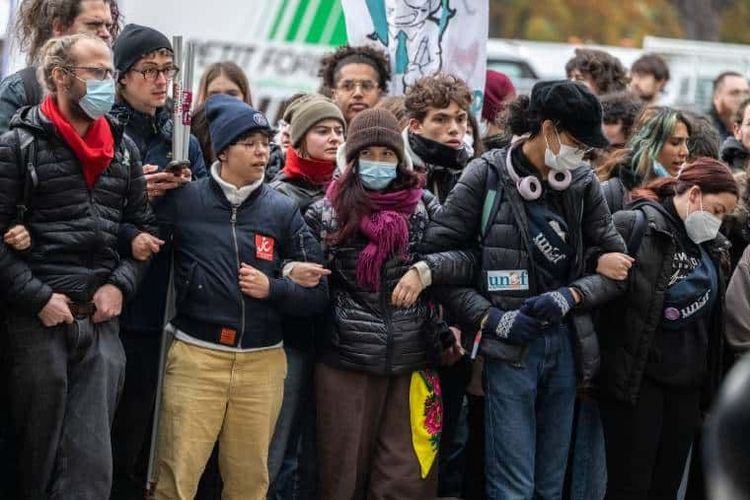
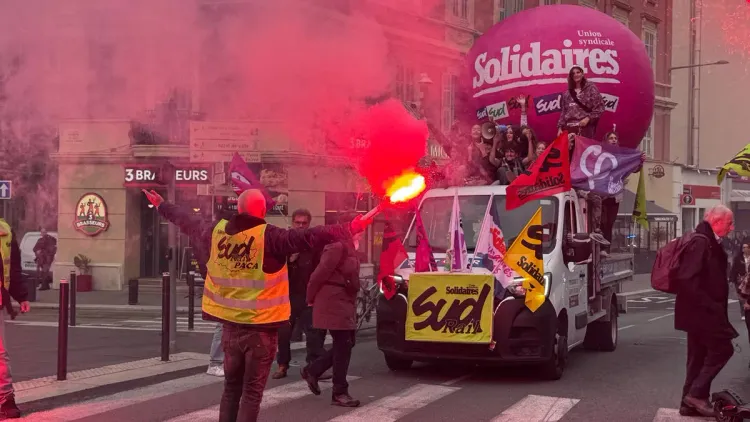
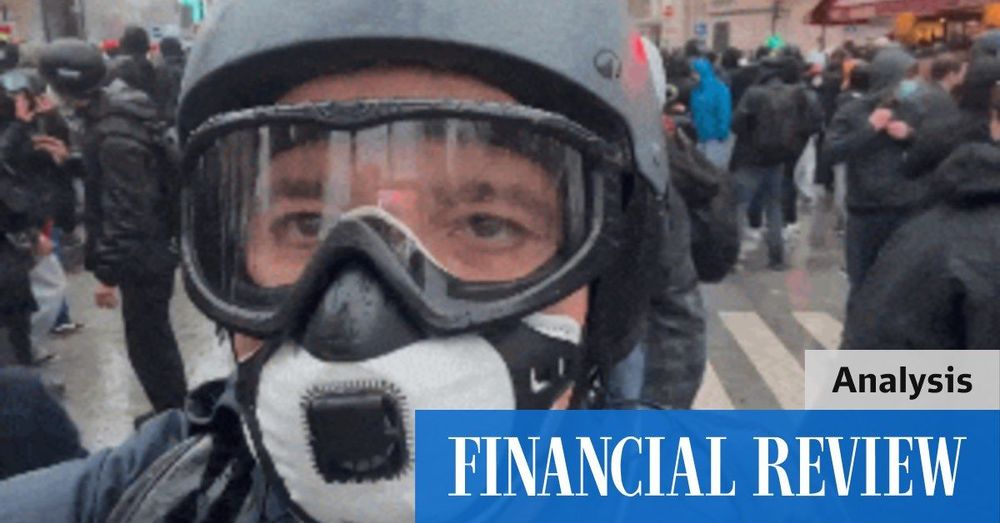
The Paris procession drew 110,000 people by the government's count and 250,000 according to organizers. Andrew Tillett, Europe correspondent for The Australian Financial Review, walked the route and reported a peaceful crowd accompanied by brass bands, cheering and political mockery. On a bus shelter, a protester dressed as Batman staged a fight with someone wearing a mask of President Emmanuel Macron.
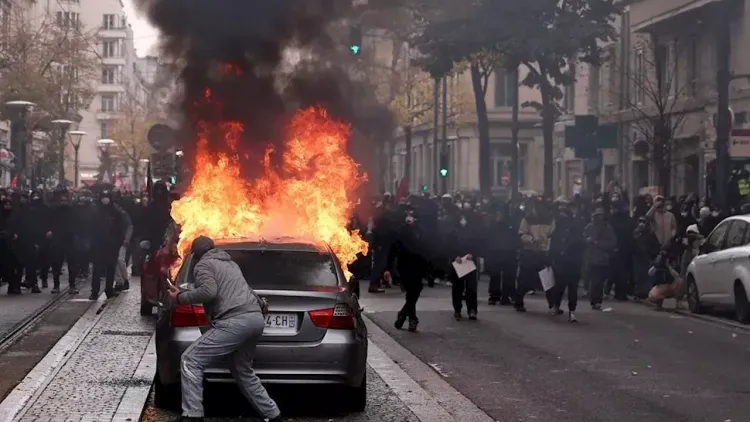
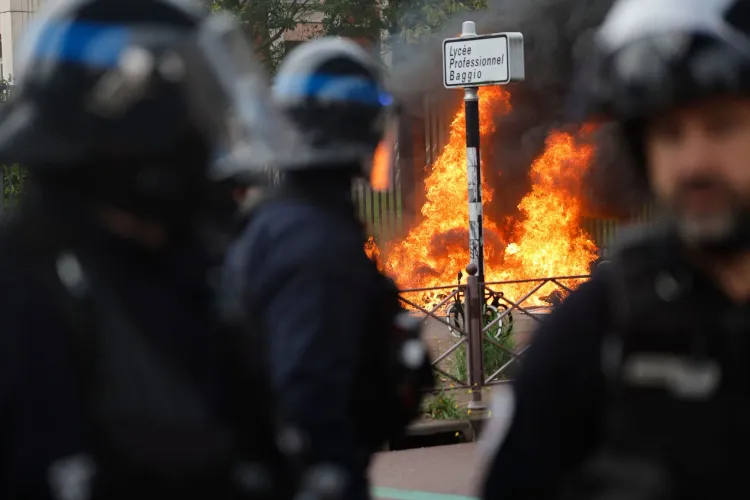
Violence broke out after marchers reached Porte de Vincennes. At about 5:30 p.m., masked protesters began throwing bottles, cans, rocks, paint, flares and fireworks at officers. Police put the number of "rioters" at 500.
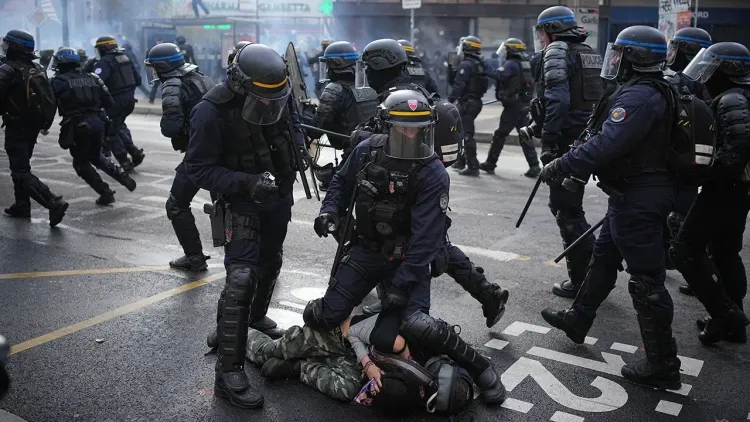
As officers responded, Tillett described being caught in a square where police advanced from opposite ends. People surged back and forth to escape tear gas, while heavily armored officers charged into the crowd with batons and riot shields.
Some demonstrators pulled boards from covered windows to make shields; others tried to put up construction fencing, which police pushed through. Officers also stopped an attempt to smash windows at an Audi dealership. By nightfall, police said they had regained control, although occasional tear gas discharges continued.
Sarah, a young woman forced into a side street with other demonstrators, told Tillett: "In the middle, it was basically chaos". She criticized the police response: "It is really sickening because everything was going fine, people were peaceful, and at the end they [the police] were waiting for us."
Security restrictions after the previous weekend's unrest
Macron's government had pledged a tougher response after the unrest on October 17. RFI reported that around 2,700 people were arrested following that weekend's violence. Retail industry representatives estimated shopkeepers' damage and losses in the hundreds of millions of dollars.
For the October 24 demonstrations, authorities deployed more than 70,000 police officers and paramilitary gendarmes across France. Soldiers guarded government buildings, while police checked bags at train stations and protest areas for weapons and sought to stop known agitators.
Restrictions also affected transport and cultural venues. Authorities imposed partial curfews in certain urban areas of Paris and other cities, and at least 24 metro stations closed. The Louvre and Musée d'Orsay shut for the day, while Art Basel Paris canceled its weekend program.
Macron allowed only trade union-organized demonstrations, forcing the cancellation of a separate Yellow Vests rally. The CGT union oversaw Saturday's marches. In Paris, police changed the approved route late Friday, less than 24 hours before the event: rather than proceeding from the Bastille to Place de la Nation, demonstrators were directed through the city's outskirts. The revised route passed few shops, limiting the risk of looting.
A movement that began in schools
The protests started in mid-September, when high school students blockaded schools over deteriorating conditions, including dilapidated buildings and teacher shortages. They also challenged what they regarded as unfair access to higher education. The movement subsequently expanded to encompass living costs and opposition to Macron's presidency.
Fuel prices were among the concerns voiced by working people at the Paris march. According to France 24, French inflation, particularly in fuel costs, has surged since the Middle East war began in February 2026. Other participants expressed hostility toward Israel or opposed the far right's positions on multiculturalism and immigration.
Agathe Lorez-Kaloustin, an 18-year-old studying history and literature at the Sorbonne, told The Australian Financial Review that concerns about education and young people's prospects had brought her to the march. "We deserve better," she said.
Arnaud, a Yellow Vests member who withheld his surname, argued that ordinary people needed more influence over decisions. "It's not really a democratic society. It's not the politicians, it's the system," he said.
Demonstrations across France
The Interior Ministry counted 410,000 demonstrators nationwide on October 24, including the 110,000 in Paris. The CGT estimated national participation at about 800,000, nearly twice the official figure. Nationwide turnout was reported as lower than the more than half a million who marched the previous week.
Interior Minister Laurent Nuñez said nearly 1,000 people were arrested across France. He described officers as facing "an extremely elevated level of violence" from black-clad "ultra-left" extremists.
France 24 reported that riot police used tear gas in Marseille, Lyon, Bordeaux, Lille, Toulouse, Montpellier and Nantes as well as Paris. The Lyon demonstration had not been authorized, and police dispersed the crowd with tear gas.
In Orléans, a counter-demonstration accompanied the National Rally congress launching Marine Le Pen's presidential campaign. Police estimated the protest crowd at 11,000; organizers said 26,000 attended. The party also confirmed Jordan Bardella's reelection as its president with nearly 99% of the vote.
The unrest comes about six months before France's presidential election. Macron cannot seek a third consecutive term under the constitution, while Le Pen leads opinion polls.
The Yellow Vests have called for another round of demonstrations on October 31 in defense of "the freedom to protest," according to RFI.