Two overnight restrictions, not a citywide shutdown
The general curfew runs from Saturday, October 31, into Sunday, November 1, and again from Sunday into Monday, November 2. All times are local to Paris. It does not cover Friday night, although the separate restriction for minors began that evening.
Decree 2026-01485, signed October 30, defines the restricted areas through attached maps. At Place de la République, where the 3rd, 10th and 11th arrondissements meet, the ban covers the central esplanade around the monument to the Republic, rather than the surrounding neighborhoods as a whole. In Châtelet-Les Halles, in the 1st arrondissement, it applies particularly around the Forum des Halles shopping center and the Canopée.
French residents and foreign visitors are both subject to the rules. Adults can generally travel elsewhere in Paris, though separate controls may affect demonstrations, gatherings or access to particular locations. The order is scheduled to expire at 6 a.m. Monday; any extension would require a further decision by security authorities based on developments over the weekend.
Access for residents, workers and essential services
People who live inside or near a restricted perimeter may cross it when necessary to reach home, provided they can establish their address and explain the journey. Residents are advised to carry identification and proof of address.
Work-related travel is also permitted when a person needs to enter or pass through a restricted zone, including for night work. Workers must be able to substantiate the trip with employment records or other appropriate evidence. Public-service personnel, particularly emergency, health and rescue teams, are exempt while traveling to perform their duties.
Tourist status alone does not provide an exemption. Anyone staying near République or Les Halles should establish whether their accommodation falls within the mapped boundaries and what documents are needed to justify access.
Broader restrictions for unaccompanied minors
For people under 18 traveling without at least one legal representative, the restricted hours are 9 p.m. to 6 a.m. on three consecutive nights, beginning Friday, October 30, and ending Monday morning, November 2.
This measure reaches beyond the two general-curfew zones. It includes defined areas around the Champs-Élysées, Place de la Concorde, the Élysée Palace, Madeleine and Saint-Lazare station, as well as the National Assembly, the Senate and Place de la Bastille. Other covered perimeters include areas around Gare du Nord, Gare de l'Est, Gare de Lyon and Montparnasse, and parts of Châtelet-Les Halles. The boundaries do not necessarily encompass the entire surrounding arrondissements.
A minor accompanied by a legal representative is not subject to this specific 9 p.m. restriction. The order also allows exceptions for medical emergencies and journeys required by properly documented training obligations.
The Paris Administrative Court suspended an earlier curfew for minors on October 28, ruling that authorities had not sufficiently established the circumstances needed to justify such a substantial restriction on freedom of movement. The Prefecture adopted a replacement measure the following day, seeking to address the court's objections while preventing further disturbances.
Saturday's march and nationwide police deployment
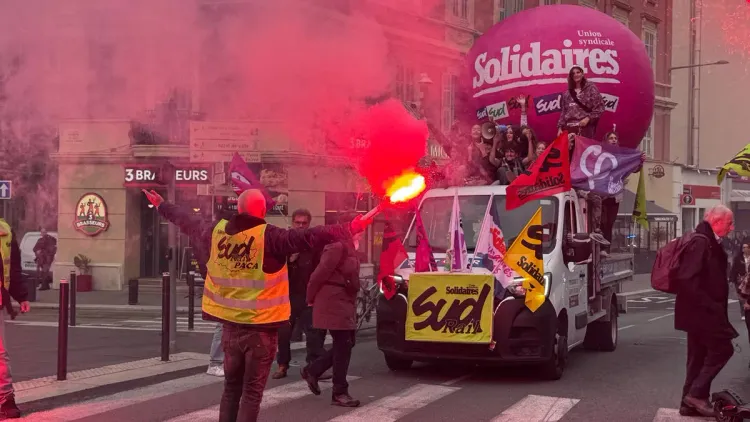
The Prefecture expects 100,000 to 150,000 demonstrators in Paris on Saturday, October 31. The main march is scheduled to follow peripheral boulevards between Porte de Bagnolet and Porte de Charenton. Authorities also fear that Halloween gatherings could lead to further nighttime incidents.
The Interior Ministry has announced a deployment of about 70,000 police officers and gendarmes across France. That is a nationwide total, not the number assigned to Paris.
Separately from the curfews, the government has prohibited gatherings and demonstrations held without prior notification in designated parts of the capital from 8 p.m. Friday, October 30, to 6 a.m. Monday, November 2.
How the protests developed
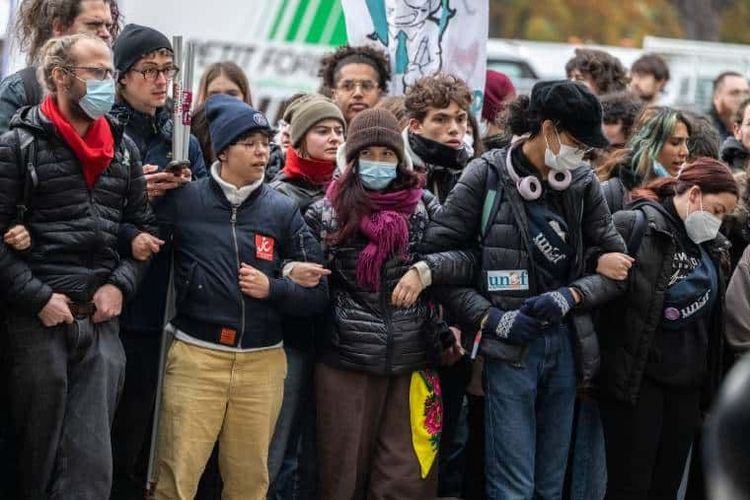
The weekend measures follow a succession of protests since mid-October over education, wages and living costs. ABC News traced the movement's origins to student demonstrations demanding education reforms in September. On October 8, Education Minister Édouard Geffray pledged 3,000 additional substitute teachers in a television interview, an apparent concession that did not stop the protests, according to BBC News.
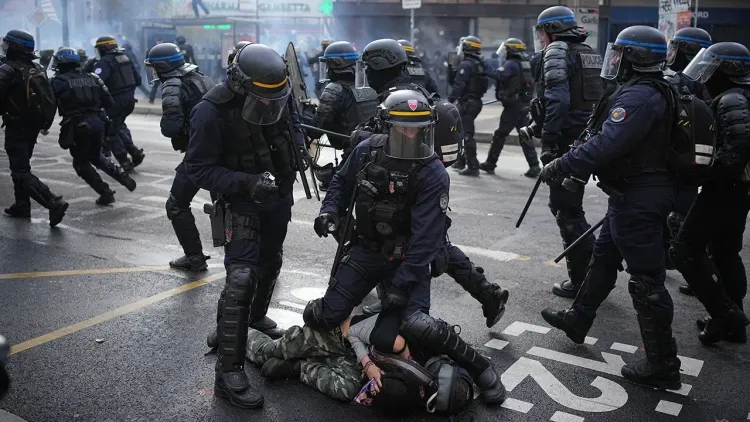
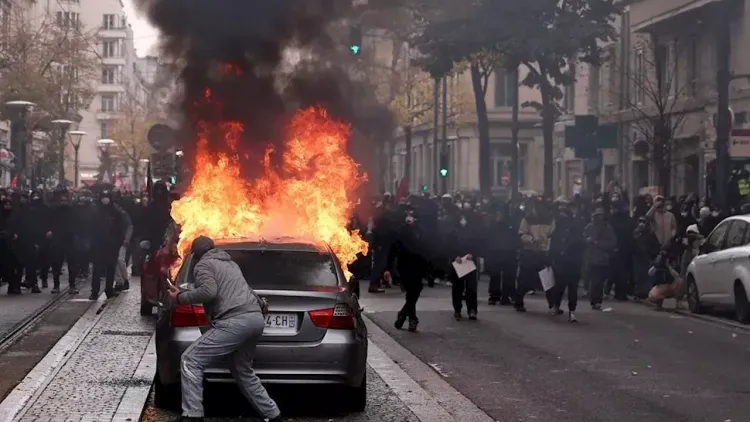
Demonstrations on October 17 and 18 included serious clashes with security forces and looting. For Saturday, October 17, the French government estimated nationwide turnout at 550,000 and reported at least 1,200 arrests, the BBC reported. Prime Minister Sébastien Lecornu said 150 police officers were injured.
Paris, Bordeaux, Nice and Lyon were among the cities where nighttime curfews took effect on Monday, October 19, in response to rioting and looting. Lecornu attributed a calmer night in part to those targeted measures, according to ABC News. As of October 20, Interior Minister Laurent Nuñez reported that 2,513 people had been taken into custody during the protests, with 67 imprisoned, and that roughly 60,000 police and other security personnel had been deployed nationwide.
Further incidents occurred the following weekend, although much of the protest activity remained peaceful. French authorities reported more than 1,300 arrests nationwide during the mobilizations over the weekend of October 24.
The protests precede France's presidential election in April 2027, which will mark the end of Emmanuel Macron's two terms. ABC News identified Marine Le Pen of the far-right National Rally and Jean-Luc Mélenchon of the left-wing France Unbowed party as leading candidates to succeed him.
Related demonstrations elsewhere in Europe
Education and living-cost protests also brought people onto the streets of major cities in Belgium, Spain, Portugal, Italy, Greece and Albania over October 17-18, according to ABC News.
In Spain, police arrested the suspected founder and principal promoter of the Spanish Blocus chapter in Picanya, Valencia, on Friday, October 30, Reuters reported. The group operated through social media using the slogan "Instituts Indignats," an apparent reference to France's Lycées Indignés student movement. Spain's Interior Ministry said six other people linked to the group had also been arrested.
That investigation concerns unrest in Barcelona on October 24. The Civil Guard put participation at around 500 people; Catalan police reported 132 arrests, comprising 83 minors and 49 adults.
Transit changes and planning a visit
The curfews do not cancel all Halloween activities or prohibit visits to other parts of Paris. Anyone heading to restaurants, entertainment venues or accommodation near République or Châtelet-Les Halles should plan around the 11 p.m. restriction and carry supporting documents if they need access for an authorized reason.
Metro and suburban rail travel may also be disrupted. Municipal authorities have announced station-access restrictions for Saturday, with operators adjusting service to police instructions. Stations identified as sensitive include République, Châtelet, Les Halles, Bastille, Concorde, Charles de Gaulle-Étoile and several stops near the Champs-Élysées. Temporary closures or entrance restrictions may affect transfers as well as journeys into central Paris.
The curfew decree does not itself close every station in the affected neighborhoods. Transit restrictions are imposed separately and can change during the day, so passengers should check the latest notices from RATP and Île-de-France Mobilités before traveling.