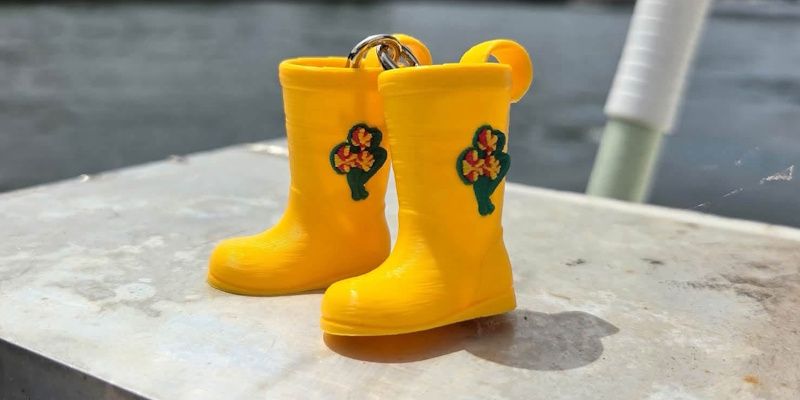
Wakeham Defends Minister's Purchase of Yellow Boot Keychains
Premier Tony Wakeham is standing by a cabinet minister's decision to spend more than $1,000 in public funds on custom keychains given to students during an educational trip to France's Beaumont-Hamel memorial site.
Andrea Barbour, who served as Minister of Tourism, Culture, Arts and Recreation until her transfer to the environment portfolio in August 2026, purchased 150 yellow rubber boot keychains that were distributed to students visiting the historic battlefield memorial. The expenditure, revealed in a recent CBC report, has drawn scrutiny over the use of taxpayer money for promotional items bearing Barbour's personal social media emblem.
The yellow boot has been a prominent feature of Barbour's social media presence since before she entered politics. A former federal government scientist specializing in water management, pollution policy and ecological science, Barbour was seen wearing one of the keychains in a TikTok video posted in August.
The keychains were supplied by a company believed to be connected to a former Progressive Conservative candidate from the last election.
Premier Defends the Purchase
Wakeham defended the purchase, stating that Barbour wanted to provide a token to each student participating in the trip. He emphasized that she followed all government protocols and did not personally benefit from the transaction.
When questioned about the appropriateness of the keychains, Wakeham noted that Barbour does not have exclusive rights to rubber boot imagery. He maintained that the minister's intention was simply to give students a memento of their experience at the historic site.
The Historic Significance of Beaumont-Hamel
The students visited Beaumont-Hamel, where the Royal Newfoundland Regiment suffered devastating losses on July 1, 1916, during the Battle of the Somme. In approximately 30 minutes, the regiment was nearly wiped out in what became one of the darkest days in Newfoundland's military history. The 74-acre memorial site, designated a National Historic Site of Canada in 1997, is the largest battalion memorial on the Western Front and one of the few preserved battlefields where visitors can still see trenches and terrain much as it appeared during the war.
The memorial, officially opened in 1925 by Field Marshal Earl Douglas Haig, honours more than 800 Newfoundlanders from the Royal Newfoundland Regiment, Newfoundland Royal Naval Reserve, and Mercantile Marine who died during the First World War with no known graves. Their names are inscribed on bronze tablets at the monument's base.
In Newfoundland and Labrador, July 1 serves as Memorial Day to commemorate the Battle of Beaumont-Hamel, carrying profound cultural significance alongside its designation as Canada Day. Educational trips to the memorial have been organized for years, with previous delegations including students selected through Heritage Fair projects and annual pilgrimages led by the Royal Canadian Legion.
Political Context
The controversy emerges as Wakeham's Progressive Conservative government approaches its first anniversary in office, having won a majority with 21 seats in the October 2025 election. Barbour was moved from tourism to the Environment, Conservation and Climate Change portfolio during a cabinet shuffle on August 20, 2026.