High turnout delivers a decisive result
The snap election, called by Vučić in September 2026, drew Serbia's highest parliamentary turnout in more than three decades. Election officials said nearly 65% of the country's 6.4 million registered voters had voted by 6 p.m., two hours before polling ended, News24 reported. Even that pre-closing figure exceeded the just-over-61% turnout recorded in the 1993 parliamentary election.
Vučić had resigned as president on September 27, with less than a year remaining in his term, to seek the prime minister's office. Serbia's constitution prohibits a president from serving a third term.
The Student List won more than half the vote. The Conversation's post-election analysis put its share at 53.3%, compared with 39.7% for Vučić's SNS, which it projected would receive 103 seats. Its analysts said the roughly 13-percentage-point gap exceeded what the ruling party could overcome through turnout suppression and vote manipulation.
Conceding on election night, Vučić told supporters that "it is clear that we lost these elections." He blamed foreign involvement, describing the outcome as "the validation of a revolution carried out with the direct support of various European countries and the US deep state."
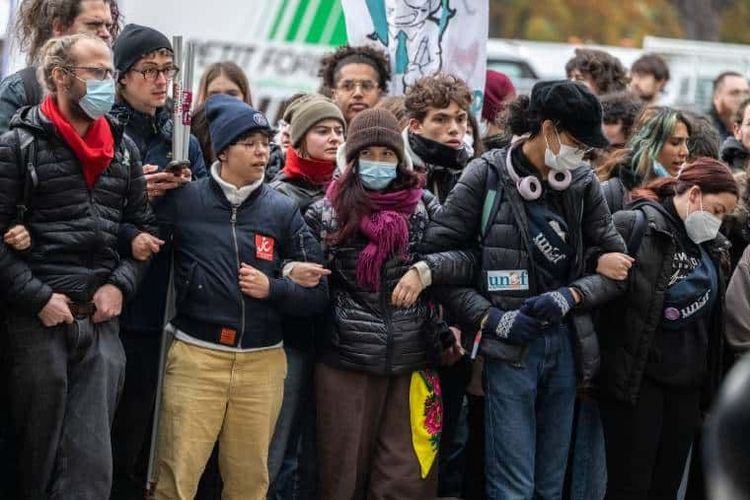
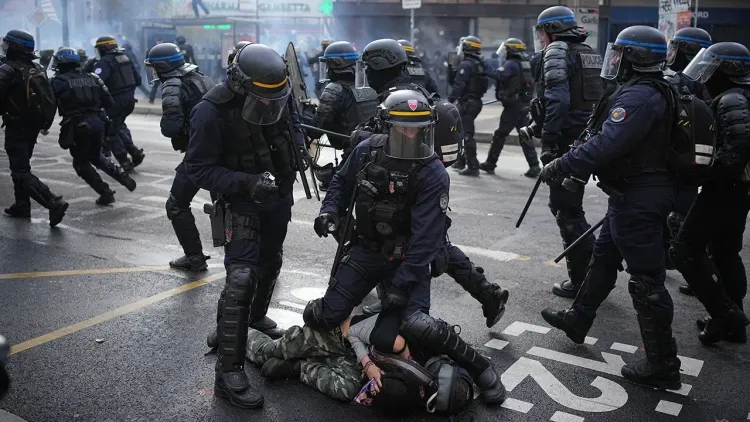
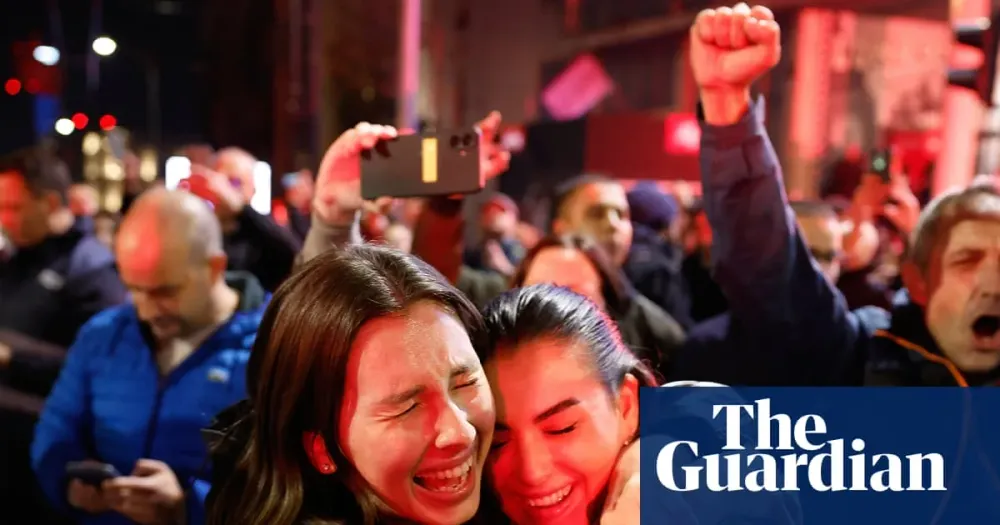
Crowds celebrated across Serbia. Sara, a young activist, described returning to streets where protesters had faced police violence: "It's very strange that on the very streets where the police beat us, we are now standing here as the victors."
The disaster behind the movement
The protests grew out of the November 1, 2024, disaster at Novi Sad's main railway station. At 11:52 a.m. CET, its 48-meter-long concrete canopy collapsed onto people beneath it, killing 16 and severely injuring another person. The station, built in 1964, had undergone renovations from 2021 to mid-2024 with support from China's Belt and Road Initiative.
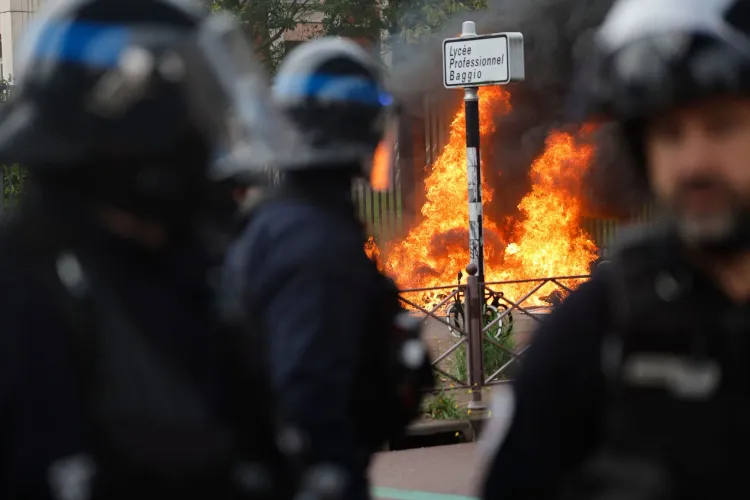
Students assembled in Novi Sad and began demonstrating almost daily for accountability and justice. Police used tear gas and batons against protesters, while the political establishment branded them traitors. Over nearly two years, the movement also faced unlawful detentions and surveillance.
The criminal proceedings remained unresolved in the latest account provided. Former construction minister Goran Vesić and 12 others were indicted on December 30, 2024. On December 24, 2025, the Novi Sad High Court dismissed charges against Vesić and five other defendants for insufficient evidence. As of April 2026, no official cause or responsibility had been established, and the Court of Appeal in Novi Sad was reviewing that dismissal.
Seeking European attention for their cause and what they saw as Serbia's democratic decline, students undertook a 13-day bicycle journey to Strasbourg, France, in April 2025. They traveled more than 1,300 kilometers. An open letter to French President Emmanuel Macron explained their purpose: "We are not riding toward Europe to flee Serbia. We are riding to bring it back."
Postdoctoral researcher Aleksandar Matković, drawing on his involvement in the movement, described extensive discussions and careful planning before the students entered electoral politics. He suggested that Serbia could offer an early indication of political transformations yet to emerge elsewhere.
An anti-corruption coalition prepares to govern
The Student List has no centralized leadership, although physician Ilija Srdanović headed its slate of 250 candidates and was described as one of its possible choices for prime minister. Its parliamentary majority brings together candidates from different backgrounds, including academics and athletes.
The coalition now faces the task of governing a divided country. One candidate called its immediate priority "the social and psychological detoxification" of Serbia. Its 11-point program calls for action against corruption, judicial reform, greater media freedom and better access to healthcare.
A movement member tempered expectations: "We are neither promising, nor expecting overnight miracles as a result of this victory. Rather we hope for something fundamentally radical for Serbia: normal, functioning institutions."
The Conversation's analysts cited Serbia's previous democratic transition as a warning. Voters last removed an authoritarian regime in 2000, when Slobodan Milošević was overthrown. The Democratic Opposition of Serbia coalition that benefited from his fall later became embroiled in corruption scandals and made an unsuccessful attempt to monopolize power.
European ties return to the agenda
The Serbian result followed Péter Magyar's April 2026 election victory in Hungary over Vučić ally Viktor Orbán. Magyar congratulated the Student List and said its leaders had told him how much encouragement they drew from his victory.
Serbia applied for European Union membership in 2009, but its accession efforts have stalled. The newly elected officials want to renew interest in integration, while EU leaders have offered support for democratic reforms.
European Commission President Ursula von der Leyen expressed readiness to help strengthen the rule of law and democratic institutions. EU enlargement commissioner Marta Kos said: "A new chapter can begin for Serbia. The door to the EU is open, and we are ready to move forward together."