Competing accounts of the unrest
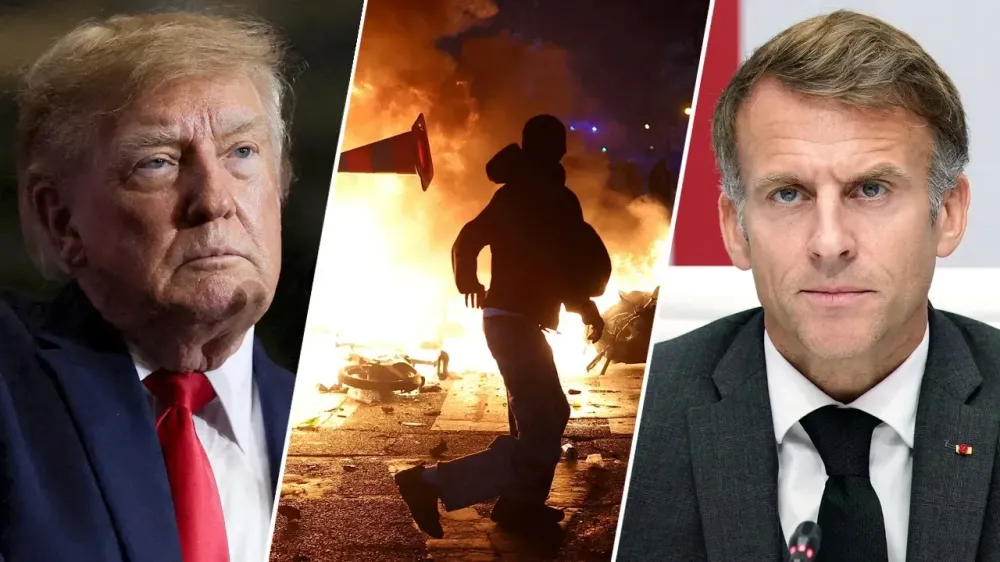
Trump called on France to close its borders at a midterm-election rally on Monday, claiming that "the migrants have taken over France." Following a weekend of anti-government demonstrations, looting and riots, he described a "once great nation" being "conquered, looted and burned to the ground" by migrants, jihadists and communists. He accused those groups of opposing Christianity and Western civilization.
Macron challenged that account on Wednesday. According to The Associated Press, he named Trump among foreign leaders spreading claims that migrants and Islamists had overrun France, which he called "completely false." Macron accused foreign actors of manipulating information about the protests, citing AI-generated images of events that had not happened in France. He said misinformation had prompted "unacceptable and stupid comments from many people including foreign leaders."
Asked by News Outlet about Macron's remarks, Pigott defended Trump as consistently "on point." He said the president had warned about mass migration for years, asserted that Trump had secured the U.S. border on his first day in office and said the State Department would resist international institutions seeking to pressure sovereign countries to encourage mass migration.
Pigott argued that mass migration destabilizes countries and creates problems rather than solving underlying ones. He said Trump had raised those concerns both in connection with France's protests and at the U.N. General Assembly for two consecutive years, where he urged an end to policies involving illegal mass migration. Pigott also argued that migration routes benefit criminal cartels, citing the administration's observations in the Western Hemisphere, and said the State Department had taken concrete steps to end the era of mass migration.
Vice President JD Vance likewise blamed immigration for the violence. In a post on X, he wrote that "Western liberals imported the third world into France and other countries in the name of diversity and compassion" and that they "ignored fundamental questions of assimilation and compatibility."
From student protests to nationwide demonstrations
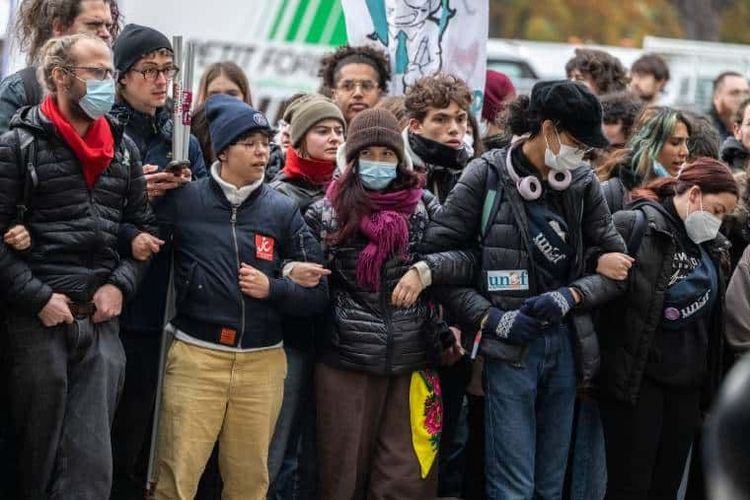
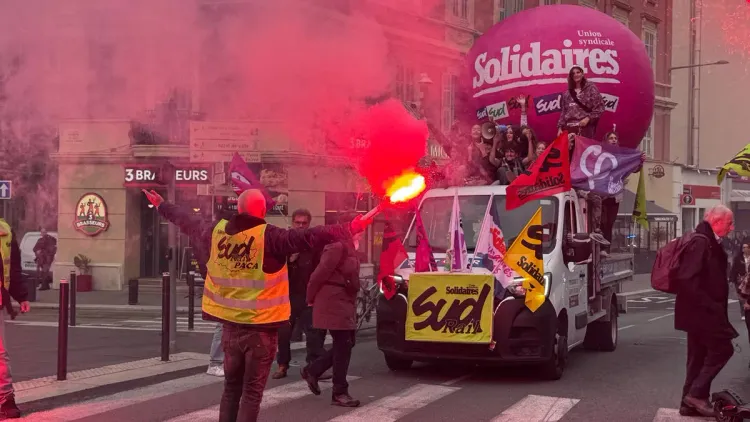
The movement began in September 2026 with students protesting conditions in schools and the high cost of living. Labor unions, farmers and the anti-government "Yellow Vests" movement subsequently joined, broadening the demonstrations.
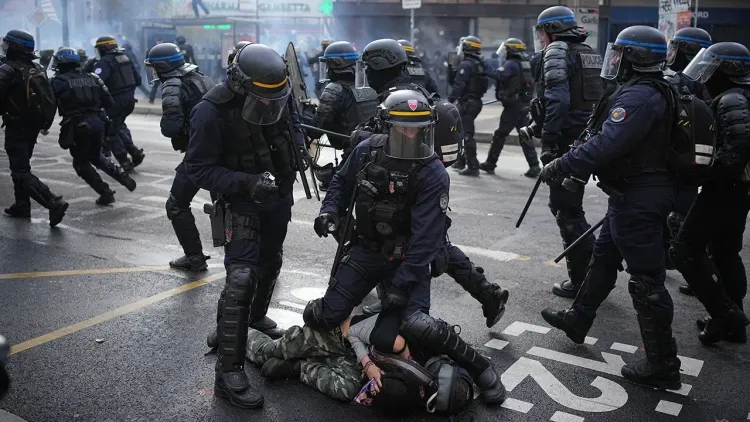
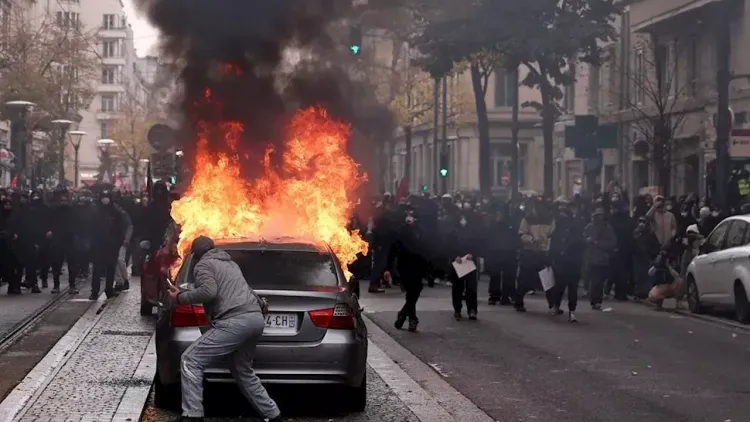
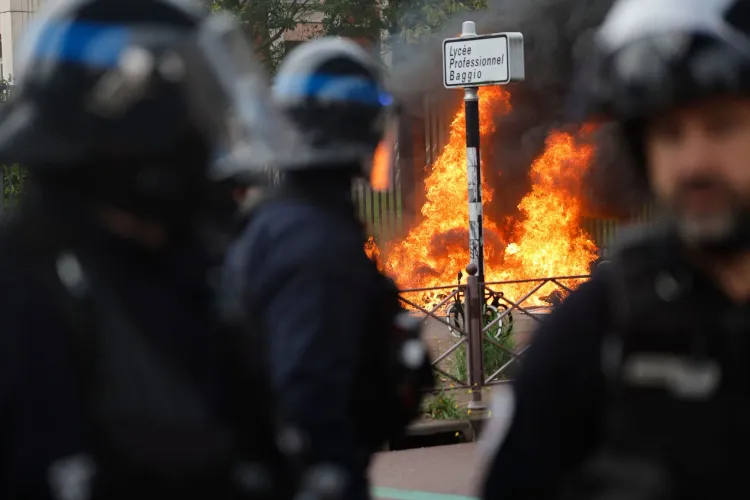
French authorities estimated that about 550,000 people demonstrated nationwide on Saturday, October 17; organizers estimated about 800,000. Authorities said more than 3,000 businesses were looted and approximately 2,500 people were taken into police custody in connection with that weekend's protests.
Among the buildings attacked was the 143-year-old town hall in Limoges, in central France. An arson attack left it largely destroyed. Mayor Guillaume Guerin said there had been a "clear, premeditated intention to burn down the town hall" and threatened to resign unless the city received money for repairs.
In a televised national address on Sunday, October 18, Macron described France's feelings as "anger and shame" and blamed the violence on "insurrectionist elements from radical far-left groups, joined by numerous criminals." He did not declare a state of emergency or impose a curfew.
The Louvre closed to visitors on Monday, October 19, after about 50 arts and culture students blocked its glass pyramid, Carrousel du Louvre and Passage Richelieu entrances. Many of the students were from the École du Louvre. The museum said it was being used "as an echo chamber."
Security preparations and cultural closures
With more demonstrations planned for Saturday, the Louvre and several other major Paris museums are expected to close, the AP reported. Reuters reported that businesses in central Paris had started boarding up their windows out of concern about further violence.
Interior Minister Laurent Nuñez announced plans to deploy some 70,000 police officers and gendarmes nationwide on October 24. Helicopters, armored vehicles and water cannons would support the deployment, while elite units would protect public buildings, including city halls.
Authorities banned some demonstrations on security grounds in cities including Lyon, Nice and Montpellier. Marches were nevertheless expected in Paris and Marseille.
The threat of unrest also led Art Basel Paris organizers to cancel the fair's weekend program at the Grand Palais. Featuring exhibitions from 211 international galleries, the fair opened to the public on Friday, October 23, for just that day.
State Department guidance for travelers
Pigott encouraged Americans heading abroad to register with the State Department's Smart Traveler Enrollment Program, or STEP. "That program lets you tell us which countries you're going to so that we can provide real-time information to Americans in the country that have registered," he told News Outlet.
He advised travelers who need help overseas to contact the nearest U.S. embassy or consulate, including for a lost passport, current safety information or assistance during a security emergency.