Removals outlast the agreement
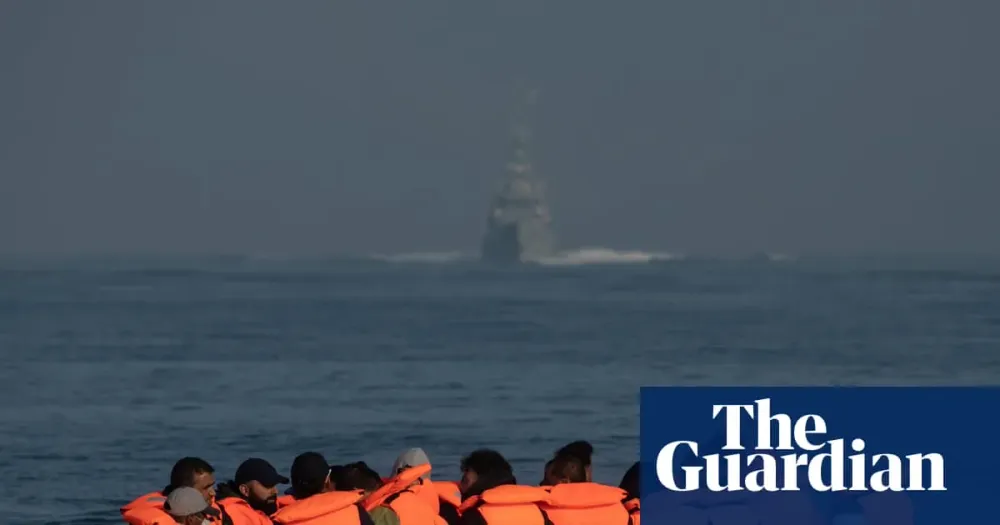
The people removed on Wednesday are believed to have reached the UK by small boat before the agreement expired. Home Office sources told the Guardian that officials were continuing to return those remaining in the scheme's cohort despite the deal having ended.
French President Emmanuel Macron and then-British Prime Minister Keir Starmer announced the arrangement in July 2025. Intended to discourage Channel crossings from northern France, it paired the forced return of some asylum seekers with the legal transfer of a similar number from France to the UK.
Known internally as Operation Hillmore, the deal initially targeted 2,600 exchanges and was intended to run for three years, with an option for either country to end it early. A June 2026 extension kept it in place until October 1. Le Monde reported that Prime Minister Andy Burnham urged Macron to preserve the arrangement during September talks, while Paris wanted to end the cooperation on controlling migrant flows.
Flight cancellations had already disrupted removals. Freedom of information data show that seven of 23 deportation flights under the scheme were canceled between July and September 2026, nearly a third of the total. That exceeded twice the number of France-bound deportation flights canceled during the first six months of the year.
Returnees describe detention and abuse
The Guardian understands that at least seven asylum seekers previously removed to France have reached the UK again since October 1. Others are reportedly waiting in northern France for favorable weather forecast in the coming days.
Two men interviewed by the newspaper, one Syrian and one Iranian, returned within days of the scheme's end and are now having their asylum claims processed in the UK. The Syrian man said officials initially detained him again while looking for a safe third country to send him to. He said they released him after finding none.
The Iranian man said he had spent months planning his return because smugglers had abused him in France. "I was tortured and beaten by the smugglers. I was too afraid to go outside in France."
An asylum seeker previously removed under the deal said at least five or six others were waiting to cross again from the Dunkirk camp known as the "Jungle." Another, who said he was 17, described being caught by police while trying to board a truck several days earlier and said he would keep trying to reach the UK.
Emma Ginn, director of Medical Justice, said vulnerable people remained detained for removal despite the scheme's abandonment. She said the prospect of being returned to France, where many reported violence and abuse by smugglers, compounded the harm caused by detention.
Limited reach and repeat crossings
Home Office figures reported by BBC News put the number returned to France between August 4, 2025, and June 30, 2026, at 1,087. During that period, 1,117 people traveled legally in the other direction under the arrangement, while 27,920 migrants reached the UK by small boat. Returns therefore accounted for only about 4% of small-boat arrivals.
Repeat crossings predated the deal's end. By June 30, nearly 50 people sent to France had made their way back to the UK. The treaty was amended to permit their return to France, and some people were removed a second time, adding to the cost.
The scheme has faced criticism because it does not appear to have produced its intended deterrent effect. Small-boat arrivals have declined by about 40% so far in 2026 compared with the same period in 2025, but irregular migration to Europe has fallen by a similar proportion.
After a three-week period without crossings, 263 people arrived in three boats on Thursday, according to Home Office data.
Costs and wider border funding
Home Secretary Shabana Mahmood told lawmakers on September 15 that each return under the scheme cost about £56,000 on average. That compares with the Home Office's estimated average of £48,800 for enforced migrant returns. Her evidence to Parliament's cross-party Home Affairs Committee put the cost of removals to France at no less than £78 million.
Maddie Harris of Humans for Rights Network questioned what the scheme had achieved while hundreds continued to wait along the French coast. She argued that accessible safe routes for anyone seeking asylum in the UK would be the most obvious way to prevent dangerous crossings.
The exchange scheme was separate from a three-year, £662 million agreement Mahmood signed with France in April 2026 to tackle small-boat crossings. That agreement includes at least 50 French police officers trained for riot control, drones, two helicopters and a camera system.
Under the April agreement, about £100 million in British funding could be redirected or withdrawn after a year if too few journeys are stopped. A removal center in Dunkirk with capacity for 140 people was expected to be completed by the end of 2026.