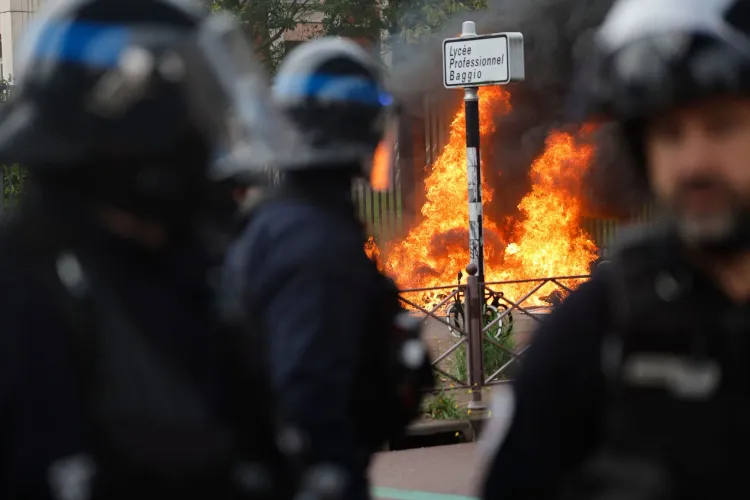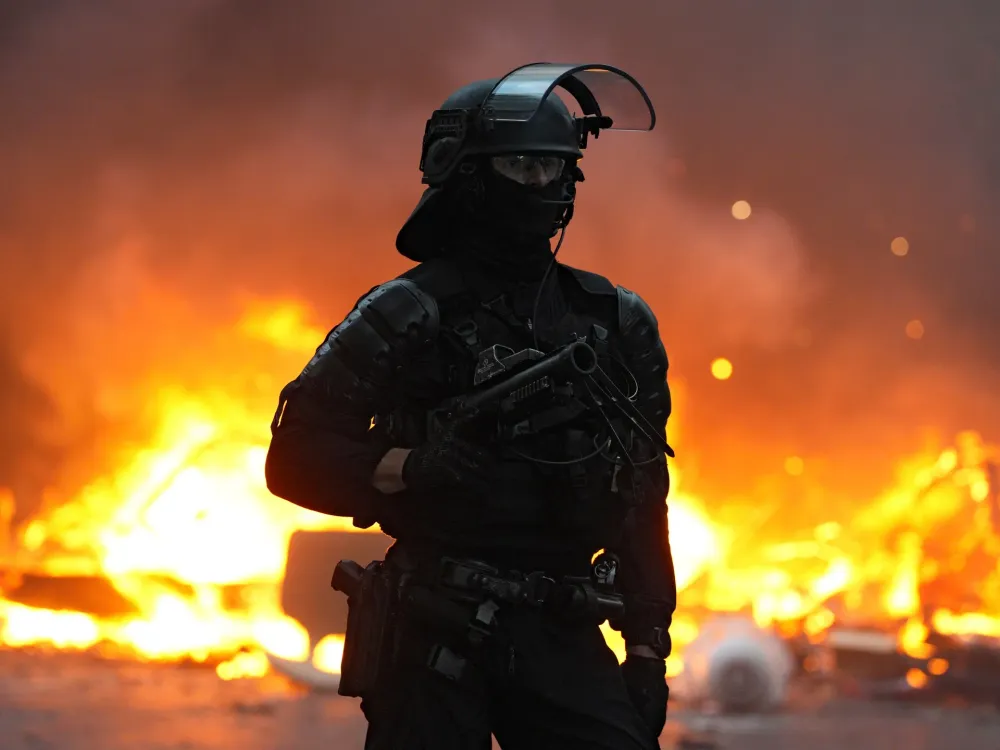
Warnings over arrests and injuries
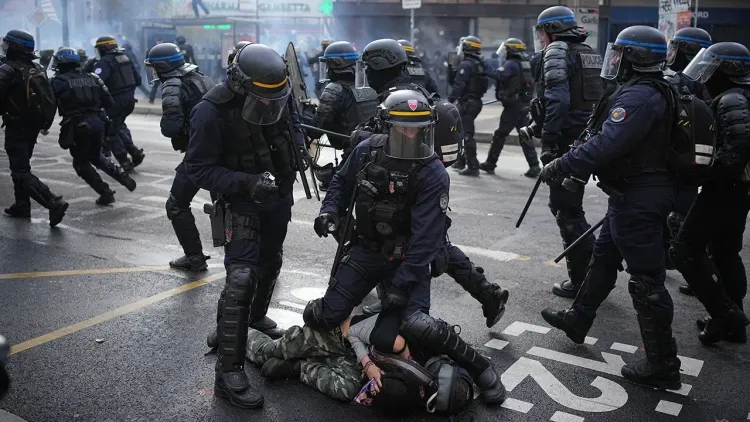
The experts called for a comprehensive review of France's protest-policing practices and condemned severe injuries suffered by young demonstrators. Their statement also denounced attacks on police and damage to property, calling for investigations to bring those responsible to justice.
"The serious and, in some cases, irreversible injuries sustained by underage demonstrators during law enforcement operations are unacceptable and unjustifiable," they said. In Lille, a teenager lost a hand after a grenade exploded during clashes between school protesters and police.
The four experts, mandated by the UN Human Rights Council, were Gina Romero, whose mandate covers peaceful assembly and association; Farida Shaheed, an expert on cultural rights; Leopoldo Maldonado Gutiérrez, whose mandate concerns freedom of opinion and expression; and Pau Pérez-Sales, whose mandate covers torture and other cruel, inhuman or degrading treatment or punishment.
Although French authorities had taken steps in October to open dialogue and address students' demands, the experts said the emphasis on security had pushed the underlying reasons for the protests aside.
School conditions and living costs fuel protests
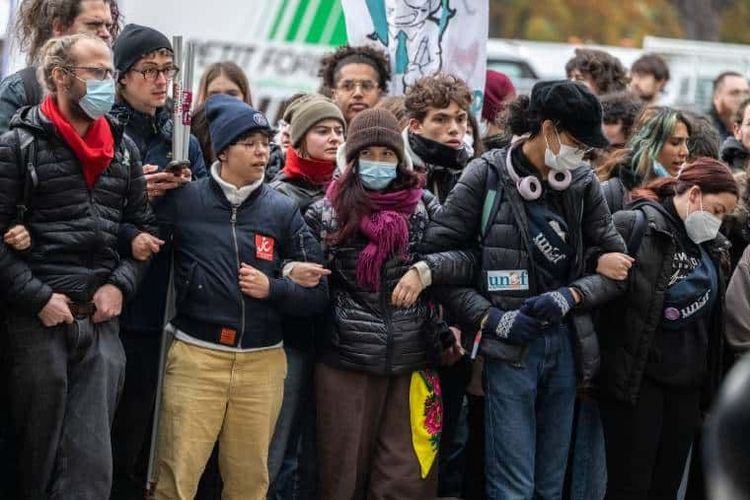
The student movement began in mid-September with complaints about high schools: buildings in poor condition, crowded classrooms and absent teachers. Students later joined nationwide demonstrations against rising living costs, with rioting and looting occurring on the margins.
The experts linked the education demands to France's obligations, stating: "Implementing the right to education is an international obligation, requiring in particular, the mobilising of the maximum available resources."
Analysts say a severe fiscal crisis and planned spending cuts, which have reduced the education budget, have hampered the government's response to students' demands.
Alice Cohen-Morzadec, a Union Etudiante spokesperson, described broader anger at President Emmanuel Macron in comments to Al Jazeera: "What we are seeing right now is a general outburst of resentment against Macron and his policies that have destroyed our rights, destroyed our living conditions."
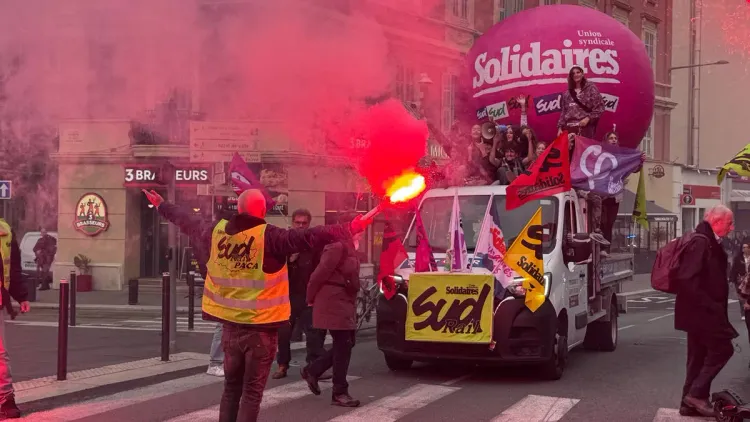
For the October 24 demonstrations, the Interior Ministry reported 410,000 participants nationwide, a deployment of 70,000 security personnel and 1,000 arrests. The previous week's unrest had brought 2,700 arrests, vandalism of public buildings and looting at hundreds of businesses. Interior Minister Laurent Nunez pledged to be "extremely vigilant, extremely firm" in responding to further unrest.
Investigations and restrictions on stun grenades
Police tactics were already under investigation before the UN statement. In an October 10 report, France 24, reporting with Reuters, cited the Interior Ministry as saying that the General Inspectorate of the National Police, or IGPN, had opened 24 investigations into incidents connected to the high school protests.
Reuters had documented 28 injuries caused by police force, including 15 cases covered by the IGPN inquiries. The incidents involved rubber bullets, stun grenades, tear gas, batons and mounted police charges.
France 24 also reported that Nunez had suspended stun grenade use while authorities investigated a 15-year-old's loss of a hand, which the minister said was likely caused by such a grenade. The BBC subsequently reported that police had been barred from using stun grenades at school protests.
Sebastian Roche, a policing researcher at the French National Centre for Scientific Research, said France stood out in Europe for its use of weapons and the number of people injured. He cited "four irreversible injuries in the space of 12 days, and they are minors," describing that level as unprecedented in France's contemporary history, according to France 24.
Roche said rubber bullets and stun grenades, described as "less lethal" weapons, generally are not used to police public-order events in Britain, Italy or Germany, apart from Hamburg. Spain permits their use, he said, but has recorded fewer injuries from them than France.
Calls for accountability
The UN experts said investigations, including those by the IGPN, were essential but needed to be accompanied by "clear instructions from superiors and a political stance that firmly and unequivocally condemns all police violence." They renewed earlier calls for changes to policing that would allow people to voice their concerns and help resolve social disputes peacefully.
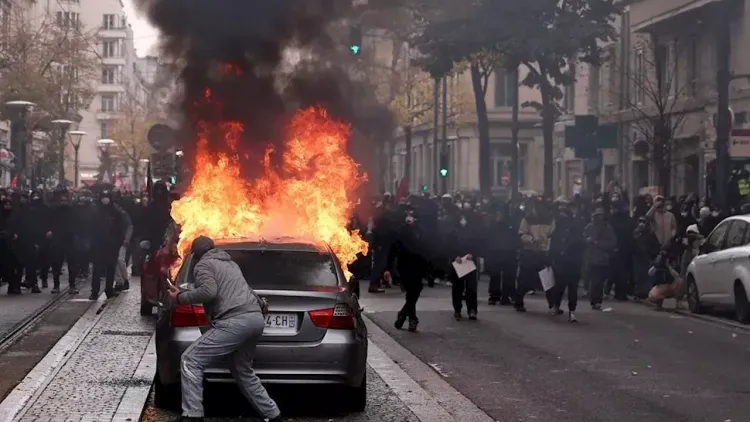
They also condemned violence directed at officers and property: "We regret that police officers have been injured, and that numerous buildings have been damaged and shops vandalised. We condemn these acts of violence. Measures are needed to investigate them and bring perpetrators to justice."
The experts said they were in contact with French authorities about the issue.