Historian Niall Ferguson Examines the Roots of Youth Unrest Sweeping European Capitals
Major European capitals have witnessed a resurgence of youth-led demonstrations as students and young activists mobilize against government policies spanning education funding, housing affordability, and fiscal austerity. Historian Niall Ferguson, writing for The Free Press, examines this wave of unrest and its intersection with mounting sovereign debt pressures, particularly in France.
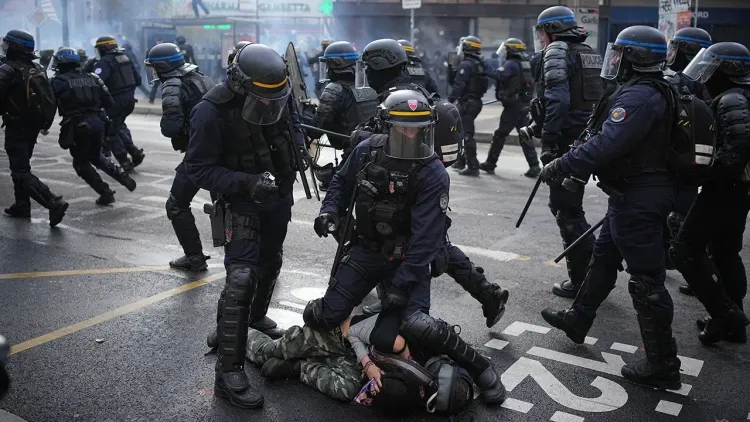
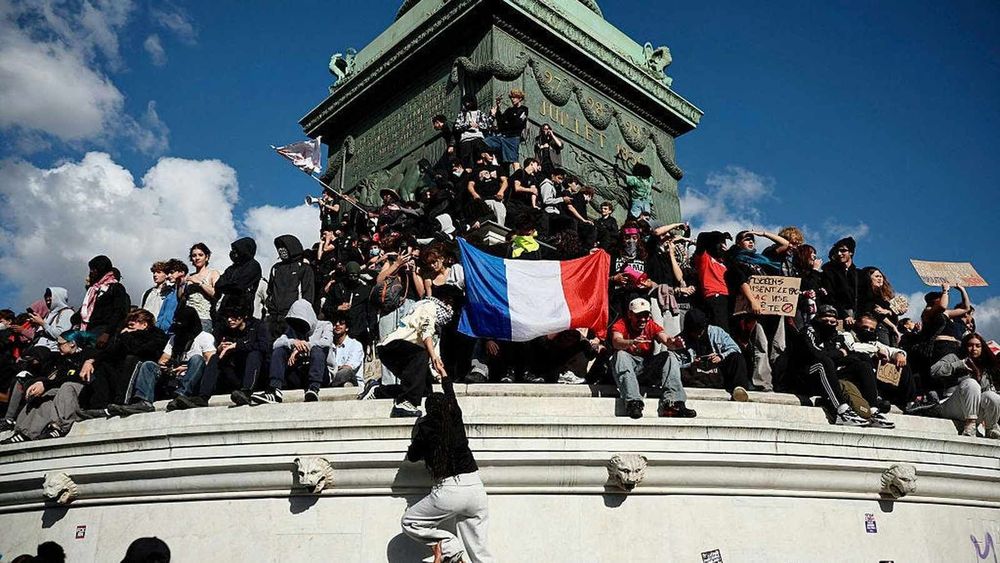
The scale of mobilization has proven substantial. On October 6, 2026, nationwide protests in France drew between 250,000 participants according to government estimates and 450,000 according to union figures, with students, teachers, parents, and trade unions joining the demonstrations. French authorities arrested 1,949 people on October 1 alone, with France's Interior Ministry reporting approximately 6,100 total arrests since the protests began roughly two weeks prior.
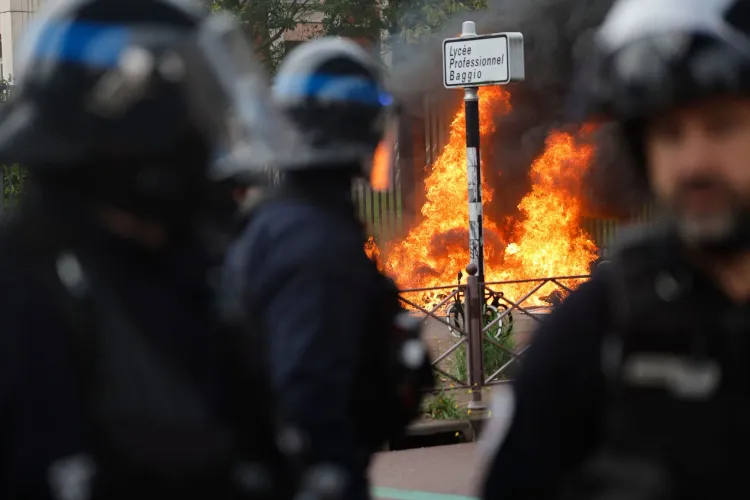
Ferguson notes that French high schools have become flashpoints for confrontation, with students setting fires and clashing with police while demanding greater investment in education. The demonstrations invoke historical imagery of French public dissent, where street protests function almost as an established political ritual for younger generations. Viral videos capture groups enacting modern iterations of revolutionary behavior across Parisian boulevards, complete with street confrontations and burning debris.
Beyond France's borders, parallel youth movements have emerged with distinct local grievances. In Spain, housing affordability has become the central catalyst for mobilization. The September 23, 2026 eviction of 87-year-old María del Carmen Abascal from her Madrid apartment, where she had lived for approximately seven decades, triggered widespread outrage and demonstrations. The crisis deepened when Spain's parliament rejected emergency housing relief measures on October 2, one day before tens of thousands protested across Spanish cities.
Belgium has experienced its own wave of unrest centered on budgetary constraints. Belgian students from French-speaking communities began blockading secondary schools on October 1, protesting education budget cuts of €500 million by 2029 and tuition increases from €835 to €1,194. On October 9, approximately 30,000 protesters clashed with police in Brussels during a national strike against Prime Minister Bart De Wever's plan to cut €10 billion from Belgium's budget over the next few years.
Fiscal Vulnerability and Market Pressures
These street-level confrontations coincide with significant financial strain at the sovereign level, particularly affecting France. French public debt reached €3.6 trillion in the second quarter of 2026, equaling 119 percent of GDP, up from 115.6 percent one year earlier, according to France's national statistics office INSEE. France's 10-year government bond yield reached 4.82 percent on October 14, 2026, representing an increase of 1.48 percentage points compared to one year earlier.
The spread between French and German 10-year government bonds exceeded 150 basis points on October 2, the widest level since late 2011 during the European sovereign debt crisis. This deterioration in France's borrowing costs relative to Germany signals heightened market concern about fiscal sustainability.
Ferguson cautions against prematurely equating the current climate with the sovereign debt turmoil of the late 2000s and early 2010s, which originated in Greece before spreading across the eurozone. Institutional safeguards established over the past decade provide central authorities with substantially broader mechanisms for intervention.
Central Bank Tools and Market Stabilization
Should French sovereign bond yields climb significantly higher—potentially by another 100 basis points, or 1 percent—the European Central Bank possesses the monetary policy instruments necessary to step in, calm market volatility, and stabilize regional bond yields. Ferguson highlights that these defensive mechanisms draw on established precedent for protecting the currency union under stress.
When Mario Draghi famously declared in July 2012 that the central bank would do whatever it takes to preserve the euro, it fundamentally altered market expectations regarding sovereign default risk within the bloc. Today, as fiscal deficits and political gridlock test member states like France, those same defensive mechanisms remain available to monetary authorities.
Structural Challenges Beyond Monetary Policy
The juxtaposition of visible youth agitation in major capitals with underlying fiscal imbalances underscores the delicate balancing act facing European policymakers. While monetary tools can successfully insulate bond markets from panic, resolving the underlying socio-economic drivers requires sustained structural and legislative efforts from national governments that extend far beyond central bank intervention.
The cultural significance of public protest in certain European nations amplifies these challenges. In France, political street protest operates almost as a rite of passage for adolescents and young adults, blending historical references to past eras of dissent with contemporary political slogans. Whether referencing historical uprisings or modern frustrations over educational policies, young demonstrators frequently employ disruptive tactics that draw heavy police responses, further polarizing public discourse.
The grievances expanding across Madrid and Brussels illustrate that European youth are grappling with systemic economic vulnerabilities that extend beyond national borders. The housing affordability crunch in Spain and budgetary austerity measures in Belgium demonstrate that younger demographics bear a disproportionate burden of ongoing macroeconomic adjustments. Consequently, public demonstrations serve as both an outlet for immediate economic distress and a warning sign to political leaders about the fragility of the social contract across the continent.
Looking ahead, the interaction between grassroots youth unrest and high-level sovereign debt pressures will likely remain a defining characteristic of European politics. While the European Central Bank stands ready to deploy backstops if bond market stress intensifies, national governments across France, Spain, Belgium, and beyond face the formidable task of balancing fiscal consolidation with policies that address the legitimate economic aspirations of their younger citizens. Monetary policy alone cannot address the fundamental structural complaints voiced in the streets.